Table of contents
This is the biggest guide to dirty matcha you'll find anywhere — where it came from, what it does to you, how much caffeine is really in it, and how to get those two-tone layers right.
But I know why most of you are here.
So the video and the recipe come first. The story comes after.
How to make an iced dirty matcha latte
Makes 1 · about 200 kcal · 15 min prep + 20 min chill
Download Printable Recipe PDF Now

Ingredients
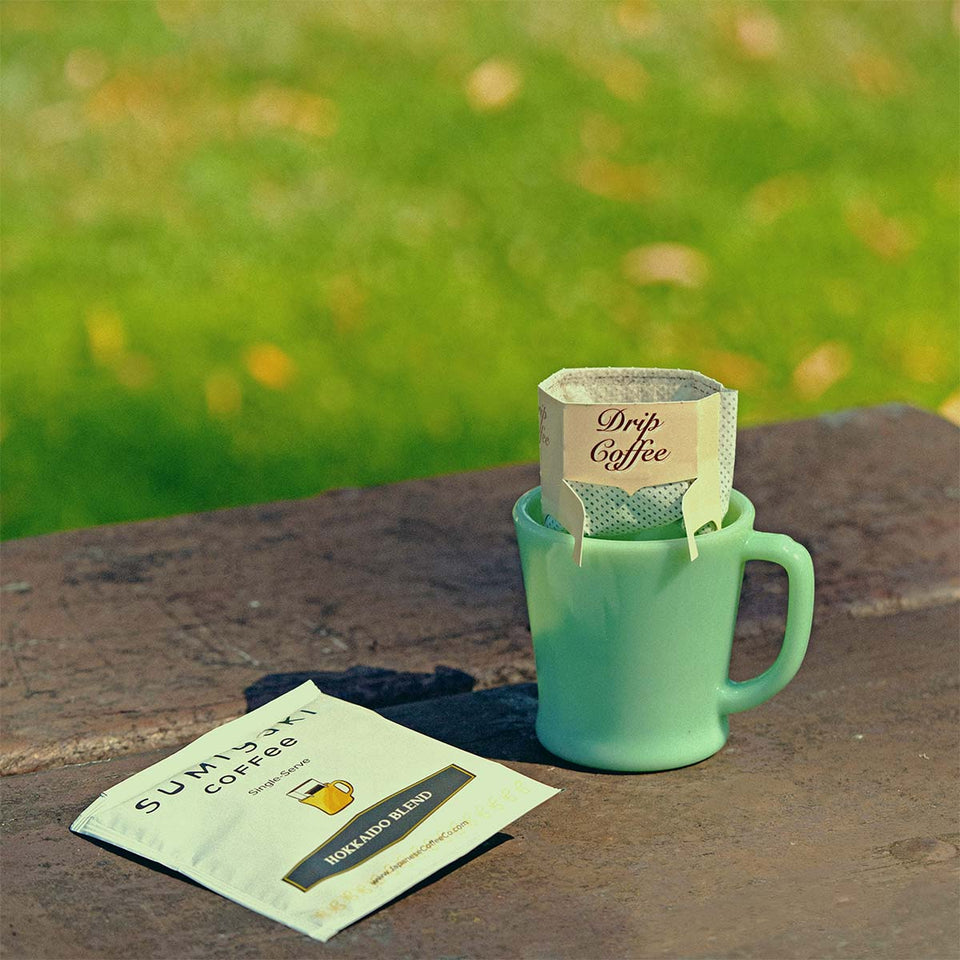
- 2 tbsp (about 10 g) freshly ground Hokkaido Blend, our Sumiyaki charcoal-roasted coffee
- 2 oz (60 ml) hot water, just off the boil, about 93 °C (200 °F) — to brew the coffee
- 1 tsp (about 2 g) premium ceremonial Matcha, sifted
- 3 oz (90 ml) hot water for the matcha — see the temperature note below
- 2 tsp (10 ml) maple syrup
- 3/4 cup (180 ml / 6 fl oz) oat milk, or any milk you like
- Ice
Steps
- Brew the Sumiyaki. Pour over the 2 tbsp grounds with 2 oz (60 ml) hot water, pour it into a small cup, and let it cool in the fridge.
- Sift 1 tsp matcha into a small bowl. Whisk it with the 3 oz (90 ml) hot water, then add the maple syrup and whisk again until it's slightly foamy.
- Pour the matcha into a glass and add ice.
- Pour in the milk, then the coffee on top. Stir, and drink.
On the coffee: the video uses Hokkaido Blend ground for a paper-filter pour-over. You can also order it as whole beans or a different grind on the product page — an espresso grind if you'd rather pull a shot.
On the matcha water: aim for 70–80 °C (158–176 °F). That's the everyday range, and it's where most people land in Japan in summer, when nobody wants a bitter cup. Want it stronger? Go up to 85–90 °C (185–194 °F) — you'll pull more out of the leaf, with more bitterness to match. It comes down to how bitter you like it.
That's the drink.
Now, if you want to know what you just made — where it came from, why it works, and how to make yours better than the cafe version — keep going.
Download Printable Recipe PDF Now
What a dirty matcha latte is
A dirty matcha latte is just matcha with a shot of coffee poured through it.
Matcha and milk in the glass, then the coffee on top so it streaks down through the green. The "dirty" part is the coffee.
I make mine with our Hokkaido Blend, a charcoal-roasted Sumiyaki coffee.
So if a dirty latte is matcha plus a shot of coffee, mine is technically a little dirtier — charcoal and all.
I know how that sounds. The taste is guaranteed, though.
People have come up with other names for the look of it, too. Some baristas call it a "camo latte" because the browns and greens swirl like camouflage. Others go with "swamp latte," which is less kind but not wrong.
What does it taste like? The matcha brings a grassy, savory depth. The coffee brings roast and a slight edge of bitterness. The milk rounds them off, and the maple sits in between like a bridge.
It shouldn't work. It does.
Where the dirty matcha came from
Nobody holds the birth certificate for this drink. But you can trace the family line, and it's a fun one.
It starts with the dirty chai.
The story most people tell — and I want to be clear that it's a story, not a documented fact — is that sometime in the 1990s, a barista in England knocked a shot of espresso into a customer's chai latte by accident. The customer drank it anyway, liked it, and ordered it again.
Whether or not that exact spill happened, the word stuck. In cafe language, "dirty" came to mean one thing: add espresso to a drink that doesn't normally have it.
Once that word existed, the matcha version was only a matter of time.
The big push came from Asia. Around 2016, Starbucks put a layered drink called the Matcha & Espresso Fusion on menus in markets like Malaysia, Indonesia, and the Philippines. Green matcha and milk on the bottom, a dark espresso shot bleeding down from the top.
It never made the official menu in the United States. That didn't matter. Photos of it traveled anyway, and people over here started asking baristas to build it by hand — a matcha latte with a shot added.
Independent cafes picked it up from there, and the American name for it settled on "dirty matcha," borrowed straight from the dirty chai.
Some people argue the idea goes back further, to Japanese and Korean cafes quietly mixing espresso into matcha drinks before any chain touched it. I believe it. Every "new" drink usually turns out to be something a small shop somewhere was already doing.
So the honest answer to "who invented the dirty matcha?" is: a spilled shot in England named it, Starbucks Asia made it famous, and a thousand small cafes made it theirs.
Now you make it in your kitchen. That's how food history usually goes.
Dirty matcha, matcha espresso fusion, dirty latte — the name game
Order this drink in three different cities and you might need three different names. Here's the decoder.
Dirty matcha (or dirty matcha latte). The common name in the US and much of the West. Matcha, milk, espresso or strong coffee. Iced is the default; hot exists.
Matcha espresso fusion. The Starbucks Asia name for the same idea. If a menu says "fusion," expect a deliberately layered, photogenic build.
Camo latte / swamp latte. Nicknames for the look. Same drink.
Double dirty. Two shots of espresso instead of one. Some shops go further and call three shots "filthy." I have never needed a filthy matcha. I respect the people who do.
Dirty latte / dirty coffee. Here's the trap. In Thailand, "dirty coffee" is a different drink entirely — a hot espresso shot poured over very cold fresh milk, no matcha anywhere in sight. It's excellent, but if you order a "dirty" in Bangkok expecting green, you'll get brown.
One drink, half a dozen names, and one false friend. Welcome to cafe menus.
The Japan side of the story
Here's the part no other dirty matcha article will tell you, because it takes a tea family with a coffee company to notice it.
Japan spent 800 years getting ready for this drink.
Start with the matcha half. In 1191, a monk named Eisai (栄西) came back from Song-dynasty China carrying tea seeds and a method: grind the leaf to powder and whisk it into hot water. He later wrote a book praising tea's effects called Kissa Yōjōki (喫茶養生記) — roughly, "drinking tea for health."
Hold on to that word kissa (喫茶), "tea drinking." It comes back.
Over the next centuries, powdered tea grew into the tea ceremony, shaped in the 1500s by masters like Sen no Rikyū (千利休). Around Uji (宇治), near Kyoto, growers learned to shade their tea plants before harvest — the technique that creates tencha (碾茶), the sweet, deep-green leaf that gets ground into matcha to this day.
Now the coffee half.
Coffee reached Japan through Dutch traders during the isolation era, but ordinary people couldn't touch it until imports opened up in the late 1800s. Japan's first coffee house opened in Tokyo in 1888.
And what did Japan name its coffee houses?
Kissaten (喫茶店) — literally, "tea-drinking shop."
I love this detail. Coffee arrived in Japan and moved into a house that tea built. The word itself is a coffee-and-tea marriage, seven centuries in the making.
Those kissaten didn't just serve coffee — they perfected it. Through their golden age in the 1950s to 70s, kissaten masters treated a cup of coffee with tea-ceremony patience: single careful pour-overs, siphons, one cup at a time. Flash-brewed iced coffee — brewing hot directly over ice — is a kissaten invention from the 1960s, which means Japan solved the "iced coffee that doesn't taste watered down" problem decades before the rest of us. I wrote about that method in my Japanese iced coffee article.
Sumiyaki (炭焼き) — charcoal-fired roasting — was born in those same rooms. Kissaten roasters in the 1950s adapted Japan's ancient charcoal cooking tradition to coffee, and the smoky, mellow style became a specialty found only in Japan. That's the roast in your glass right now; the full story is in my history of Sumiyaki coffee.
This history is personal for Miki, our Chief Design Officer. She grew up going to jazz kissa with her father, a jazz guitarist — dim rooms, old vinyl crackling, the smell of Sumiyaki coffee in the air. Tea at home, coffee at the kissaten. Nobody in Japan ever asked me to pick a side.
So when a layered green-and-brown drink showed up on menus and the internet called it new, I smiled a little.
The name is new. The marriage isn't. If you want to go deeper, my kissaten guide and the complete history of coffee culture in Japan pick up where this section leaves off.
The double dose
Most mornings, you reach for one thing: coffee or matcha. This is both in the same glass.
That means caffeine from two different plants at once. It's the drink I make when I actually need to wake up, not just sip something warm.

And the morning after a long night? I won't tell you it cures a hangover — nothing really does. But two sources of caffeine, with food, is how I get back to feeling human.
Matcha vs. espresso

Here's the thing: the two halves aren't doing the same job.
The coffee provides caffeine and its own antioxidants — for many people, coffee is one of the biggest sources of those in the diet.
The matcha brings caffeine too.
But you're drinking the whole leaf as powder, so you also get catechins, the green-tea antioxidants (the EGCG people talk about), in a bigger dose than you'd get from a steeped cup.
So you're getting a double dose of antioxidants from two different plants in one drink.
Matcha also has something coffee doesn't: L-theanine, the amino acid green tea drinkers credit for that calm, focused feeling.
Paired with caffeine, it takes the edge off the spike — which is why a strong matcha doesn't hit you the way a double espresso can.
That's the part espresso alone can't give you.
What the science actually says
I sell tea and coffee for a living, so you should expect me to say nice things about both. Let me try to be more useful than that and stick to what's actually been measured.
On the catechins. When you steep green tea, most of the leaf — and much of what's in it — stays behind in the pot. Matcha skips that loss. You swallow the whole ground leaf.
The number that gets quoted everywhere comes from a 2003 analysis by Weiss and Anderton, which measured 137 times more EGCG in a matcha sample than in one brand of brewed green tea. That figure deserves a caveat: the comparison tea was a cheap one, so 137x is the flattering end of the range.
The fair takeaway is smaller but still real. Drink the powder instead of the infusion and you take in several times the catechins of a typical steeped cup. That's just what happens when you eat the leaf instead of rinsing it.
On L-theanine plus caffeine. This combination has been tested in small controlled studies for years. Trials such as Owen and colleagues in 2008 and Giesbrecht and colleagues in 2010 found that caffeine paired with L-theanine improved attention and speed on cognitive tasks compared with caffeine alone, with participants reporting less of the jittery edge.
And matcha itself? Researchers have looked at that too. Back in 2021, Baba and his team ran a placebo-controlled trial where older Japanese adults drank matcha every day, and the folks who did held their focus better when they were a bit stressed.
These are small studies, not miracles. But the direction is consistent, and it matches what tea drinkers have said for centuries: matcha wakes you up without shaking you.
Now the honest caveat about this drink. When you pour espresso on top of matcha, you shift the balance. The caffeine total rises while the L-theanine stays the same, so the ratio tilts toward the coffee side.
In other words, a dirty matcha is the awake end of matcha's range. If what you want is the soft, meditative calm of a plain bowl of matcha, don't add espresso to it. That's a different tool for a different morning.
I drink both, on different days, for exactly that reason.
How much caffeine is really in one
Search this question and you'll find answers from 76 mg to 190 mg, which is another way of saying nobody's drink is the same. So let's do the math for this specific recipe instead of quoting the internet at you.
The coffee half. A single espresso shot carries about 63 mg of caffeine by USDA figures. Our version uses a small, strong 2 oz (60 ml) pour-over instead, which lands in the same neighborhood — call it 60 to 90 mg depending on your grind and pour.
The matcha half. Matcha typically runs somewhere around 19 to 44 mg of caffeine per gram, depending on the leaf. Our recipe uses about 2 g, so figure roughly 40 to 70 mg.
The glass, all together. Somewhere around 100 to 150 mg. That's about what a strong mug of drip coffee holds — an 8 oz cup of drip averages around 95 mg, and most people pour bigger mugs than 8 oz.
So no, a dirty matcha isn't some dangerous double-caffeine monster. It's one strong coffee's worth, split across two plants.
For scale, here's how it lines up:
| Drink | Typical caffeine |
| Cup of green tea (steeped, 8 oz / 240 ml) | ~30–50 mg |
| Single espresso shot (1 oz / 30 ml) | ~63 mg |
| Matcha, 2 g serving | ~40–70 mg |
| Drip coffee (8 oz / 240 ml) | ~95 mg |
| This dirty matcha recipe | ~100–150 mg |
The FDA's general guidance for healthy adults is up to 400 mg of caffeine a day. One dirty matcha fits inside that with room to spare — just remember it counts as one strong coffee, not one gentle tea, when you're adding up your day.

How matcha colored the coffee world

Think about what a coffee shop looked like ten years ago.
Espresso, cortado, cold brew, mocha — every drink some shade of brown. The menu board was basically one color. Then matcha showed up, and the counter turned green.
I'm going a bit sideways here, but it's kind of like when black-and-white TV switched to color.
Same room, suddenly a lot more to look at. And it didn't stop at green.
Cafes started layering it — a bright green matcha sitting on a pink strawberry base, or a soft lavender cream cap floating on top.
The drink became something you wanted to photograph before you even tasted it. Before all that, matcha mostly lived in the health-food aisle.
It was the wellness powder you bought to be good to yourself, not the drink you stood in line for.
A few shops pushed it into the mainstream.
MatchaBar opened what's usually called America's first matcha cafe in Brooklyn back in 2014, with things like a watermelon matcha on the menu.
The West Coast caught up fast: MatchaBar landed in Silver Lake, in LA, in 2017; Junbi started up in Pasadena that same year (their Strawberry Matcha and Yuzu Dragon Fruit are about as colorful as a drink gets); and Stonemill Matcha brought a serious matcha cafe to San Francisco in 2018.
The chains moved too. Starbucks had a green tea latte on its US menu by the mid-2000s, and Dunkin' added matcha lattes nationwide in 2020. Once the donut chain carries it, a drink has officially stopped being niche.
So when you make a dirty matcha latte, you're really making one of those two-tone drinks yourself — green on the bottom, coffee streaking down through it. Half the fun is how it looks before you stir it.
The dirty family tree
Once "dirty" became cafe code for "add espresso," baristas started dirtying everything. Here's the family at a glance.
| Drink | Base | The "dirty" part | Character |
| Dirty chai | Spiced chai latte | Espresso shot | Warm spice meets roast; the original |
| Dirty matcha | Matcha latte | Espresso or strong coffee | Grassy umami meets roast; the looker |
| Dirty hojicha | Hojicha (roasted green tea) latte | Espresso shot | Roast on roast; caramel and smoke |
| Thai "dirty coffee" | Very cold fresh milk | Hot espresso poured on top | No tea at all; a Bangkok classic |
The dirty hojicha deserves a special word, because it might be the sleeper hit of the family.
Hojicha is green tea that's been roasted, so it already tastes of caramel and toast before any coffee arrives. Put espresso against it and you get roast layered on roast — closer to a dessert than a wake-up call, and lower in caffeine than the matcha version.
I'll show you how to make it in the variations section below.

When to drink it
Morning to midday. That's my window.
Two caffeine sources are a lot of caffeine. Drink it at 4 or 5 pm, and you might still be wide awake at midnight.
By late afternoon, I switch to something gentler, like hojicha.
One more: I don't drink this on an empty stomach.
Coffee and matcha are both a little rough before you've eaten — for me, that's a fast track to jittery and slightly queasy.
Eat something first, even a small thing. (That's also why it works the morning after — you're having it with food.)
Getting the layers right
Half the appeal of this drink is the two minutes before you stir it. So let's talk about why the layers happen, and why yours might be collapsing into brown soup.
It's density. That's the whole secret.
A liquid with more dissolved in it is heavier and sinks. A liquid with less dissolved in it is lighter and floats. Everything else is technique.
Put the sweetener in the bottom layer. This is the trick most people miss. The maple syrup goes into the matcha, not the coffee, because sugar makes that layer denser. A sweetened matcha base holds the coffee up instead of swallowing it.
Cold sinks, warm floats. Cold liquids are denser than warm ones. So the ideal build is a cold, sweet matcha-and-milk base with the coffee arriving last on top. If your coffee is warm and the base is icy, physics is on your side. If everything's the same temperature, you're relying on sugar alone.
Pour slow, and break the fall. Pour the coffee over the back of a spoon held just above the surface, or aim it directly at an ice cube. Both spread the stream so it lands softly instead of punching a hole through the green.
Use a clear glass. Obvious, but I'll say it. A tall, narrow glass shows the gradient better than a wide one, because the layers stack deeper.
Why yours went muddy. One of four things: you poured too fast, the coffee went in before the milk, there wasn't enough sugar in the base, or everything was the same temperature. Fix whichever one you recognize.
And once you've admired it — stir. The layers are for the eyes. The flavor is in the mix.
Choosing your coffee
Ask five baristas which coffee belongs in a dirty matcha and you'll get five answers. Here's the honest map of the debate, and where I've landed.
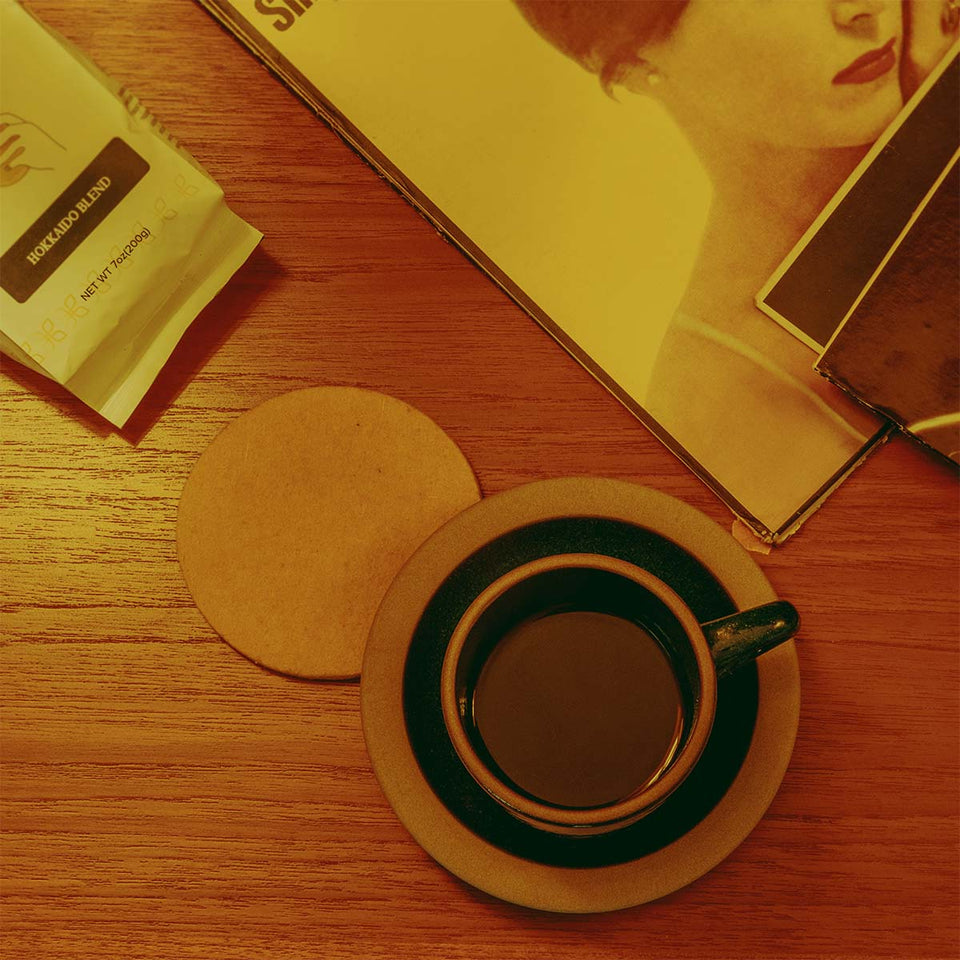
The light-roast argument. Plenty of specialty baristas will tell you to use a light, fruity roast — something Ethiopian, say — because its brightness lifts the matcha instead of fighting it. It's a fair position. If that's your style, our Asa Tsuyu Blend is our lightest roast, pulls a lovely espresso, and plays exactly that role.
![Asa Tsuyu Blend [Light Blend] Coffee (Colombia, Brazil, Ethiopia)](https://cdn.shopify.com/s/files/1/0530/5145/7703/files/web-ready_Asa_Tsuyu_Blend_life-style_600x600.jpg?v=1754689231)
My argument. I go the other way, and I do it on purpose.
The problem with delicate coffee in this drink is that milk and matcha are loud. A subtle, tea-like light roast can simply vanish under them, and then you've paid for a shot you can't taste.
Charcoal-roasted Sumiyaki coffee, on the other hand, holds its ground. Our Hokkaido Blend is rich, low on acidity, and the charcoal leaves a smoky note you can still pick out through the milk. Green stays green, coffee stays coffee, and neither one gets buried.
That's my version of the drink. Not the only right one — the loudest one.
On brewing method. Espresso is the classic, and if you have a machine, pull a single shot and you're done. No machine? You have options:
- Strong pour-over — what I use in the video. A small, concentrated 2 oz (60 ml) brew stands in for a shot.
- Moka pot — the stovetop workhorse. Its strong, syrupy output is a natural fit here.
- Cold brew concentrate — smooth and already cold, which makes layering easy. Use about 2 oz (60 ml) of concentrate, not diluted cold brew.
- Instant, in a pinch — dissolve it strong in very little water. I won't pretend it's equal, but a busy Tuesday is a busy Tuesday.
Whatever you brew, keep it small and strong. This drink wants a concentrated 1–2 oz (30–60 ml) of coffee, not a full cup — a full cup drowns the matcha instead of streaking through it.
Choosing your matcha
Onto the green half. Really it comes down to three things: quality, freshness, and owning a sifter.
On grade. You'll see matcha sold as "ceremonial" and "culinary." Ceremonial-grade is made from younger, shaded leaves and tastes smoother and a little sweet; culinary-grade is bolder and more bitter, built to punch through batter and frosting.
For a dirty matcha, I use our premium ceremonial Matcha from our family brand, Japanese Green Tea Co. The milk and coffee already bring plenty of force, so a smooth matcha keeps the green side pleasant instead of harsh.

Culinary matcha still works — the maple syrup exists partly to balance its extra bite. But if the matcha is the reason you're making this drink, spend on the matcha.
On color and freshness. Good matcha is a bright, spring green. If your powder looks dull, army-green, or yellowish, it's either low quality or past its prime, and it'll taste flat and bitter under coffee. Keep matcha sealed, away from light, and use it within a couple of months of opening — it fades faster than people expect.
On sifting. Don't skip this one. Matcha powder is ground so fine that the bits basically stick to each other, so it clumps. Give it thirty seconds through a small sieve and you go from gritty to smooth. Lumpy matcha is never great, and in a layered drink you'll spot every little lump.
On water temperature. I said it up in the recipe, but it's worth saying twice since this is where most people slip up: 70–80 °C (158–176 °F) gets you an everyday smooth cup, and 85–90 °C (185–194 °F) if you want the matcha louder. Don't use boiling water, it scorches the leaf.
The tools: what you need and what you don't
Let me save you some money before I spend some for you: you can make a dirty matcha with a fork, a jam jar, and stubbornness.
But a few tools make it better, so here's the honest shopping list, cheapest first.
A small fine-mesh sieve. A few dollars, and the single biggest upgrade on this list. Sifted matcha whisks smooth; unsifted matcha fights you. Any tea strainer or small flour sieve works.
Something to whisk with. Three real options here.
The traditional answer is a chasen (茶筅), the bamboo matcha whisk. Its dozens of fine tines break up the powder and raise a soft foam that no kitchen whisk matches. If you're going to drink matcha regularly, get one — I wrote a full guide to choosing and caring for a chasen, and both the bamboo and electric versions live in our teaware collection.

The modern shortcut is a handheld electric milk frother — around ten dollars. The foam comes out a touch bubblier than a chasen's, but for a drink that's about to meet milk, ice, and coffee, it does the job well.
The zero-dollar answer is a jar with a tight lid. Matcha, water, shake hard for 15 seconds. Cold-shaken matcha is a legitimate method, not a hack.
A small bowl. Any cereal bowl works. A proper chawan (茶碗) tea bowl is a pleasure to whisk in, but it's a want, not a need.
A kitchen scale, maybe. A scale that reads to 0.1 g makes your drink repeatable — 2 g of matcha today tastes like 2 g tomorrow. A teaspoon gets you close enough if you'd rather not measure. I own the scale. I still use the teaspoon half the time.
The coffee side. A simple cone dripper and paper filters — that's what the video uses, and a basic plastic one costs less than lunch. A moka pot works if you own one. An espresso machine is lovely and completely unnecessary for this drink. Please don't buy one for a dirty matcha.
The splurge, if you're curious. The Cuzen Matcha Maker ($299) grinds whole tencha leaves into matcha on demand with a ceramic stone mill — it turns slowly, so no heat damage, and the powder lands in your bowl minutes-fresh instead of months-old. We carry it as an authorized retailer, and it's the closest a kitchen counter gets to a tea ceremony's stone mill. Not required. Very hard to give back once you've tasted the difference. (Picture below: Cuzen Matcha)

Make it yours: variations
The best part of making this at home is that you're in charge of every dial.
Need to really wake your brain up? Go for a double — double the coffee, or double the matcha, whichever you want out front.
Taking it easy on the weekend? A single shot or a gentle pour-over keeps it light.
After that, it's all yours: more matcha or less, more bitter or less, maple syrup or none, whatever milk is in the fridge.
There's no wrong version — it's your taste.
Once you've got the base drink down, here are the directions worth exploring.
Hot dirty matcha. Skip the ice, warm the milk, same build order. The layers mostly disappear in a hot version, so feel free to just stir it together. On a cold morning I don't miss the gradient at all.
The dirty hojicha. Swap the matcha for 1 tsp (about 2 g) of Hojicha Powder, whisked the same way. Hojicha is roasted green tea, so the drink turns caramel-brown and tastes like toast and smoke meeting coffee. It also carries much less caffeine than matcha, which makes this the version I'll actually drink in the afternoon. We have a full hojicha oat milk latte recipe if you want to master the base first.

Strawberry dirty matcha. A spoon of strawberry puree or good strawberry jam in the bottom of the glass before the matcha goes in. Pink, then green, then the coffee streak — three layers, and yes, it's as photogenic as it sounds.
Vanilla or cinnamon. Add a drop of vanilla to the milk, or whisk a pinch of cinnamon into the matcha. Tiny changes, but they make the whole thing feel cozier.
Sweetener swaps. Maple is my default because it bridges the roast and the grass. Honey works, brown sugar leans cozy, and plain simple syrup keeps things neutral. My tea-side team wrote up ten ways to sweeten matcha if you want the full tour.
Milk moves. Oat is the house pick — creamy, naturally sweet, and it doesn't fight the matcha. Whole dairy milk makes the richest version. Coconut milk pushes it tropical. Almond runs thin here; I'd skip it. More on why in our piece on oat milk and Japanese tea.
Blended. Everything in a blender with the ice. You lose the layers and gain a green-and-tan frappe. Summer approves.
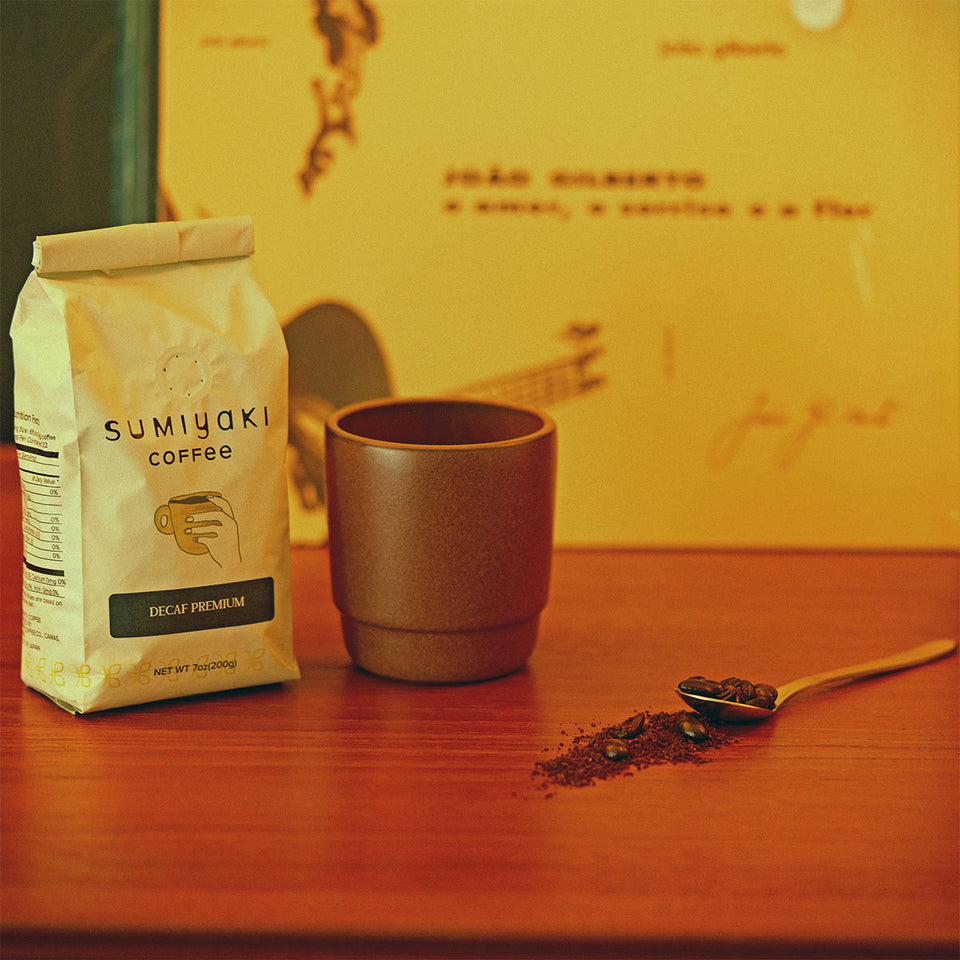
Decaf dirty matcha. Not a joke — if you love the flavor but not the buzz, our Decaf Premium Blend keeps the Sumiyaki roast character with 93–98% of the caffeine removed. Pair it with a light hand of matcha and you have an evening-safe version.
Protein dirty matcha. The gym crowd blends a scoop of unflavored or vanilla protein into the milk. It works. I have no strong feelings about it, which for me counts as an endorsement.
Troubleshooting: when your dirty matcha goes wrong
Every question below has landed in my inbox at least once. Here's the repair manual.
"It's bitter and harsh." Four suspects, in order of likelihood. Your matcha water was too hot — recheck the temperatures in the recipe. You used too much powder — 1 tsp (about 2 g) is plenty against this much milk. The matcha itself is stale or low-grade — check the color. Or the coffee over-extracted, which happens when the grind is too fine or the brew sat too long. Fix one at a time and re-taste.
"It's clumpy even though I sifted." Then the powder is damp, not lumpy. This usually means a tin that went straight from the fridge to the counter — cold powder meets warm air, condensation forms, clumps are born. Let a chilled tin come to room temperature before opening it (more on storage below). Also check your whisking: a fast zigzag, like drawing the letter W, breaks clumps far better than stirring in circles. Blooming the powder in a spoonful of water first helps too.
"I can't taste the coffee at all." Your brew is too gentle or too big. This drink wants a small, concentrated 1–2 oz (30–60 ml), not a mug's worth of regular-strength coffee. If the strength is right and it still vanishes, the roast is too delicate for milk — the choosing-your-coffee section above is your friend.
"It tastes watery." Warm coffee hit the ice and melted half of it. The 20-minute chill in the recipe exists exactly for this — don't skip it. Big ice cubes melt slower than pebble ice, and a pre-chilled glass buys you a few more minutes.
"My milk looks split or grainy." Some plant milks separate when they meet hot or acidic liquid, and coffee is both. Cooling the coffee first solves most of it. If it keeps happening, switch to a barista-style oat milk — they're formulated to hold together.
"My layers collapsed into brown soup." Covered in full up in Getting the layers right — the short version is sweeter and colder on the bottom, slow pour on top.
"It just tastes... flat." Nothing is broken; something is old. Matcha past its prime goes olive-drab and dull, and coffee more than a month or two past roast loses its voice. This drink has only four ingredients. Freshness is the recipe.
Storing your matcha and coffee
A dirty matcha has four ingredients, and two of them die young. Here's how to keep them alive.
Matcha's five enemies: oxygen, light, heat, humidity, and strong smells. Beat all five with one habit — an airtight, opaque container in a cool spot, nowhere near the spice rack. Matcha is the whole leaf, ground fine, so every bit of exposure lands directly in your cup.
Once opened, plan to finish a tin within about 60 days. The color tells you the truth: bright spring green means alive, olive means tired.
The fridge is fine for a sealed tin, with one rule attached — let it come fully back to room temperature before you open it. Open it cold and condensation moisture gets into the powder, which is where those stubborn clumps come from. I keep my full storage method in a separate guide, the best way to store your matcha, if you want the long version.
Coffee is simpler. Buy whole beans, keep them in an airtight container away from light, at room temperature, and grind right before you brew. Skip the fridge — beans soak up moisture and whatever your leftovers smell like. Freshness window: the first few weeks after the roast date are the good ones.
None of this is fussy for fussiness's sake. At what matcha costs right now, a stale tin is money in the trash — and why it costs that much is the next part of the story.
The matcha shortage moment
If your matcha got more expensive lately, or your favorite brand keeps selling out, you're not imagining it. The dirty matcha boom is happening in the middle of a genuine matcha squeeze.
The demand side went vertical. Japan's agriculture ministry numbers show green tea exports jumped about 42 percent by volume in fiscal 2025, with powdered tea making up the bulk of it — and social media is the engine. Every layered green drink that goes viral sends a few thousand more people to buy a tin.
The supply side can't sprint. Matcha starts as tencha, a shaded leaf that makes up only around 6 percent of Japan's tea production. New tea fields take four to five years before their first proper harvest, and Japan has far fewer tea farmers than it did twenty years ago.

You could see the squeeze in the numbers: at the spring 2025 auctions in Kyoto, tencha prices averaged roughly 1.7 times the previous year. Some of Kyoto's most famous tea houses put purchase limits on matcha in late 2024 because tourists were clearing the shelves.
What does that mean for your dirty matcha?
Three things. Expect prices to stay firm for a while. Buy from sellers who can actually tell you where the leaf comes from — vague "Japanese-style" matcha of unclear origin is exactly what floods in during a shortage. And store what you buy well, sealed and dark, so none of it goes stale on your counter.
Our matcha comes from our trusted farms we have been working for decades, which is the one supply chain I can personally vouch for. That's not a boast; in a shortage, it's just the reason we can keep the tin in stock.
If you are looking for a wholesale matcha, contact Gwen, our Wholesale Concierge. She handles both tea and coffee.
Ordering one at a cafe
Sometimes you want it made for you. Here's how to get one anywhere, even where it's not on the menu.
The magic sentence is: "an iced matcha latte with a shot of espresso."
That's it. Every cafe with matcha and an espresso machine can build a dirty matcha, whether or not the board says so. At Starbucks in the US, that same custom order works — the Asia menu's Matcha & Espresso Fusion never officially crossed the ocean, but its parts are all behind the counter.
Two refinements if you care about the look: ask for the shot on top (some baristas will pour it in first, which tastes the same but photographs like mud), and ask for light ice if you want more drink in the cup.
Now, the math I can't resist doing.
A cafe dirty matcha runs $7–9 in most American cities right now. Made at home with good ingredients — real ceremonial matcha, freshly ground Sumiyaki coffee, oat milk — one glass costs roughly $1.50–2.50.
Drink three a week and home-brewing pays for the bag of coffee and the tin of matcha inside a month. I sell the ingredients, so of course I'd say that. The arithmetic says it too.
Download Printable Recipe PDF Now

Quick reference
| Drink | Dirty Matcha (Iced Dirty Matcha Latte) |
| What it is | Matcha latte + espresso or strong coffee poured on top |
| Other names | Matcha espresso fusion, camo latte, swamp latte |
| Makes | 1 serving (~200 kcal) |
| Time | 15 min prep + 20 min chill |
| Caffeine | ~100–150 mg — two sources, coffee + matcha |
| Best time to drink | Morning to midday (not late afternoon; not on an empty stomach) |
| Matcha water | 70–80 °C (158–176 °F); up to 85–90 °C (185–194 °F) for stronger |
| Layering rule | Sweet + cold on the bottom, coffee poured slowly on top |
| Coffee | Hokkaido Blend (Sumiyaki) · light option: Asa Tsuyu Blend |
| Matcha | Premium ceremonial Matcha |
| Afternoon swap | Dirty hojicha with Hojicha Powder (lower caffeine) |
Keep reading: How to Brew Tasty Sumiyaki Coffee · What Makes Sumiyaki Charcoal Roasting Special · Can I Mix Coffee With Tea? · Japanese Coffee Jelly (with Video)
Download Printable Recipe PDF Now
Related products
![Asa Tsuyu Blend [Light Blend] Coffee (Colombia, Brazil, Ethiopia)](http://japanesecoffeeco.com/cdn/shop/files/web-ready_Asa_Tsuyu_Blend_life-style.jpg?v=1754689231&width=960)


Get Free Bonus Books

Sign up for free to the Coffee Club to get advice and exclusive articles about how to choose Japanese Coffee, and tips, tricks, and recipes for enjoying Japanese coffee.
About the author

Kei Nishida
Author, CEO Dream of Japan
Certifications: PMP, BS in Computer Science
Education: Western Washington University