Table of contents
I saw this one time and wanted to try it myself. Coffee lovers will scold at me. (^^)
Do you want to wow your guests?
Here is an idea.
It's called espresso bomb and we added some Japanese twist to it. Please check out the video first.
How to make an espresso bomb
Makes 1 · about 100 kcal · 10 min
videoid="-DIZwOH0Nys", cover="https://cdn.shopify.com/s/files/1/0530/5145/7703/files/how-to-make-espresso-bomb_51d9be4c-9596-4f9e-b5a4-d1a6e47eaf7c.jpg?v=1789317431"
Download Printable Recipe PDF Now

I'll be honest about the order of operations here: the fizz is the point, and everything else is a bonus. So make it once for the show, then make it again for the taste.
Ingredients
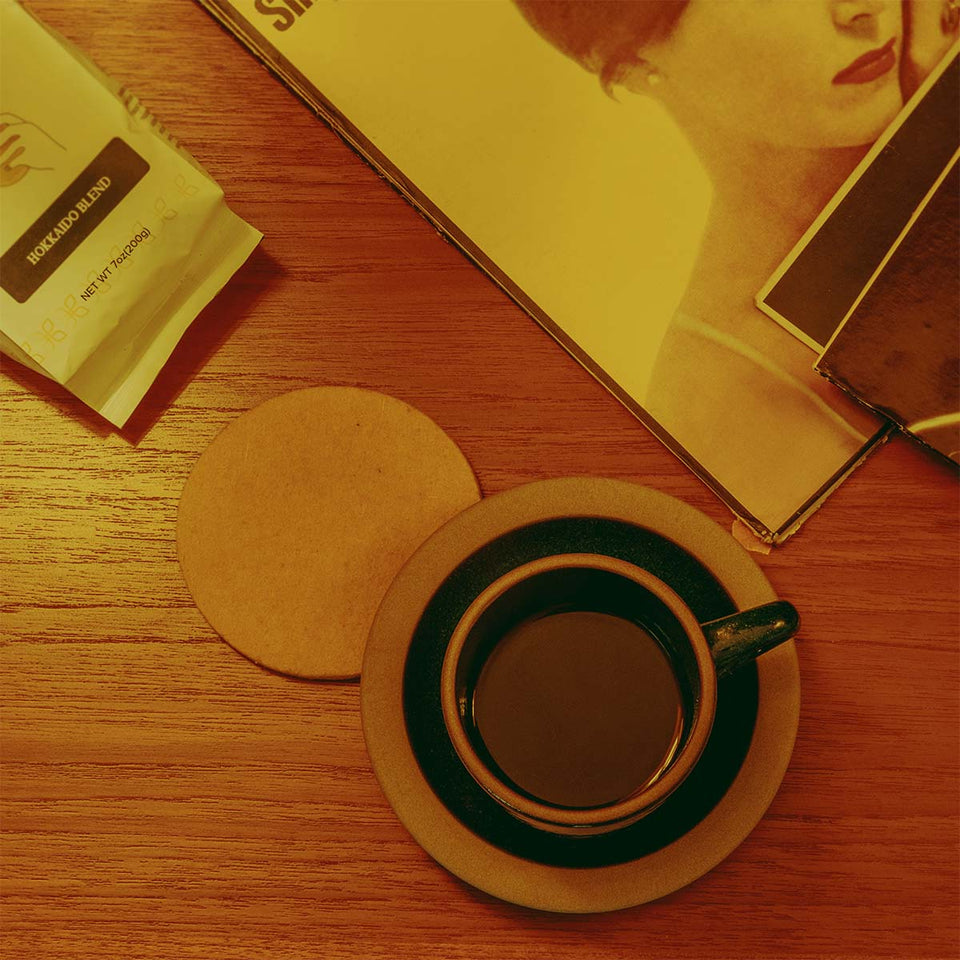
- 2 espresso shots (about 2 oz / 60 ml) of Hokkaido Blend, finely ground — our Sumiyaki charcoal-roasted coffee
- 8 oz (240 ml) yuzu tonic water, cold
- Lemon slices
- Flaky sea salt
Steps
- Grind the Sumiyaki fine and pull 2 espresso shots straight into a shot glass.
- While it brews, tip some flaky sea salt onto a small plate.
- Rub a lemon slice around the outside bottom of the shot glass to wet it.
- Press that wet bottom into the salt.
- Pour the cold yuzu tonic into a tall glass, then drop the shot glass in right away. It should go fully under.
- Drink it now, while it's still going.
Download Printable Recipe PDF Now
The salt isn't in the coffee. It's on the outside of the glass, which is the whole trick — I'll explain why in a minute.
Don't let it sit. The fizz is loudest in the first ten seconds, and the drink is best in the first two minutes.
That's the drink.
Now, if you want to know what you just made — where it came from, why the bubbles do that, and how to find the version you actually like — keep going.

What is an espresso bomb?
An espresso bomb is espresso dropped into a glass of cold tonic water, shot glass and all. One shot or two, depending on who's making it. We made it with two shots.
The glass goes under. The tonic foams up over it. You drink the whole thing while it's still fizzing.
That's really it. There's no milk, no syrup, no whisking, nothing to balance: coffee, bubbles, citrus, a little salt on the rim of the shot glass.
It's an older drink called an espresso tonic, which people in Scandinavia have been drinking since 2007.
Espresso poured gently over tonic and ice, layered and calm: same two ingredients, completely different mood. I'll get to how one became the other further down.
What surprises people is the taste. Tonic water is bitter on its own, from the quinine, and coffee is bitter in a different way, and you'd think stacking two bitters would be miserable.
That's what I thought before I tried, but..
It isn't.
The tonic's sweetness and the carbonation lift the coffee instead of flattening it, and the citrus cuts across both.
It tastes closer to a cola than to iced coffee, but it is a fun drink I thought.
Why it fizzes like that
The salt is not for flavor. Not really.
Tonic water is packed with dissolved carbon dioxide, and that gas is looking for somewhere to escape.
It can't just leave from a smooth surface — it needs a rough spot to gather on. Scientists call those nucleation sites. You've seen it with the bubbles that cling to the inside of a soda glass, always in the same places.
Salt crystals are covered in rough edges. Drop a salted glass into tonic, and you've handed the CO2 thousands of exits all at once.

That's the whoosh—same principle as dropping mints into a cola, just less destructive to your kitchen.
Three other things pile on:
The drop itself agitates the tonic, and agitation shakes gas out of solution.
The espresso is hot, and warm liquid holds onto dissolved gas much worse than cold liquid does. So the moment the hot shot meets the cold tonic, more CO2 comes out.
That cuts both ways, though.
A shot straight off the machine can foam so hard that it boils over and leaves you with a flat drink thirty seconds later.
Several recipes I've read suggest letting the espresso sit for a minute before the drop, and I think they're right. You want a fast fizz, not a violent one.
And the espresso brings crema, which is already a foam. It gives the bubbles something to build on, which is why the head on top comes out tan and thick instead of white and thin.
Put those together, and you get about ten good seconds.
You can skip the salt if you want. The drink still works; it just doesn't do anything.
I've made it both ways, and I'll admit the salted one tastes slightly better too. A trace of salt on the tongue knocks the hard edge off bitterness, which is why people salt grapefruit and why some baristas put a pinch in cold brew.
Small effect. Real one.
How does it taste?
Four things are happening at once, and they arrive in a specific order.
First is the fizz, which reads as sweet before you've registered any flavor. Carbonation does that.
Then the coffee arrives, but thinner than you're used to, because 2 oz (60 ml) of espresso spread across 8 oz (240 ml) of tonic is a lot of dilution.
What survives is the roast character, not the body.
Then the quinine, which is the bitter backbone of tonic water. This is the part that decides whether you love the drink or put it down.
Then the citrus and the salt, at the very end, cleaning up after everything else.
The whole thing lands somewhere between an iced Americano and a cola. Not creamy, not smooth, not comforting. It's a drink for a hot afternoon when you want to feel awake and slightly startled.
If you drink your coffee with milk and sugar, I want to be straight with you: this may not be for you, and there's no shame in that. It's a bitter drink with bubbles.
If you already drink black coffee and you like a gin and tonic, you'll probably finish this in about ninety seconds.

Choosing your coffee
Here's where the specialty coffee world and I disagree, and I'll give both sides properly.
The light-roast argument. Most Scandinavian and Australian cafes build their espresso tonic on a bright, fruity light roast — Ethiopian and Kenyan beans especially.
The logic is sound. Tonic is floral and citrusy already, so a coffee with berry and stone-fruit notes plays into it and the whole drink reads like fruit soda.
If you want to try that version, our Asa Tsuyu Blend is our lightest roast and pulls a clean, bright shot.
My argument. I go the other way, for the same reason I go the other way on a dirty matcha.
Tonic is loud. It's carbonated, it's bitter, it's citrusy, and it's four times the volume of the coffee. A delicate shot can disappear into it, and then you've spent good beans on something you can't taste.
Our Hokkaido Blend is the Sumiyaki charcoal-roasted one, sitting at medium-dark — City to Full City, in the usual roast scale. Charcoal roasting leaves a less acidic note that carries straight through the bubbles.

It's also low on acidity, which matters more here than people expect: the tonic and lemon are already bringing plenty of sharpness, and a bright acidic coffee on top of that can tip into sour.
So the low-acid shot gives the drink a floor to stand on. Green apples and bergamot don't need any more friends in this glass.
That's my version. Not the correct one — the one I make.
On the shot itself. Pull it fine and pull it short. A ristretto-style shot is denser and holds up better against dilution than a long one.
If you don't have a machine, a moka pot is the best stand-in here, and a very concentrated 2 oz (60 ml) pour-over works in a pinch — you lose the crema, which means a smaller foam head, but the flavor's fine.
Choosing your tonic and your citrus
I can probably say the tonic matters more than the coffee. I know, I didn't expect that either.
Go dry. A dry or light tonic gives you the quinine and the bubbles with far less sugar, and the drink comes out cleaner. Standard tonic water is sweet, sometimes very sweet, and against espresso that sweetness turns syrupy fast. This is the single change that improves it most.
Cold, and freshly opened. Bubbles are the entire event. Tonic from a bottle that's been open since Tuesday will give you a sad little fizzle and a flat drink. Small bottles or cans over big bottles, always.
Bubble size. Some tonics are aggressively carbonated with fine bubbles; others are softer. The aggressive ones make a better bomb. If your foam head is disappointing, blame the tonic before you blame your technique.
On the citrus. We use yuzu tonic in the video, but the citrus is genuinely a dial you can turn.
- Yuzu (柚子) — floral and sharp, more perfume than juice. My favorite, and the reason is basically that I'm Japanese and it tastes like home.
- Lemon — the safe one, and what's in the recipe as a wedge. Clean and bright, works with any roast.
- Lime — louder and more bitter, leans the whole drink toward a cocktail.
- Grapefruit — the best partner for a darker roast, because grapefruit's own bitterness is closer to coffee's than lemon's is.
- Orange — softer and sweeter. If you find the drink too harsh, start here.
Plain tonic plus a squeeze of whatever's in your fruit bowl gets you 90 percent of the way. Flavored tonic just saves you a step.
Find your own blend
I'm not going to give you the correct ratio, because I don't think there is one, and because the fun of this drink is that it takes about four minutes to try a different version.
Here are the dials.
Coffee to tonic. Mine is 2 shots to 8 oz (240 ml), which is roughly 1:4 and lands firmly on the coffee side. Go to 1 shot in 8 oz (240 ml), and it becomes a soda with a coffee accent — genuinely nice on a very hot day. Go the other way, 2 shots in 5 oz (150 ml), and it's an aggressive little drink that mostly tastes of espresso.
Ice, or no ice. I usually skip it. The tonic is already cold, and ice dilutes a drink that's dilute already. But a couple of big cubes keep it cold longer if you're a slow drinker, and big cubes melt slower than small ones.
Glass shape. Tall and narrow gives you a better foam column and a more dramatic drop. Wide and short lets the head spread out and settle faster. Whichever you use, leave more headroom than you think you need, because the first version most people make goes over the side.

Salt, or no salt. More salt means more fizz and a rounder taste. No salt means a calmer drink that's easier to sip slowly.
Shot glass in or out. Leave it in, and the drink keeps releasing bubbles as you go. Fish it out after the foam settles, and you get a cleaner glass to drink from. Either is fine. I usually leave it.
Sweet or not. The original Scandinavian version had a little syrup in it. If the quinine is too much for you, half a teaspoon of simple syrup or maple in the tonic softens the whole thing without making it a dessert.
If you've been to Japanese Kissaten, you know Japanese like to put gum syrup in coffee, do that to make it taste like the one you find in Japan.
So who invented it?
Nobody has a clean claim on the espresso bomb, but the drink underneath it has a paper trail, and it's a good story.
It starts in Oslo, not Sweden.
The earliest record is from 2007, when a barista working alongside Anne Lunell and Charles Nystrand mixed leftover tonic with syrup and a shot of espresso.
Depending on who tells it, this was either the day after a staff party or one hot afternoon while closing up.
Lunell has said they used to make strange coffee drinks after work, and that this was one of the few that actually tasted good.
A few months later, Lunell and Nystrand opened Koppi Roasters in Helsingborg, Sweden, and put a refined version on the menu as Kaffe & Tonic.
That's the drink's real birthday. Norway mixed it, Sweden named it and served it.
It stayed on the Koppi menu for about ten years, until the cafe closed in December 2017.

By then it had spread across Scandinavia, then to North America through international barista competitions, and it was on menus in San Francisco, New York and New Orleans by around 2014. It reached Japan by about 2015.
The roastery is still going, for what it's worth.
Now, the bomb.
The dramatic version — salted shot glass dropped into tonic, glass and all — is a social media invention from the mid-2020s, and it blew up over 2025.
As far as I can tell, no one has a documented claim to it.
The creator most associated with the trend is Andrew of Pull & Pour, but from what I've seen, he's careful about this himself — he presented it as the viral espresso tonic bomb, not as something he came up with.
Other creators like John Rondi posted their own versions around the same stretch.
Which is normal. Most viral drinks don't have an inventor; they have an accelerant.
Here's the part I find funny.
If you fly to Stockholm right now and ask for an espresso bomb, you'll get a confused look. Scandinavians drink the original — espresso poured slowly over cold tonic and big ice cubes, layered, no salt, no drop, nothing exploding.
They call it espresso tonic or kaffe tonic, and it's been a normal summer drink there for nearly twenty years.
So the honest answer is that the espresso bomb is a Scandinavian drink that went abroad and got louder.
I'm not complaining.
I made a version with charcoal-roasted coffee and yuzu tonic, which is hardly the purist path either.
Coffee and citrus around the world
If you're reading this thinking "coffee and lemon, really?", I want to show you how old and how widespread this pairing actually is.
The bomb is new. The idea isn't.
Italy — the caffè Romano. Espresso served with a slice of lemon, either on the side or rubbed around the rim of the cup.
The version I've read most often is that the lemon was there to cover the bitterness of rough beans or an over-pulled shot, which sounds plausible and also sounds like the kind of tidy explanation that gets repeated because it's tidy.
Either way it's been served in Italian bars for a long time.
Portugal — mazagran. Strong coffee or espresso over ice with lemon juice, sometimes mint, sometimes topped with water or soda.
It came from Algeria originally, but Portugal took it in completely, and it's one of the older iced coffee-and-citrus drinks anywhere.
Scandinavia — the espresso tonic, covered above. A permanent summer fixture rather than a trend.
Australia. Melbourne cafes run espresso tonics and cold brew spritzes every summer. Australians lean hard toward light-roast specialty coffee, so their versions are the fruity ones — floral espresso against a good tonic with an orange or ruby grapefruit twist.
The United States. Coffee tonics and espresso spritzes show up on specialty menus every summer, but the mainstream version is cold brew lemonade, which even the big chains have run seasonally.
Half of America has had coffee with citrus in it without ever thinking about it that way.
Mexico. Espresso with sparkling water and lime, or with a grapefruit soda, is a normal afternoon drink in city cafes.
Six countries, one idea. Acid and bitterness get along better than people expect, which is also why we put lemon on fish and vinegar on fries.
BTW, If you are interested in different types of coffee, check out this article, which I started to create as a hobby and keep updating as I find new ones. Everything You Need to Know about Different Types of Coffee - List of every type of coffee in the universe (maybe)

Where the espresso bomb is hot right now
The bomb didn't spread evenly. It landed hardest in hot places that were already drinking coffee with citrus.
India and Indonesia. This is where I see the most of it — home-cafe creators and local baristas posting short videos of the drop, usually tagged as the viral espresso bomb. In places where summer is genuinely punishing, the salt-lime-tonic combination gets framed as the best hot-weather drink going, and more than a few people swear by it the morning after a long night.
I'd take the hangover claim with the same skepticism I'd apply to any hangover claim, but the appeal in 40 °C (104 °F) heat is obvious enough.
Thailand and Vietnam. These two barely had to adjust. Coffee with citrus is already settled there — an espresso with orange juice is a normal cafe order, not an experiment.
So adding bubbles and a pinch of salt didn't read as strange, and the bomb has been sliding onto custom menus without much fuss.
Worth knowing if you travel: in Thailand, "dirty coffee" means something else entirely — a hot espresso poured over very cold milk.
Different drink, same adjective. Cafe menus are full of these traps.
Korea. Korea has spent the last few years in a full espresso bar boom, with small standing-counter shops opening everywhere and people drinking tiny cups fast.
From what I've seen, the espresso bomb has been picked up there partly as a visual joke — it looks like a coffee version of the soju bomb, which Koreans have been dropping shot glasses into beer glasses for decades: same gesture, no alcohol.
Korean cafe trends also move faster than almost anywhere on earth, so by the time you read this it may already have been replaced by something else.
That's not a criticism. It's just the metabolism of that scene.
The Japan side
Now the part I actually want to talk about.
Espresso tonic is not new to Japan. It arrived around 2015, and you can find it in specialty cafes in Tokyo and Osaka if you look for it.
But it never became a thing. Ten years in, it's still a specialty-shop item, not a summer default.
Ask an ordinary person in Japan what they drink in August, and they'll say iced coffee, mugicha, or something from a vending machine. Not coffee with bubbles in it.
I've thought about why, and I have a theory rather than an answer.
Japan takes iced coffee extremely seriously and solved the problem a long time ago.
Flash-brewed iced coffee — brewing hot directly over ice — came out of kissaten (喫茶店) in the 1960s, and it produces a cold coffee that tastes like coffee instead of like watered-down coffee.
When your iced coffee is already that good, the pressure to invent a refreshing alternative just isn't there.
I wrote about that method in my Japanese iced coffee article.
 There's also a conservatism about coffee itself in Japan that I don't think outsiders always see.
The kissaten tradition treats a cup with tea-ceremony seriousness — one careful pour at a time, nothing added, nothing hiding the roast.
Charcoal roasting, Sumiyaki (炭焼き), came out of those same rooms in the 1950s precisely because roasters were chasing a purer cup.
In that lineage, dropping a shot into fizzy quinine water is a bit of a provocation.
The full story is in my history of Sumiyaki coffee.
How much caffeine is really in one
Easy math this time, because only one ingredient has any.
Tonic water has zero caffeine. Lemon and salt have zero. Everything in the glass comes from the espresso.
Most of the versions online use one shot or two. Ours is two, which puts it at the higher end.
A single shot runs about 63 mg by USDA figures, so two shots put this drink somewhere around 125 mg. Call it 110 to 140 depending on your dose and grind.
That's more than a mug of drip coffee, which averages around 95 mg for 8 oz (240 ml). It's a double espresso, because that's exactly what it is.

| Drink | Typical caffeine |
|---|---|
| Tonic water alone | 0 mg |
| Single espresso shot (1 oz / 30 ml) | ~63 mg |
| Drip coffee (8 oz / 240 ml) | ~95 mg |
| This espresso bomb (2 shots) | ~110–140 mg |
| Espresso bomb, single shot | ~55–70 mg |
The FDA's general guidance for healthy adults is up to 400 mg a day.
One thing the fizz does hide, though: this drink goes down fast. A hot double espresso takes a few minutes to sip.
A cold carbonated one can be gone in under two, and then you've had a double espresso without the pacing that normally comes with it.
Nutrition specialists quoted on this trend have made the same point — the dose creeps up on people when double shots are involved, and caffeine's half-life runs somewhere around eight to ten hours.
Please be careful and conscious about the timing you take.
Make it yours: variations
Single shot. Half the caffeine, and the tonic comes forward. On a hot afternoon, this is arguably the better drink.
Cold brew bomb. Use 2 oz (60 ml) of cold brew concentrate instead of espresso. You lose the crema, so the foam head is thinner, and the temperature contrast disappears, which means less drama. But it's smoother and easier to drink, and you can make it without a machine.
Grapefruit version. Swap the lemon for a grapefruit wedge and use a grapefruit tonic. Grapefruit's bitterness sits closer to coffee's than lemon's does, and this is the version I'd hand to someone who found the lemon one too sharp.
Soda water instead of tonic. No quinine, no sweetness, just bubbles and coffee. Much more austere. You'll want a squeeze of citrus and possibly a little syrup, and what you get is essentially a carbonated Americano.
Orange espresso. Not a bomb at all, but worth knowing since it's the drink Thailand and Vietnam already had: espresso over orange juice and ice. No bubbles, same principle.
A little sweet. Half a teaspoon of simple syrup or maple in the tonic before the drop. This is closer to the original Kaffe & Tonic than the unsweetened version is.
Decaf. Our Decaf Premium Blend keeps the Sumiyaki roast character with 93–98% of the caffeine removed. The fizz doesn't know the difference, and this makes it an evening drink.
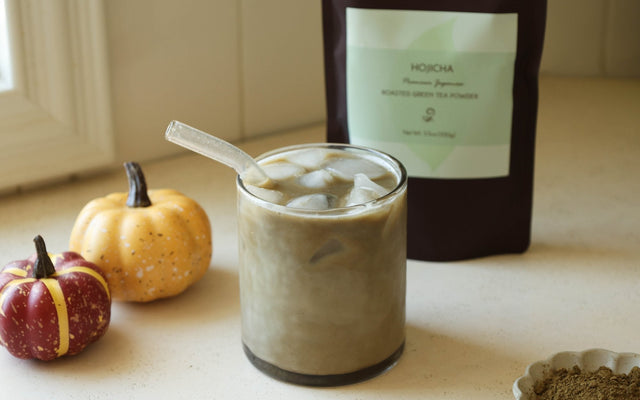
Hojicha tonic. Skip the coffee entirely — strong hojicha over tonic with lemon. Roasted tea and quinine work about as well as coffee and quinine, with a fraction of the caffeine. Our tea-side brand carries a Hojicha Powder if you want to try it.
And if you like the idea of coffee crossing over into something else entirely, the dirty matcha is the other half of that experiment.
Troubleshooting
"It overflowed everywhere." Too much tonic for the glass. The shot glass displaces its own volume, and the foam needs somewhere to go, so fill the tall glass no more than two-thirds.
Also drop the shot glass in; don't throw it. And let the espresso cool for a minute first — a shot straight off the machine is the most common cause of a boil-over.
"The shot glass floated." An underfilled shot glass traps air and floats. Fill it properly to the rim, and it'll sink. Thicker glass sinks more reliably than thin.
"Barely any fizz." Three suspects, in order: the tonic was flat or from an already-open bottle, there wasn't enough salt on the glass, or the tonic wasn't cold enough. Fresh small bottle, generous salt, straight from the fridge.
"It's too bitter." Tonic and espresso are both bitter, so this is the most common complaint and the easiest to fix.
Drop to one shot, switch to a sweeter tonic, or add a half-teaspoon of syrup. If it's still too much, the coffee is probably over-extracted — pull it shorter.
"It tastes flat and dull." Old coffee. Two ounces of espresso against eight ounces of tonic is a hard test for beans past their prime. Whole beans, ground right before you pull, within a few weeks of roast date.
"Too salty." You only need the salt on the outside bottom of the shot glass, not the rim you drink from and not in the coffee. Tap off the excess before dropping.
"It went watery." Ice. Either skip it or use large cubes, and use tonic straight from the fridge so the ice isn't doing the cooling.
"Oh no, I chipped my glass." Drop it into a sturdy tumbler, not something thin-walled or precious.
Tools: what you need and what you don't
Short list this time. This is a four-ingredient drink with one move.
A tall glass and a shot glass. The tall one should hold at least 12 oz (350 ml), so you have room for the foam, and it should be sturdy enough that you're not nervous dropping something into it.
The shot glass wants thick walls — thin ones float and chip.
A small plate. For the salt. That's the whole tool.
Flaky sea salt. Worth being slightly particular here. Flakes have more surface and rough edges than fine table salt, so they hold onto the glass better and set off more fizz. Any flaky finishing salt works.
Something to pull espresso. A machine is the obvious answer and gives you crema, which is where the thick tan head comes from.
A moka pot is the best alternative — strong, syrupy, close enough. A very concentrated pour-over works too, and the only real cost is the crema. If you want the full method, see my Sumiyaki brewing guide.
What you don't need. No whisk, no frother, no scale, no special glassware, no bar tools. If you were hoping this article would justify a purchase, I'm sorry.
Ordering one at a cafe
You will not find "espresso bomb" on many menus, and if you ask for one by name, you'll probably get a blank look. Ask for the parts instead.
The sentence is: "a double espresso and a glass of tonic water over ice, separate."
Then build it yourself at the table. Any cafe with an espresso machine and tonic in the fridge can do this, and most will find it more interesting than annoying.
If they have espresso tonic on the menu already, order that — it's the better-made drink, and someone who lists it has usually thought about which beans go in it.
Two notes if you care about the result.
Ask for the tonic cold and freshly opened rather than from a jug, and ask for the espresso in a separate small glass so you can pour or drop it yourself.
And the arithmetic I always end up doing.
A cafe espresso tonic runs about $6–7 in most American cities. At home it's a couple of shots of good coffee and a small bottle of tonic — call it $1.50.
I sell the coffee, so of course I'd point that out. The math still works.
Quick reference
| Coffee | 2 espresso shots, about 2 oz (60 ml) |
| Recommended beans | Hokkaido Blend, Sumiyaki charcoal-roasted, medium-dark |
| Grind | Fine, espresso |
| Tonic | 8 oz (240 ml), dry, cold, freshly opened |
| Citrus | Lemon wedge, or yuzu tonic |
| Salt | Flaky sea salt, outside bottom of the shot glass only |
| Glass | Tall, at least 12 oz (350 ml), filled two-thirds |
| Ratio | About 1:4 coffee to tonic |
| Caffeine | ~110–140 mg |
| Calories | About 100 |
| Time | 10 minutes |
| Drink within | 2 minutes |
Keep reading: Why Japanese iced coffee is so popular · The history of Sumiyaki coffee · What is special about Sumiyaki charcoal roasting · Kissaten: its birth up to the present day
Download Printable Recipe PDF Now
Related products
• Disclosure: I only recommend products I would use myself, and all opinions expressed here are my
own. This post may contain affiliate links that I may earn a small commission at no additional cost to you.
The commission also supports us in producing better content when you buy through our site links.
Thanks for your support.
- Kei and Team at Japanese Green Tea Co.


Get Free Bonus Books

Sign up for free to the Coffee Club to get advice and exclusive articles about how to choose Japanese Coffee, and tips, tricks, and recipes for enjoying Japanese coffee.
About the author

Kei Nishida
Author, CEO Dream of Japan
Certifications: PMP, BS in Computer Science
Education: Western Washington University