Table of contents
Every fall the pumpkin spice latte comes back, and every fall somebody says it's over.
This year the story is that younger Americans are trading it for matcha.
In Japan it's going the other way. Starbucks Japan put its pumpkin spice latte back on the menu on September 30, and over there it still feels like a slightly foreign, slightly fun autumn treat.
So we made one that meets in the middle. It's pumpkin spice and Japanese roasted tea in one glass, with two shots of our Sumiyaki coffee underneath.
But I know why most of you are here. So the video and the recipe come first. The story comes after.
How to Make a Pumpkin Spice Hojicha Latte
Makes 1 · about 100 kcal · 10 min, plus cooling the syrup
videoid="11TdvBAwnhM", cover="https://cdn.shopify.com/s/files/1/0530/5145/7703/files/pumpkin-spice-hojicha-latte-video-cover.jpg?v=1792846769"
Download Printable Recipe PDF Now

The syrup is the only part that takes any time. Make it once and you're set for several lattes.
Pumpkin Spice Hojicha Syrup
Ingredients
- ¼ cup (60 ml) pumpkin puree
- ¼ cup (60 ml) water
- ¼ cup (about 50 g / 1.8 oz) brown sugar
- 1 tsp (5 ml) Hojicha Powder
- 1 tsp (5 ml) ground cinnamon
Steps
- Put the pumpkin puree, water, brown sugar, hojicha powder and cinnamon in a small saucepan and whisk until smooth.
- Cook over low heat for 5 to 7 minutes, whisking often, until it starts to thicken.
- Take it off the heat once it lightly coats the back of a spoon.
- Pour it into a clean jar and let it cool completely before you cover it and put it in the fridge.

The Latte
Ingredients
- 1 tsp (5 ml) Hojicha Powder
- ¼ cup (60 ml) hot water, about 90 °C (194 °F)
- Ice
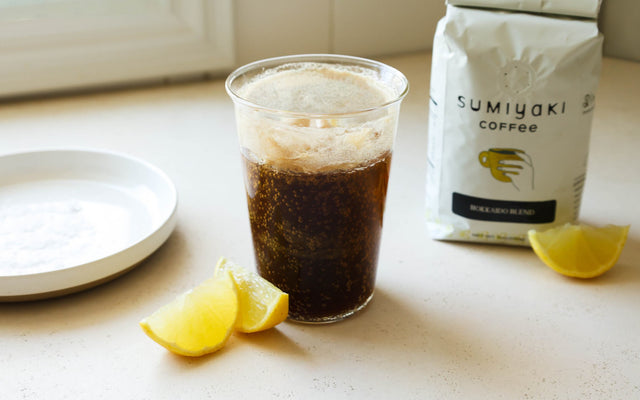
- 2 shots of espresso, about 2 oz (60 ml), made with Hokkaido Blend
- 2 tbsp (30 ml) pumpkin spice hojicha syrup
- ½ cup (120 ml) milk of your choice (we used oat milk)
Steps
- Sift the hojicha powder into a small bowl so it doesn't clump.
- Pour in the hot water and whisk until it's smooth and a little frothy. We used a bamboo chasen (茶筅) in the video, but a small milk frother does the job.
- Fill a tall glass with ice and pour the hojicha over it.
- Add the two shots of espresso.
- Add 1 to 2 tablespoons of the syrup. Two is where we landed.
- Top with the milk and stir well.
Download Printable Recipe PDF Now

Stir before the first sip. The syrup sinks, and without a stir the first mouthful is mostly milk.
That's the drink.
Now, if you want to know what you just made, keep going.

Pumpkin Spice in Japan
The pumpkin spice latte is an American invention. Starbucks started testing it in 2003 and took it to every U.S. store in 2004.
For more than ten years it didn't even have pumpkin in it. Real pumpkin went into the recipe in 2015.

Starbucks Pumpkin Spice K-Cups on a U.S. store shelf, 2022.
Japan got it later, and then lost it again.
From what I've read, Starbucks Japan first sold it in 2006, then dropped it for about fifteen years. It came back in 2021 and has been a fall item ever since.
This year it returned on September 30 (a day earlier for Rewards members), hot or iced, at 550 to 680 yen. That's about USD$3.50 to USD$4.30.
The part I find funny is the timing.
Over here, people keep calling pumpkin spice dead and switching to matcha. Over there, matcha is everywhere already, and pumpkin spice is the novelty with an overseas feel.
Each side wants what the other one grew up with. I think that's kind of great.
The Tokyo Roastery Version
Starbucks Reserve Roastery Tokyo in Nakameguro (中目黒) went further this year.

The coffee bar at Starbucks Reserve Roastery Tokyo.
Its fall menu, from September 4, has a Barrel-Aged Pumpkin Spice Latte made with Japanese-grown pumpkin powder and the roastery's whiskey-barrel-aged coffee.
It's topped with cinnamon, nutmeg and peel of iyokan (伊予柑), a tangerine-like citrus from Ehime (愛媛). It costs 1,400 yen and it's dine-in only.
On the same menu, the tea bar serves a drink made with Kaga Bo hojicha (加賀棒ほうじ茶), a roasted tea from Ishikawa (石川), with hojicha gelato melting into it.
So pumpkin spice and hojicha ended up on one menu in Tokyo. If the flagship roastery is doing that, I figure we're not crazy for putting them in one glass.
Starbucks Reserve Roastery Tokyo
2-19-23 Aobadai, Meguro-ku, Tokyo 153-0042
Kabocha, Japan's Pumpkin
The pumpkin Japanese home cooks reach for is kabocha (南瓜).
It's the squat, dark green one American stores sell as "kabocha squash," with dense, sweet flesh inside.
These days I even see it at Trader Joe's.

Inside a Trader Joe's in Bellevue, Washington.
The part that surprised me is that kabocha isn't native to Japan.
I honestly didn't know that until I sat down to write this, and my guess is a lot of people in Japan don't know it either.
The usual account is that Portuguese traders brought it over in the 16th century, and 1541 is the year you see most often.
The name is usually traced to Cambodia. The Portuguese are said to have called it something like "Cambodia abóbora," Cambodian squash, and Japanese shortened that to kabocha. Some people argue for a different Portuguese word, so I'd call it the best-known story rather than a settled fact.
And if you want something to say at the table, the pumpkin in your can probably isn't the round orange kind either.
Libby's, the puree we linked above, has been canning in Morton, Illinois, since 1929, using its own Dickinson variety grown on farms nearby. It has tan, buff-colored skin, closer to a butternut squash than to a jack-o'-lantern.

Illustration: a classic carving pumpkin (left) and a Dickinson pumpkin, the kind Libby's cans (right).
Hokkaido Grows About Half of Them
Most of Japan's pumpkins come from Hokkaido (北海道). NARO, Japan's national agricultural research organization, puts the island at more than half of the country's pumpkin harvest.
That's also where our coffee comes from.
Sapporo Coffee Kan (サッポロ珈琲館) roasts our Sumiyaki coffee over charcoal in Ebetsu (江別), right next to Sapporo. The bag you see in the video is our Hokkaido Blend.

Sapporo Coffee Kan's flagship store sits right in front of the Sapporo Clock Tower (札幌市時計台), the white building with the red roof.
So the coffee in this glass and most of Japan's pumpkins come from the same island. Funny coincidence. I'll take it.
Tōji, the Pumpkin Day
In Japan, pumpkin gets one more date after Halloween.
Tōji (冬至) is the winter solstice, around December 21 or 22. The custom is to eat kabocha on the shortest day of the year and soak in a hot bath with yuzu floating in it.
The idea, as it's usually told, is that it helps you stay well through the cold months. It's a custom, not medicine.
But it does mean pumpkin season in Japan doesn't stop at Thanksgiving. As far as I'm concerned, neither does this latte.
Why Hojicha Works Here
Hojicha (ほうじ茶) is Japanese green tea roasted until the leaves turn brown.
The roasting takes most of the grassy bite out and leaves a toasty, almost caramel flavor.
That's the same neighborhood brown sugar and cinnamon live in, which is why I think it works better here than matcha would. Matcha argues with pumpkin a little. Hojicha just goes along with it.
The usual story is that hojicha started in Kyoto (京都) in the 1920s, when a tea merchant roasted leftover leaves so they wouldn't go to waste. It's a story more than a documented fact, but it's a nice one.
We use our Hojicha Powder twice in this recipe, once in the syrup and once whisked with hot water for the latte. Powder dissolves straight into the drink, so you're getting the whole leaf, not just what steeps out of it.

If you want to go deeper, I wrote a full guide to hojicha on our tea site.
How Much Caffeine
Most of the caffeine here comes from the espresso.
A shot runs about 63 mg by USDA numbers, so two shots put you somewhere around 130 mg. The hojicha adds some on top, though roasted tea tends to be on the lighter side.
Want it gentler? Make it with one shot. Or skip the espresso and you have a plain pumpkin spice hojicha latte.
Why Sumiyaki Coffee
Sumiyaki (炭焼) means charcoal-roasted. Our partner Sapporo Coffee Kan roasts the beans over charcoal, and I wrote about the history of Sumiyaki coffee if you're curious how that started.
For this drink I'd pick the Hokkaido Blend.
It's the roastery's long-selling house blend, with a mild bitterness and almost no acidity. Low acidity matters when you pour a shot into milk and pumpkin. A bright, sour espresso clashes with the syrup.

If you're going to make this a fall habit, this is the coffee I'd start with.
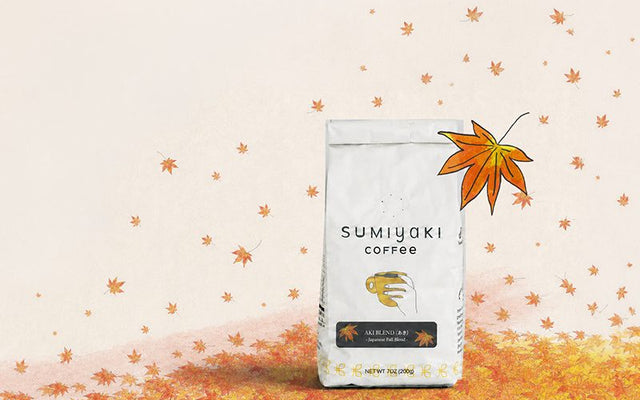
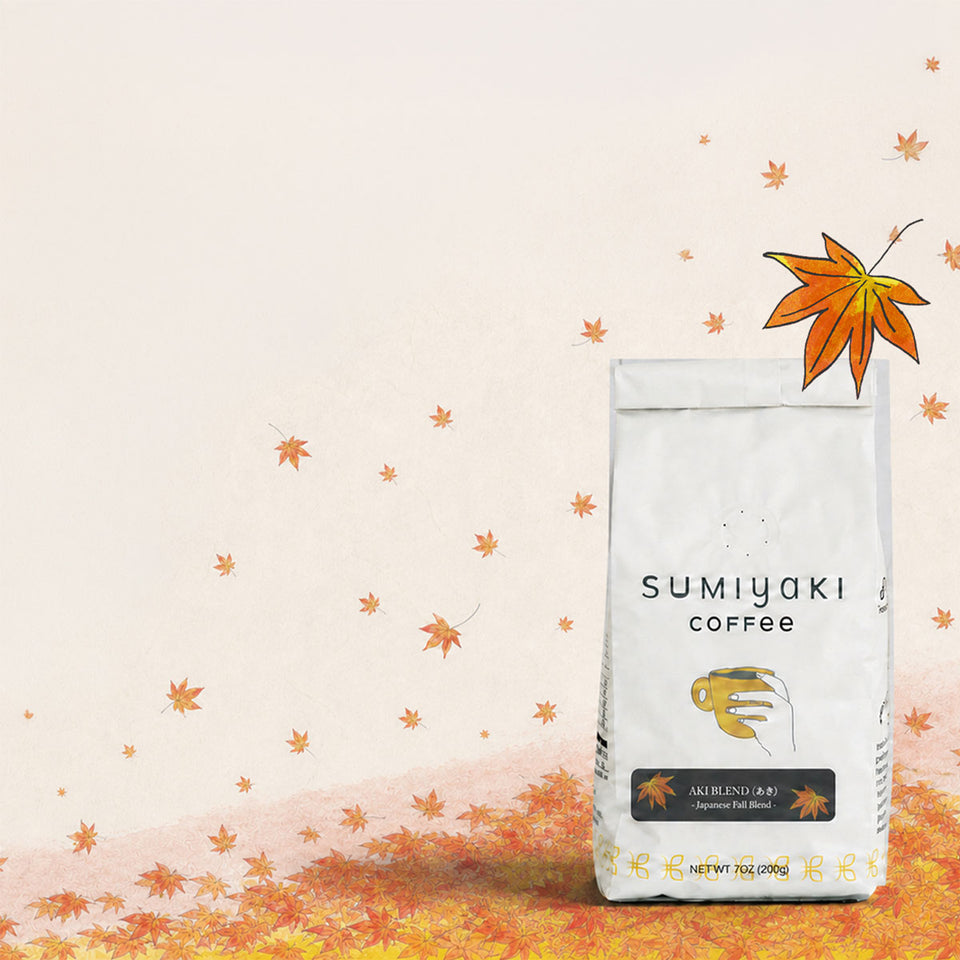
Our seasonal Aki Autumn Blend works too. It's a deep-roasted Mocha blend from the same roastery, with the sweetness coming through in the finish, and it's only around for the fall.
Variations
Hot. Skip the ice. Warm the milk until it steams, then stir everything together in a mug.
More spice. The syrup only uses cinnamon, which keeps the hojicha in front. Want the full pumpkin pie feel? Add a small pinch of nutmeg, ginger or cloves to the saucepan.
No coffee. Leave out the espresso and add a little more milk. It's a softer, tea-only version.
Less sweet. Start with 1 tablespoon of syrup and taste before adding more.
Dairy-free. We made it with oat milk. Picking one? Our tea site has a whole piece on oat milk and tea.
No pumpkin. There's our plain hojicha syrup, which goes into almost anything.
Storing the syrup. Keep it covered in the fridge and stir it before each use. Pumpkin puree doesn't keep as long as a plain sugar syrup, so I'd use it up within about a week.
Final Thoughts
I have to admit, I did not know kabocha was not originally Japanese until I wrote this article. (^^)
I always thought it was just a Japanese vegetable, and I bet a lot of Japanese people think the same.
And now I even see kabocha at Trader Joe's.
Pumpkin spice is the opposite. It is a very American thing, and Starbucks Japan only made it a fall regular in 2021.
So this latte has a bit of both, with our Sumiyaki coffee from Hokkaido underneath.
Please give it a try this fall, and let me know if you taste more pumpkin or more hojicha!
Quick Reference
| Serves | 1 |
| Calories | About 100 |
| Time | 10 minutes, plus cooling the syrup |
| Coffee | 2 espresso shots, about 2 oz (60 ml), Hokkaido Blend |
| Tea | 1 tsp Hojicha Powder in ¼ cup (60 ml) hot water |
| Syrup | 2 tbsp (30 ml) |
| Milk | ½ cup (120 ml), oat milk in our video |
| Caffeine | About 130 mg from the espresso, plus some from the hojicha |
| Served | Iced, or hot with steamed milk |
| Syrup keeps | About a week in the fridge |
Keep reading: The history of Sumiyaki coffee · What is Mocha coffee? · Why Japanese iced coffee is so popular · Dirty matcha
Download Printable Recipe PDF Now
Related products




• Disclosure: I only recommend products I would use myself, and all opinions expressed here are my
own. This post may contain affiliate links that I may earn a small commission at no additional cost to you.
The commission also supports us in producing better content when you buy through our site links.
Thanks for your support.
- Kei and Team at Japanese Green Tea Co.


Get Free Bonus Books

Sign up for free to the Coffee Club to get advice and exclusive articles about how to choose Japanese Coffee, and tips, tricks, and recipes for enjoying Japanese coffee.
About the author

Kei Nishida
Author, CEO Dream of Japan
Certifications: PMP, BS in Computer Science
Education: Western Washington University