Skip to content

How Matcha Became One of Japan’s Most Loved Traditional Drinks


While matcha is now synonymous with green tea-based drinks, it has a rich history in Japan that’s closely linked with tradition. What started as a drink for monks has now become one of Japan’s most beloved traditional drinks.

The Early History of Matcha in Japan

While matcha has now become closely connected with Japanese culture, it didn’t originate in Japan. Matcha, also referred to as powdered tea, was first developed in China during the Tang Dynasty (618–907 CE). It was first introduced in Japan by Buddhist monks who traveled to China in search of spiritual knowledge. These monks realized that powdered tea helped them remain alert and calm while they meditated for hours at a time.

Matcha started as a drink for monks, but it slowly began to gain popularity among the aristocracy. It wasn’t only appreciated for its taste but also for its ability to sharpen focus. Drinking matcha became a spiritual experience for monks, who used it to reach enlightenment during long meditations.

Tea cultivation slowly began to take root in Japan in the late 12th century, especially in regions where the climate was suitable for growing tea. Farmers experimented with different cultivation methods, gradually improving the quality of tea.

As tea cultivation slowly improved, matcha also began to taste better. What started off as a spiritual experience slowly began to gain popularity as a drink that not only sharpened focus but also looked aesthetically rich.

Matcha

How Tea Ceremonies Made Matcha a Tradition in Japan

While matcha is now synonymous with Japan, it was not always so. What really helped matcha gain popularity in Japan were tea ceremonies. These ceremonies were highly ritualized events that were based on making matcha.

Tea masters, who formalized the ceremony in the 16th century, emphasized simplicity, harmony, and mindfulness. Every action, from scooping the powder to whisking it into a frothy foam, had meaning. Matcha was no longer just a drink, but an experience of peace and connection.

These tea ceremonies created an association between matcha and Japanese virtues like patience, respect, and the enjoyment of the present moment. This tradition was passed down through the generations, keeping the ritual and the importance of matcha alive.

Tea ceremonies continue to the present day in Japan, thereby providing the opportunity for the heritage and significance of matcha tea to continue in future generations.

Why Growing Matcha Is So Different from Regular Green Tea

One of the most common misconceptions about matcha is that it’s just ground green tea leaves. While that’s partly true, it is far from the entire truth:

  • Shading: Matcha tea plants are shaded from the sun weeks before being harvested. This boosts chlorophyll production, creating the vibrant green color, and increases L-theanine levels.

  • Steaming: The leaves are then steamed to stop the oxidation process, followed by careful drying.

  • Sorting: The leaves are then sorted to get rid of the stems and veins, leaving only the tender leaves, which are called tencha.

  • Grinding: Tencha is then ground into a powder with stone wheels.

This process makes matcha unique. Grinding regular green tea leaves will not get the same results in terms of taste, texture, and quality.

matcha

How Matcha Survived Through Changing Times

Japan has gone through many historical transformations, such as the feudal period and the modern era. However, during all of these transformations, matcha tea has remained an integral part of their lives. Even though the tea ceremonies helped the Japanese preserve their traditions, matcha was also made accessible to the general public. Thus, the people enjoyed their matcha at home, and tea shops made it accessible for anyone to enjoy.

Japan saw a huge rise in coffee popularity during the Meiji Era and the period after World War II, driven by Western influences. Nevertheless, matcha maintained its importance through the tea ceremony traditions and everyday consumption.

How Modern Cafes Brought Matcha to New Audiences

Over the past few decades, cafes in Japan have contributed greatly to the popularization of matcha among the younger generation.

Matcha lattes, ice drinks, soft-serve ice cream, and other desserts have made matcha popular again. The younger generation is also enjoying the taste of matcha. Even though they do not attend tea ceremonies, they are aware of the taste of matcha.

Matcha powder is also being used in these cafes, and the quality of the powder is high. The bright green color and the taste of the matcha are being appreciated by the younger generation.

Japanese blogs, cafes, and food channels often share behind-the-scenes processes and recipes, and newly developed matcha products. Many of these sites remain exclusive to Japanese audiences, but international viewers and buyers can read more about ways to access region-locked products and content. As a result, the world outside is also aware of the taste of matcha through modern cafe trends popularized in Japan. 

This modern approach has allowed matcha to transcend its traditions while still remaining connected to its roots.

Why Matcha Became Popular Around the World

The popularity of matcha across the globe can be attributed to several factors:

  • The Return of Traditions

More people are looking for natural or traditional foods, and since matcha has both a long history and is made in a manner consistent with that history, people who want authenticity are also interested in matcha.

  • Visual Appeal

Thanks to its bright green color, matcha is very eye-catching, and combined with the movement of people sharing Instagram and other social media images of their matcha beverages and desserts, it quickly gained global popularity.

  • Alternative Source of Energy

Matcha provides a long-lasting source of energy without the jitters associated with coffee; as such, its popularity has also increased among people looking for alternatives to coffee.

  • Health and Wellness

The antioxidants and other nutrients that matcha provides are of interest to people concerned about their overall health, fitness, and well-being.

The above reasons helped spur the rapid growth of the popularity of matcha around the world.

How Matcha Remains Important in Japanese Life Today

While matcha is well-loved and regularly consumed around the world, it has a strong association with daily life in Japan. Matcha can be found in homes where families use it for drinks and desserts for both family members and guests.

It’s often served at special occasions, such as tea ceremonies or festivals, in seasonal desserts, and as a beverage. Matcha is also enjoyed all year round in Japan. Tea schools still exist today, and the tea ceremony continues to be part of their curriculum to pass on ancestral wisdom to newer generations.

As the younger generation finds new ways to consume this versatile foodstuff by creating new beverage and snack ideas, the mix of tradition and imagination continues to ensure that matcha continues to be cherished from generation to generation.

A Drink That Connects Past and Present

Matcha has evolved from a spiritual ritual drink to an everyday pleasure you can get at every cafe in Japan. Matcha continues to link together all the years between when it was created and today. Whether you’re at a quiet tea room or drinking matcha at a busy cafe, the links to tradition are still very strong. As a result, even after hundreds of years and many generations, many of the most enjoyable beverages in Japan today are made with matcha.


FAQs about Matcha History

It arrived in the 12th century with Zen Buddhism (powdered green tea was already used in China). Tea master Sen no Rikyu codified the tea ceremony in the 16th century, which cemented matcha’s cultural status. Matcha has been continuously consumed in Japan for 800+ years — coffee’s 150-year Japanese history is short by comparison.

How is matcha consumed differently from green tea?

Matcha = ground tea leaves whisked into water, so you consume the leaf itself. Sencha (and other Japanese green teas) = whole leaves steeped, then leaves discarded. Matcha is more concentrated in caffeine, antioxidants, and chlorophyll. The two are different beverages despite both being green tea. Our sister brand Japanese Green Tea Co. carries both.

Where does coffee fit in Japanese drinking culture?

Coffee is a Meiji-era (post-1868) addition that grew dramatically in the 20th century. Today coffee actually outsells green tea by volume in Japan — but matcha and coffee occupy different cultural niches. Matcha is ceremony, ritual, and tradition. Coffee is daily life, work, and modern leisure. Both are deeply Japanese now, in different ways.

Japanese Green Tea vs. Japanese Coffee

Should I drink matcha or coffee?

Honestly, both — at different times. Coffee for the morning wake-up, matcha for steady afternoon focus, hojicha for evening calm. Many of our customers run all three throughout the day. The Japanese drinking-pattern wisdom isn’t "pick one" — it’s "match the drink to the moment."

Is matcha actually healthier than coffee?

Different antioxidant profiles, similar overall health benefits. Matcha has L-theanine (calmer focus) and EGCG (cardiovascular). Coffee has chlorogenic acids and trigonelline. Population studies show both correlate with longer life expectancy when consumed moderately. Drink whichever fits the moment; you’re not choosing between healthy and unhealthy.

Related products

14 reviews

Hokkaido Blend (Colombia, Brazil, Honduras, Indonesia)

USD $25.00
Quick view

Sapporo Coffee Kan's most popular and long-selling signature blend, known as "the house blend," offers a rich, full-bodied coffee experience with a pleasant, mild bitterness and a mellow taste. Crafted by adding the finest Mandheling Berkat Lingtong beans to the blend, it achieves a rare balance—delivering depth and complexity without the sharp acidity often found in other coffees. For those who prefer a smoother, less acidic cup without sacrificing richness and flavor, this special house blend truly hits the spot.

5 reviews

Select Blend Combination Set (Get 30% Off)

USD $110.00 USD $77.00
Quick view

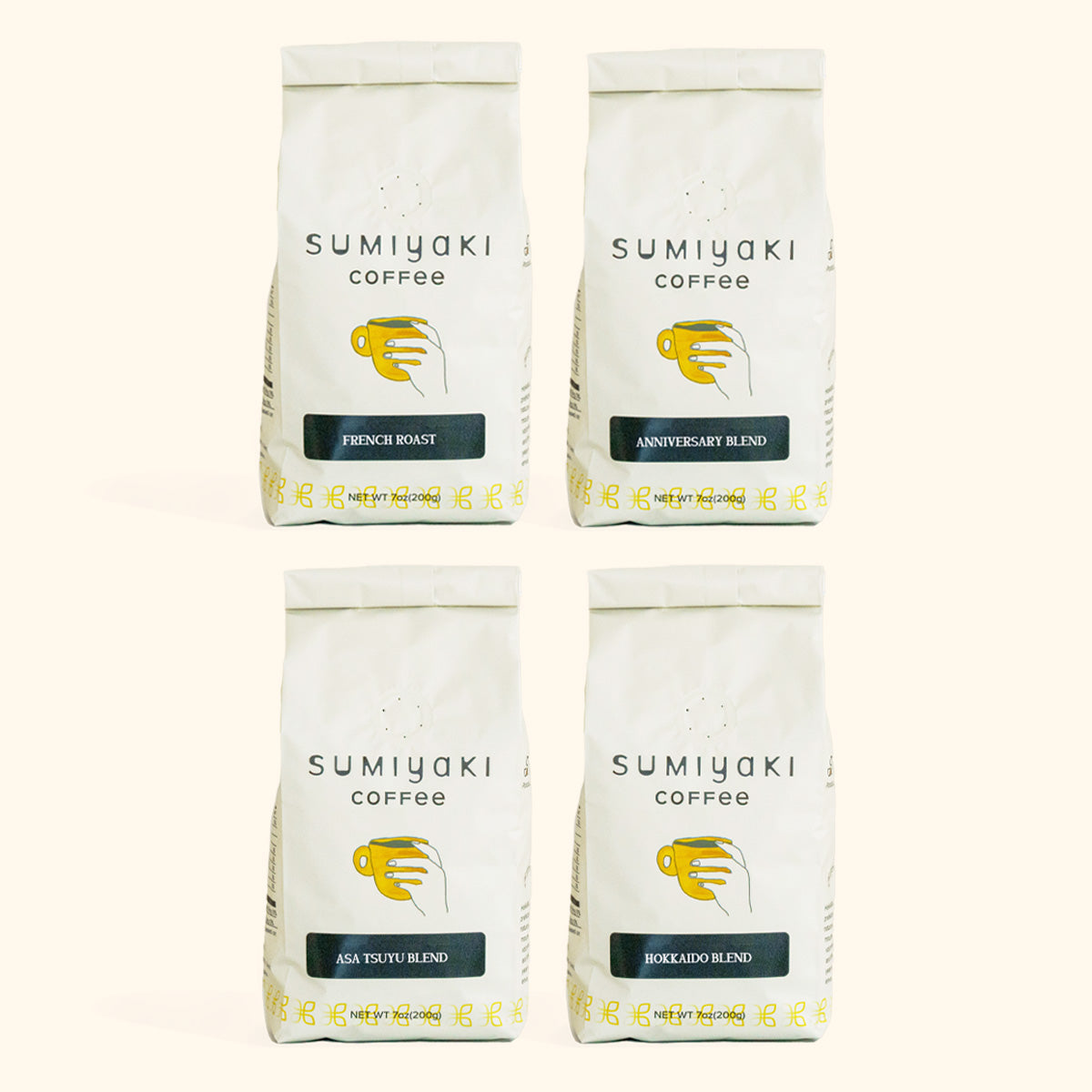
Get 30% off for a limited time when you purchase this special Combination Set featuring four of our most popular Premium Blend Sumiyaki Coffees. Your order will include four 200g packages: Anniversary Blend Coffee (Colombia, Brazil, Indonesia), the fruity favorite originally created for Sapporo Coffee Kan’s 30th anniversary; Asa Kiri Blend, a light roast with pure coffee flavor and a soft touch of sourness; Hokkaido Blend, the signature house blend beloved for its rich and balanced taste; and French Roast Blend, a dark, smoky roast perfect for pairing with milk or crafting café au lait and coffee cocktails. All beans are roasted to order under the expert blending tradition of Sapporo Coffee Kan, led by Ito Eiichi, the renowned “King of Blenders” in Japan, ensuring every cup is a masterful balance of flavor and aroma.

Asa-Yuu Blend Duo (Get 20% Off)

USD $50.00 USD $39.00
Quick view

Meet the Asa-Yuu Blend Duo (朝夕): a roasted-to-order set featuring Asa Tsuyu (light roast, Colombia/Brazil/Ethiopia) and Hokkaido (medium roast, Colombia/Brazil/Honduras/Indonesia). Bright in the morning, smooth and balanced through the day—now 20% off for a limited time.

Matcha - Ceremonial Japanese Powdered Green Tea

This ceremonial matcha is crafted from the finest Japanese green tea, grown in nutrient-rich soil enhanced with compostable grasses and sugarcane through the Chagusaba method, which gives the tea a natural sweetness and exceptional flavor. In collaboration with researchers from Shizuoka University, farmers ensure that the soil quality consistently produces tea of the highest standard.

Renowned among top Japanese chefs for its unmatched aroma, this matcha is made by carefully shading the plants before harvest to boost caffeine and amino acids, then meticulously drying, de-stemming, and grinding the leaves into a fine powder. Made from the Yabukita cultivar, this 1.8 oz (50g) matcha comes in a high-quality, air-tight paper tube canister, providing a luxurious and authentic Japanese tea experience.

Buy Premium Matcha Chasen Whisk (100 Prong)

This premium-quality matcha chasen whisk is crafted with durable, high-grade bamboo and designed for lasting performance. Featuring 100 prongs, it offers a superior whipping ability compared to lower-quality 40–60 prong whisks and is considered the highest grade, often used in high-end tea ceremonies in Japan.

As it is made from natural bamboo, measurements may slightly vary, but generally, the base measures about 30mm (1.3 inches), the length is 100mm (3.9 inches), and the whisk opening is 60mm (2.4 inches), making it an ideal choice for creating a perfectly smooth and frothy matcha.

Buy Ceremonial Matcha Gift Set – Hario × Japanese Green Tea Co.

The Ceremonial Matcha Set – Hario × Japanese Green Tea Co. celebrates the union of two Japanese specialists: our award-winning ceremonial matcha and Hario, the iconic glassware brand known for its craftsmanship and timeless design. We are truly excited to bring this collaboration to life, blending Hario’s modern aesthetic with the rich tradition of Japanese tea.

Gift Box Size
12.1" (width) x 9" (length) x 4.7" (height) [15.9 cm x 22.9 cm x 6.4 cm] 

Included


Related Articles You May Be Interested

Can I Mix Coffee With Tea? – Coffee Quiz
Myth Busted? - Coffee Is Not Healthy Like Green Tea
Japanese Green Tea vs. Japanese Coffee
What is Starbucks Japan Regional Landmark Stores
Hario Vs. Kalita
Hario Vs. Kalita

Get Free Bonus Books

Join Japanese Coffee Club

Sign up for free to the Coffee Club to get advice and exclusive articles about how to choose Japanese Coffee, and tips, tricks, and recipes for enjoying Japanese coffee.

Unsubscribe anytime. It’s free!

About the author

Kei Nishida

Author, CEO Dream of Japan

info@japaneseCoffeeCo.com

Certification: PMP, BS in Computer Science

Education: Western Washington University

Kei Nishida is a passionate Japanese tea and coffee connoisseur, writer, and the founder and CEO of Japanese Coffee Co. and Japanese Green Tea Co., both part of Dream of Japan.

His journey began with a mission to introduce the world to the unparalleled quality of Japanese green tea. Through Japanese Green Tea Co., he established the only company that sources premium tea grown in nutrient-rich sugarcane soil—an innovation that led to multiple Global Tea Champion awards.

Building on this success and his passion for Japanese craftsmanship, Kei expanded into the world of coffee, pioneering the launch of Japanese Coffee Co., the first company to bring Sumiyaki charcoal-roasted coffee to a global audience. His dedication to authenticity and quality ensures that this traditional Japanese roasting method, once a well-kept secret, is now enjoyed worldwide.

Beyond tea and coffee, Kei has also introduced Japan’s legendary craftsmanship to the world through Japanese Knife Co., making handmade katana-style knives—crafted by a renowned katana maker—available outside Japan for the first time.

Kei’s journey continues as he seeks out and shares the hidden treasures of Japan, one cup and one blade at a time.

Learn more about Kei

Related Posts

Introducing the Sakura Blend (桜ブレンド): Our Limited-Time Spring Seasonal Coffee Is Here!

Meet Sakura Blend — our first spring seasonal coffee! Bright, smooth, naturally sweet. Not sakura-flavored. While suppli

Read More
How a Sumiyaki Roaster Machine Works: Inside the Japanese Charcoal Roasting Process

Discover the art of Japan’s charcoal coffee roasting — where binchotan, far-infrared heat, and artisan skill create a de

Read More
Introducing the Asa-Yuu Blend Duo (朝夕 ブレンドデュオ): Two of Our Most Popular Coffees, Now Together!

The Asa-Yuu Blend Duo (朝夕) is here! Two of our most popular Sumiyaki coffees in one set – bright Asa Tsuyu and smooth Ho

Read More
Leave a comment

Your email address will not be published..

Cart

Your cart is currently empty.

Start Shopping

Select options