Skip to content

The Role of Coffee Culture in Japanese Student Life

While tea is often associated with Japanese culture, coffee has also made a significant mark. Coffee culture has firmly planted its roots in the daily lives of many, particularly among college students. Far from being merely a morning habit, coffee significantly influences both the academic and social aspects of student life. From bustling city cafes to quiet campus spots, coffee is a key ingredient in the recipe for student success and social interaction.

Amidst a hectic schedule filled with classes, studying, and group projects, sometimes you might find yourself needing a reliable paper writing service that can do my history homework to keep up with deadlines. Similarly, Japanese students often turn to coffee as an essential tool for both staying awake and fostering productive study sessions. This article explores how coffee culture influences learning, productivity, and community among students in Japan.

Coffee as a Study Enabler

Boosting Concentration and Productivity

For a multitude of students, coffee serves as the essential boost needed for their scholarly pursuits. The caffeine in coffee is known for its ability to enhance focus and increase alertness, making it a popular choice during long study sessions. In Japan, where the pressure to excel academically is high, coffee shops near universities often become extended classrooms where students spend hours poring over notes and assignments.

The Rise of Study Cafes

In recent years, there has been a significant rise in the popularity of study cafes—spaces designed specifically for students who want to combine caffeine intake with a conducive studying environment. These cafes often provide high-speed internet, power outlets, and even reference materials. They offer a quiet, controlled environment that encourages productivity, making them a preferred spot for students who need to escape the distractions of home or dorm life.

Social Interactions and Coffee

Coffee Shops as Social Hubs

Beyond just a place for studying, coffee shops in Japan serve as vital social hubs for students. They are places where young people gather to discuss ideas, collaborate on projects, or simply unwind after a long day. The inviting atmosphere of a coffee shop creates an ideal setting for fostering relationships and sparking creativity. These venues also frequently host events and workshops that further integrate them into the fabric of student social life.

The Role of Coffee in Networking

Coffee culture plays a crucial role in networking, which is essential for forging a successful career for both students and professionals. Casual coffee meetings can lead to internships, job opportunities, and collaborations. The informal setting helps lower barriers, making it easier for students to interact with mentors and industry professionals. Many successful business ideas and startups have sprung from conversations held over coffee.

Coffee Culture and Student Well-Being

A Ritual for Mental Health

Many students find that the ritual of brewing and enjoying a cup of coffee provides a necessary mental pause in their busy lives. The act of taking a coffee break provides a needed pause in their busy schedules, offering a moment of solitude or a chance to socialize, which can be crucial for mental health. This daily ritual can become a mindful practice, reducing stress and enhancing overall psychological well-being.

The Comfort of Routine

Establishing a coffee routine can provide a comforting sense of stability and predictability in the otherwise chaotic life of a college student. Whether it’s a morning espresso to kickstart the day or a late-night brew to fuel a study session, the ritual can help anchor a student’s daily routine. Maintaining a consistent routine can be vital for keeping focus and efficiency high during the academic year.

The Role of Coffee Shops as a “Third Place”

In Japan, coffee shops serve as a “third place”—a neutral space outside of home and work where urban dwellers, especially students, can relax, socialize, or study. These venues become crucial in cities where personal space is limited, offering a comfortable escape from small living quarters or the structured school environment. Coffee shops not only promote social interactions but also provide serene spots for quiet reflection and relaxation.

Students use these coffee shops for various activities, from completing homework to relaxing with peers. The atmosphere fosters creativity and productivity, alleviating academic pressures and enhancing mental well-being. Moreover, these venues frequently host cultural events and workshops, enhancing the overall community experience. Coffee shops are integral to student life in Japan, providing a versatile environment that supports both academic success and personal growth.

Conclusion

Coffee culture in Japan has transcended mere beverage preference to become a pivotal element of student life. It supports academic performance, fosters social interactions, and contributes positively to the overall well-being of students. As you delve into your studies or seek to broaden your academic and professional networks, consider how integrating coffee into your routine could not only enhance your productivity but also enrich your college experience. Whether you are a coffee aficionado or someone looking to optimize your study habits, embracing the nuanced coffee culture might just be the key to balancing the demands of student life.

FAQs about Japanese Student Coffee Culture

How is coffee part of Japanese student life?

Universally. Japanese university students use cafés as study spaces, social spots, and pre-class wake-up locations. Many universities have on-campus cafés; students also frequent local kissaten and chain cafés (Doutor, Tully's, Komeda). The format mirrors Western student-coffee culture, but the pace and atmosphere are calmer.

Are study cafés a Japanese thing?

Yes — strongly developed in Japan. Some chains explicitly market to studiers (Komeda has booth seating perfect for hours of work); some independent kissaten allow students to nurse one cup all afternoon (a practice that would get you booted from a US Starbucks). The cultural acceptance of slow coffee + studying is part of why kissaten survive.

Kissaten (喫茶店): Its Birth up to the Present Day Concept

How much do Japanese students spend on coffee?

A typical student budget runs ¥300–500 per cup at chains, slightly more at specialty cafés. Frequent visits add up — many students budget ¥10,000–20,000/month on coffee. Convenience-store coffee (¥150) is the budget option; vending-machine canned coffee is even cheaper. The price tiers are well-developed.

What about coffee subscription services for students?

Cafe subscriptions exist (some chains offer monthly all-you-can-drink). Bean-delivery subscriptions are growing among students who brew at home. For US college students wanting a Japanese coffee experience at home, our single-serve drip bag combo is dorm-friendly — no machine, no grinder, full Japanese-style flavor.

Should I drink coffee while studying?

Honestly, yes — moderate caffeine improves focus and memory consolidation for most people. The trick is timing. A cup at the start of a study session is good; another mid-session is fine; past 2 cups in 4 hours, you’re into diminishing returns. Switch to Premium Decaf for late-night sessions to avoid wrecking sleep.

Related products

16 reviews

Hokkaido Blend (Colombia, Brazil, Honduras, Indonesia)

USD $25.00
Quick view

Sapporo Coffee Kan's most popular and long-selling signature blend, known as "the house blend," offers a rich, full-bodied coffee experience with a pleasant, mild bitterness and a mellow taste. Crafted by adding the finest Mandheling Berkat Lingtong beans to the blend, it achieves a rare balance—delivering depth and complexity without the sharp acidity often found in other coffees. For those who prefer a smoother, less acidic cup without sacrificing richness and flavor, this special house blend truly hits the spot.

5 reviews

Select Blend Combination Set (Get 30% Off)

USD $110.00 USD $77.00
Quick view

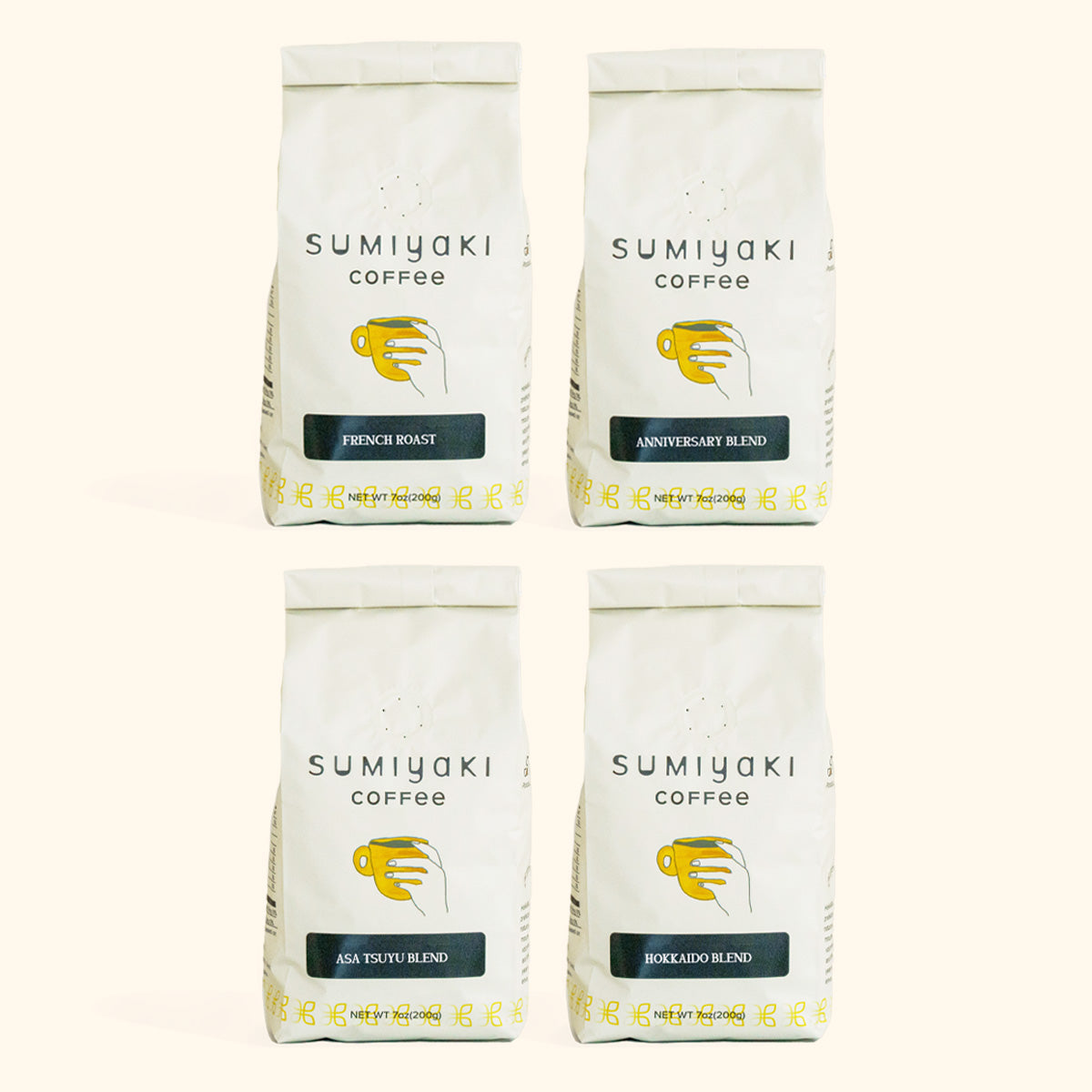
Get 30% off for a limited time when you purchase this special Combination Set featuring four of our most popular Premium Blend Sumiyaki Coffees. Your order will include four 200g packages: Anniversary Blend Coffee (Colombia, Brazil, Indonesia), the fruity favorite originally created for Sapporo Coffee Kan’s 30th anniversary; Asa Kiri Blend, a light roast with pure coffee flavor and a soft touch of sourness; Hokkaido Blend, the signature house blend beloved for its rich and balanced taste; and French Roast Blend, a dark, smoky roast perfect for pairing with milk or crafting café au lait and coffee cocktails. All beans are roasted to order under the expert blending tradition of Sapporo Coffee Kan, led by Ito Eiichi, the renowned “King of Blenders” in Japan, ensuring every cup is a masterful balance of flavor and aroma.

Asa-Yuu Blend Duo (Get 20% Off)

USD $50.00 USD $39.00
Quick view

Meet the Asa-Yuu Blend Duo (朝夕): a roasted-to-order set featuring Asa Tsuyu (light roast, Colombia/Brazil/Ethiopia) and Hokkaido (medium roast, Colombia/Brazil/Honduras/Indonesia). Bright in the morning, smooth and balanced through the day—now 20% off for a limited time.


Related Articles You May Be Interested

Coffee with Japanese Whisk? Otemae Coffee お点前珈琲
Japanese Convenience Store Coffee War
Japanese Contributions to the World of Coffee
Why Japanese Iced Coffee is So Popular
Kalita - Everything You Need to Know

Get Free Bonus Books

Join Japanese Coffee Club

Sign up for free to the Coffee Club to get advice and exclusive articles about how to choose Japanese Coffee, and tips, tricks, and recipes for enjoying Japanese coffee.

Unsubscribe anytime. It’s free!

About the author

Kei Nishida

Kei Nishida

Author, CEO Dream of Japan

info@japaneseCoffeeCo.com

Certifications: PMP, BS in Computer Science

Education: Western Washington University

Kei Nishida is a passionate Japanese tea and coffee connoisseur, writer, and the founder and CEO of Japanese Coffee Co. and Japanese Green Tea Co., both part of Dream of Japan.

His journey began with a mission to introduce the world to the unparalleled quality of Japanese green tea. Through Japanese Green Tea Co., he established the only company that sources premium tea grown in nutrient-rich sugarcane soil—an innovation that led to multiple Global Tea Champion awards.

Building on this success and his passion for Japanese craftsmanship, Kei expanded into the world of coffee, pioneering the launch of Japanese Coffee Co., the first company to bring Sumiyaki charcoal-roasted coffee to a global audience. His dedication to authenticity and quality ensures that this traditional Japanese roasting method, once a well-kept secret, is now enjoyed worldwide.

Beyond tea and coffee, Kei has also introduced Japan’s legendary craftsmanship to the world through Japanese Knife Co., making handmade katana-style knives—crafted by a renowned katana maker—available outside Japan for the first time.

Kei’s journey continues as he seeks out and shares the hidden treasures of Japan, one cup and one blade at a time.

Related Posts

Behold: Balmuda's "The Brew" - Tokyo-based design powerhouse brings their coffee maker to the US
Behold: Balmuda's "The Brew" - Tokyo-based design powerhouse brings their coffee maker to the USA

Experience Balmuda's excellent coffee machine as Tokyo's design influence makes its way to the United States. This cutti

Read More
Everything You Need to Know About Papua New Guinea Coffee — And Its Surprising Connection to Japan

PNG coffee has deep ties to Japan — from Blue Mountain roots to today's specialty scene. Meet Baroida Estate and try our

Read More
OC Japan Fair April 2026 — Visit Us at Booth #A8!
OC Japan Fair Spring 2026 Recap (April 3 - 5 2026)

We were at OC Japan Fair again! April 3-5 2026 with new products, Miki Pon's art debut and more. Here is a recap video f

Read More
1 comment on The Role of Coffee Culture in Japanese Student Life
Leave a comment

Your email address will not be published..

Cart

Your cart is currently empty.

Start Shopping

Select options