Skip to content

How to Make Coffee Shochu (コーヒー焼酎)


How to Make Coffee Shochu (コーヒー焼酎): A Unique Coffee-Infused Japanese Spirit Beverage that You Can Easily Make at Home

The title of this article might have made you wonder, "Coffee & alcohol, really?" However, if you think about it, coffee and alcohol are quite a popular combination that has been loved worldwide for decades – think Irish coffee, Espresso Martini, Kahlua, to name a few. The newest member in this category, creating quite a buzz in the coffee world, is this delicious beverage – Coffee Shochu.

How to Make Coffee Shochu


Before we get into the details, let us give you a quick introduction to what Shochu is so that its cultural connection to Japan can be appreciated along with the deliciousness of the drink. Shochu(焼酎)is a Japanese spirit with about 25% alcohol content, made by distillation from ingredients such as rice, sweet potatoes, barley, buckwheat, etc. It is the most popular spirit in Japan and is usually served on rocks, diluted with water (Mizu-wari 水割り) or soda (soda-wari ソーダ割り).

As Shochu is distilled most commonly from starch sources rather than fruits, its flavor tends to be earthy rather than fruity. This allows Shochu to be the perfect base where the original flavors of unique coffee beans can shine to their full potential. Now that we know why Shochu is so special and why coffee works so well with Shochu let us disclose the secret of what Coffee Shochu really is!

What is Coffee Shochu?

Coffee Shochu is made by infusing coffee beans inside a bottle or a jar of Shochu for several days. Soaking the coffee beans in the Shochu makes the flavor of the coffee dissolve into the Shochu and also changes the color of the Shochu from colorless to different shades of golden brown depending on how long the coffee beans are soaked. This creates a Shochu that has subtle notes of unique flavors and a gorgeous appearance taking your Shochu-drinking experience to a whole new level.

Whereas common alcoholic beverages with coffee are created as cocktails with sugary-sweet tastes, Coffee Shochu keeps things minimalistic. It celebrates the taste of the coffee and the Shochu themselves without any unnecessary frills. As a result, coffee Shochu is the ultimate grown-up drink – strong, pure, and unpretentious.

Japanese Coffee Co.


That being said, Coffee Shochu allows you liberty in how you enjoy it. So it can be enjoyed straight on rocks or made into cocktails or mixed with water, soda, milk, etc. You can use Coffee Shochu to create any drink you wish, depending on your personal taste and preference.

At this point, you might be already craving freshly poured Coffee Shochu on a chilled glass with ice, and you might be wondering whether you have to travel all the way to Japan to have the experience. But wait, did we tell you the best thing about Coffee Shochu? The best thing about Coffee Shochu is that it can be easily made at home! Everything tastes so much better when you make it with your own hands, right? So without further ado, let’s see how you can make your own Coffee Shochu right away.

How to Make Your Own Coffee Shochu at Home – A Simple and Easy Recipe

coffee shochu

10g of coffee beans for 100ml of Shochu. So if you are using 30g of coffee beans, then add it to 300ml of Shochu, 50g of coffee beans in 500ml of Shochu, and so on.

Download Printable One-Page Recipe PDF Now

  • Sign up for the free Japanese Coffee Club (unsubscribe anytime) to download the printable PDF of this recipe now.


What You Will Need:
  • Roasted Coffee beans
  • Japanese Shochu
  • Airtight glass container (for example, Mason Jar)
The Steps:
  • Take a clean, dry, and preferably sterilized airtight container made of glass.
  • Put the coffee beans inside the container.
  • Gently pour the Shochu into the container and close the lid of the container tightly.
  • Store it in a cool, dry place with minimal temperature variations for three days to 1 week or longer.
  • Take out the coffee beans after one week. (The amount of time the coffee beans are soaked can be varied and experimented with according to your preferences).
  • Your Coffee Shochu is ready to be enjoyed!

As you can see, making your Coffee Shochu at home is extremely simple, and you can even do it while reading this article. However, you might have some more questions about Coffee Shochu, so we have put together some insider tips below that might come in handy to make your Coffee Shochu taste better.

Type of Coffee Beans to Use

You can use any kind of coffee beans; play around and have fun trying out different types of roasts, origins, and blends. However, if you want to enjoy the inherent flavor of the beans, then it is better to use fruity and floral beans that are light to medium roasted. If you want a strong 'coffee taste' – smokiness, intense bitterness, etc., then you might want to try a darker roast with chocolaty notes. Finally, if you want plain and clean flavors, you can try using beans with earthy flavors.

Freshly Roasted Coffee Beans

My personal favorite is using European Premium Mild Signature Blend Coffee (Colombia, Brazil, Honduras, Indonesia) The bold taste of the coffee really matched with Shochu. I also enjoyed Decaf Premium coffee so that I can use less caffeine in alcoholic drinks.

  • Type of Shochu:

As you might already know, Shochu can be made from different ingredients, and depending on what it is distilled from, the taste and flavor of Shochu vary. The ingredients can be things like potatoes, sweet potatoes, rice, barley, buckwheat, etc. “Honkaku Shochu," or best quality Shochu, is single-distilled and retains the characteristics of the original ingredient. So this is another opportunity for you to experiment and customize your Coffee Shochu by choosing what kind of Shochu you use.

  • Additional Ingredient:

Sometimes, you might come across recipes of Coffee Shochu that suggest adding several Japanese rock sugars (こんぺいとう) into the jar and let them dissolve completely. This will add sweetness to your Coffee Shochu, and although it is not necessary, it might be an exciting way to tweak your Coffee Shochu, especially if you like your beverages to be sweet.

  • Storage:

To keep the original taste and to preserve it safely, once you take out the coffee beans, it is recommended to store the jar of your Coffee Shochu in the refrigerator.

What are Some of the Best Ways to Enjoy Your Coffee Shochu?

Now that you have a big jar of Coffee Shochu all to yourself, you might be wondering how to enjoy it in the best possible way. The answer is that the possibilities are endless – you can make it into anything you want, whether it be cocktails, an original hot drink, or just as it is. We will share some of the ways we thought it tastes best.

  • On the rocks

What better way than to enjoy your Coffee Shochu in the timeless, classic style, right? We would recommend you to pour your Coffee Shochu on some ice cubes in a chilled glass and take a moment to enjoy the flavors, the beauty, and the taste of your homemade Coffee Shochu.

  • Coffee Shochu Latte

It is so good it is even on the UCC’s official page as a recommended coffee cocktail drink, and it is made simply by adding fresh milk, sugar syrup, and Coffee Shochu in a tall glass of ice.

UCC Coffee
  • Coffee Shochu Mojito

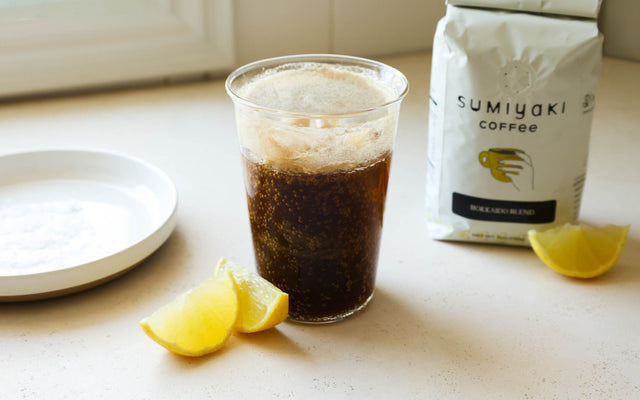
This is a Coffee Shochu cocktail with a refreshing twist. All you have to do is to pour in 60ml of Coffee Shochu into a glass followed by fresh mint leaves and lime wedges or slices. Next, add some sugar syrup or skip if you want it to be sugar-free. Then add some crushed ice and pour some fizzy soda water on top to complete the drink.


Download Printable One-Page Recipe PDF Now

  • Sign up for the free Japanese Coffee Club (unsubscribe anytime) to download the printable PDF of this recipe now.

FAQs about Coffee Shochu

What is coffee shochu, and why is it specifically a Japanese drink?

Coffee shochu (コーヒー焼酎, kōhī shōchū) is shochu — Japanese distilled spirit made from rice, barley, sweet potato, or other base — infused with whole coffee beans. The result is a clear, slightly viscous liquor with strong coffee aroma, bitter coffee flavor underlying the shochu base, and an alcoholic warmth that pure coffee can't deliver. Typically 25-35% alcohol depending on shochu base used.

The drink emerged in Japan in the late 20th century as a fusion of two beloved Japanese categories — coffee culture and shochu drinking. It's primarily a homemade-or-specialty-bar drink rather than a mass-produced commercial category; most coffee shochu is either DIY at home or made by small specialty distilleries.

Coffee shochu represents a distinctly Japanese approach to fusion drinks — taking two strong cultural products (coffee and shochu) and combining them in a way that respects both. The result isn't replacing coffee with alcohol or replacing shochu with coffee; it's creating a third category that draws from both.

How do I make coffee shochu at home?

Method: place 100g whole coffee beans (lightly roasted preferred for best aromatic extraction) in a clean glass jar. Pour 750ml shochu (any base — barley shochu produces cleanest result; rice shochu works fine) over the beans. Seal and store in a cool dark place for 2-3 weeks, shaking the jar every 2-3 days. Strain through a fine mesh or coffee filter, discarding the beans. Bottle the strained coffee shochu and store sealed; keeps indefinitely.

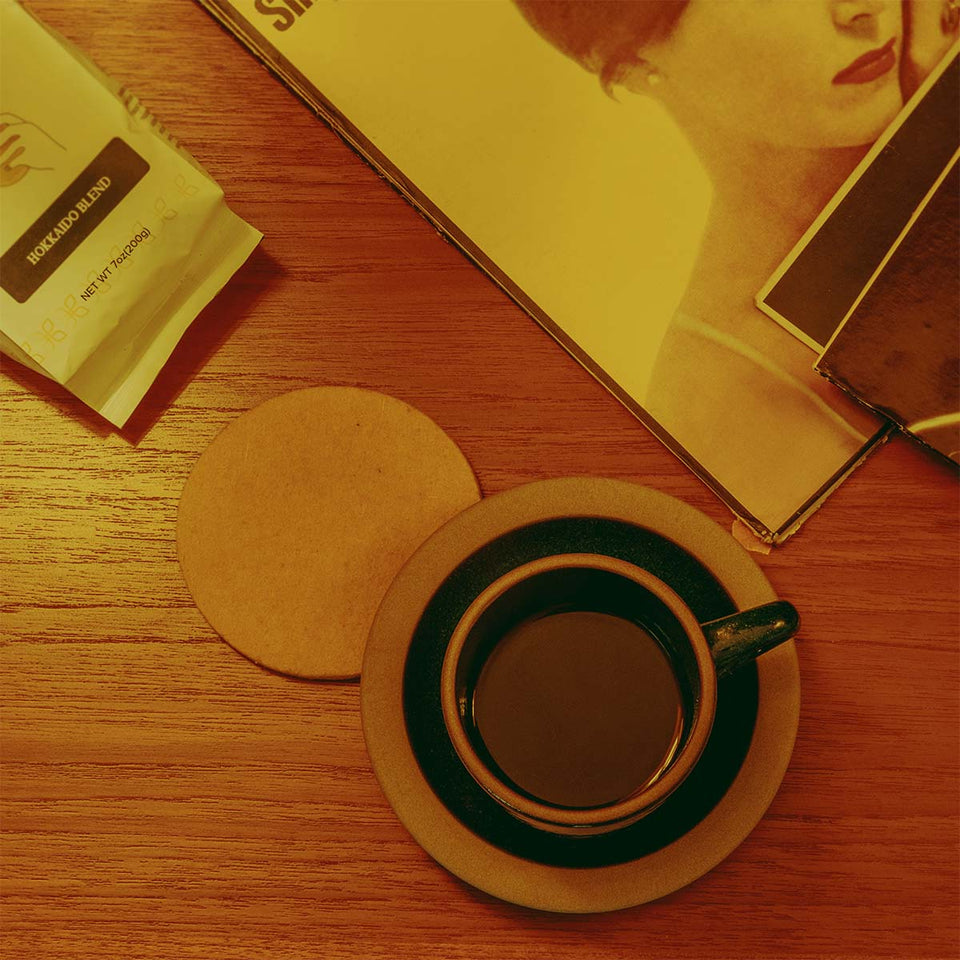
Bean selection matters. Light-medium roasted beans produce brighter, more aromatic coffee shochu; dark-roasted beans produce deeper, more bitter result. JPCo's Yuki Sora Blend (Blue Mountain Quattro) or Hokkaido Blend both produce distinctive Japanese-charcoal-roasted character in the resulting shochu — meaningfully different from generic commercial coffee.

Don't use pre-ground coffee — the fine particles produce muddy, sediment-heavy shochu that's hard to filter cleanly. Use whole beans throughout the infusion process. Total prep time is minimal (5 minutes); patience is the actual ingredient (3 weeks of waiting).

How is coffee shochu typically served in Japan?

Three common formats. Straight (neat) — small portions in a small glass, sipped slowly like a digestif. The strong coffee aroma and shochu warmth are the focus; not a casual-drinking format. On the rocks — coffee shochu over ice, often with a slice of lemon or a few drops of bitters. The dilution makes it more accessible while preserving the coffee character.

Coffee shochu cocktail — mixed with milk, simple syrup, or sweet liqueurs to create dessert-style cocktails. The coffee-shochu-milk combination is essentially an alcoholic version of milk coffee — Japanese-style coffee martini variant. These cocktails appear at Japanese specialty bars and Japanese-fusion restaurants in U.S. cities.

Drinking timing: post-meal as digestif, late-evening before bed (the coffee aroma is part of the experience but the caffeine content is quite low after distillation), or paired with rich desserts (chocolate, tiramisu, cheesecake). Not typically a meal-paired drink; shochu generally doesn't pair with food the way wine does.

Does coffee shochu actually have caffeine?

Some, but much less than brewed coffee. The infusion process extracts soluble compounds from whole beans into shochu — caffeine extracts but at lower efficiency than hot-water brewing. Estimates vary: 100ml of coffee shochu contains roughly 30-60 mg of caffeine, compared to 100ml of brewed coffee containing 60-80 mg.

Per typical serving, the caffeine content is meaningful but not high. A 50ml shot of coffee shochu has about 15-30 mg of caffeine — equivalent to a half-cup of weak tea. Daily evening drinking of coffee shochu is unlikely to disrupt sleep meaningfully for most adults.

The alcohol content is the more practical concern. At 25-35% ABV, coffee shochu is significantly more alcoholic than wine and slightly less than typical hard liquor. Treat it as you'd treat sake or any spirit — moderate single-serving portions, not an unlimited-drinking format.

Where can I try coffee shochu outside Japan?

Japanese bars in major U.S. cities. New York (specifically the East Village's Japanese specialty bars), San Francisco Bay Area, Los Angeles, Seattle, and Boston all have Japanese specialty bars that serve coffee shochu. Restaurant week menus and tasting flights often include coffee shochu as a Japanese-curiosity option.

Specialty liquor stores with strong Japanese sections (BevMo Japan section, Total Wine occasionally, smaller specialty liquor shops in Japanese-American neighborhoods) sometimes stock commercially-bottled coffee shochu. Selection is narrower than in Japan; brand options are limited.

Easiest path is making it at home. The DIY process is simple, the resulting product is high quality (assuming quality beans and quality shochu), and the customization (your choice of bean, your choice of shochu base) produces a final product better than most commercial coffee shochu. The 3-week wait is the main barrier; otherwise, it's an easy specialty-drink project.

MAKE YOUR FIRST COFFEE SHOCHU WITH OUR PREMIUM JAPAN ROASTED BEANS!
16 reviews

Hokkaido Blend (Colombia, Brazil, Honduras, Indonesia)

USD $25.00
Quick view

Sapporo Coffee Kan's most popular and long-selling signature blend, known as "the house blend," offers a rich, full-bodied coffee experience with a pleasant, mild bitterness and a mellow taste. Crafted by adding the finest Mandheling Berkat Lingtong beans to the blend, it achieves a rare balance—delivering depth and complexity without the sharp acidity often found in other coffees. For those who prefer a smoother, less acidic cup without sacrificing richness and flavor, this special house blend truly hits the spot.

37 reviews

Hokkaido Blend Single-Serve Pour-Over - Disposable Filter Bag

USD $42.00 USD $39.00
Quick view

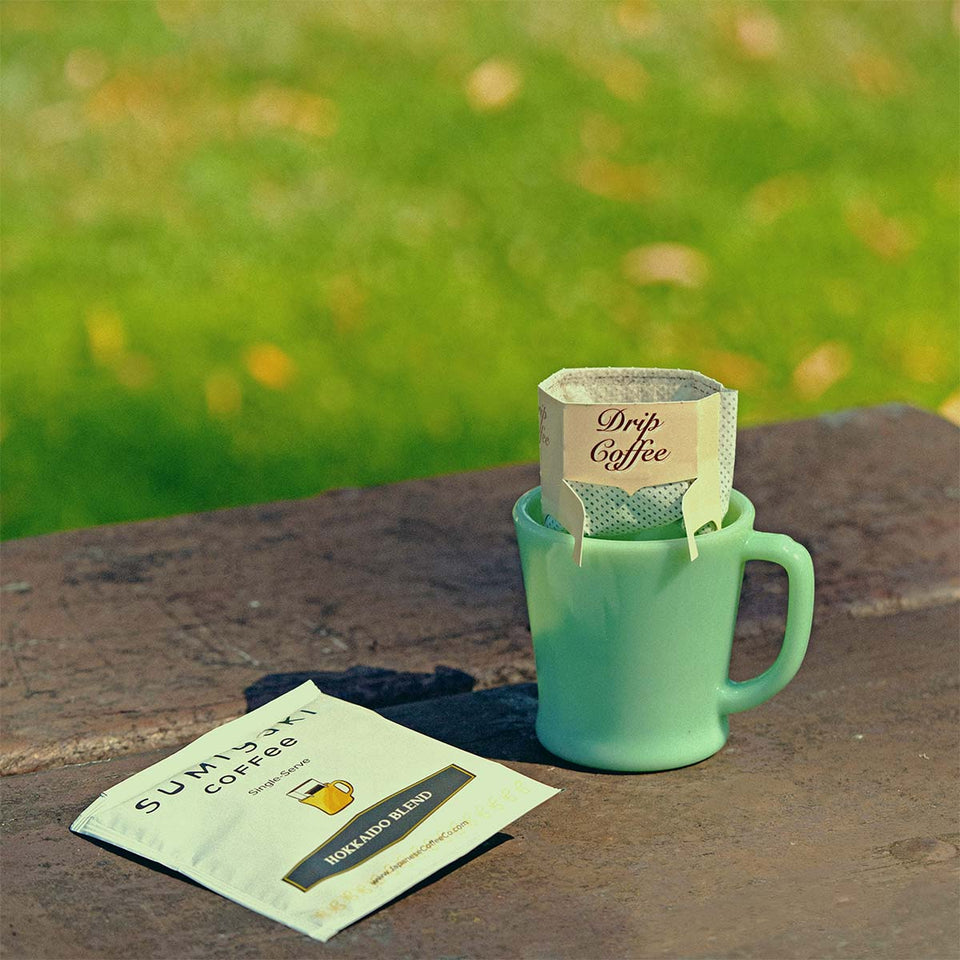
The Single-Serve Disposable Filter Bag (Cup-On) is an ingenious coffee-brewing method that has been popular in Japan for quite some time but remains lesser known elsewhere. Designed to hold the perfect amount of ground coffee for a single cup, each filter bag features a clever paper structure that securely stabilizes onto your cup—just pour hot water, and voilà, a fresh and delicious drip coffee is ready with minimal effort and no special equipment. What sets this Cup-On apart from other pour-over filters is its unique 4-point system, an innovative design that prevents the filter from becoming soaked after pouring, ensuring a consistent and flavorful brew. Among the many variations of cup-on filters available in Japan, this premium version stands out for delivering an exceptional pour-over experience crafted for true coffee enthusiasts.

28 reviews

Hokkaido Blend Single-Serve Pour-Over Gift Box Set

USD $85.00 USD $79.99
Quick view

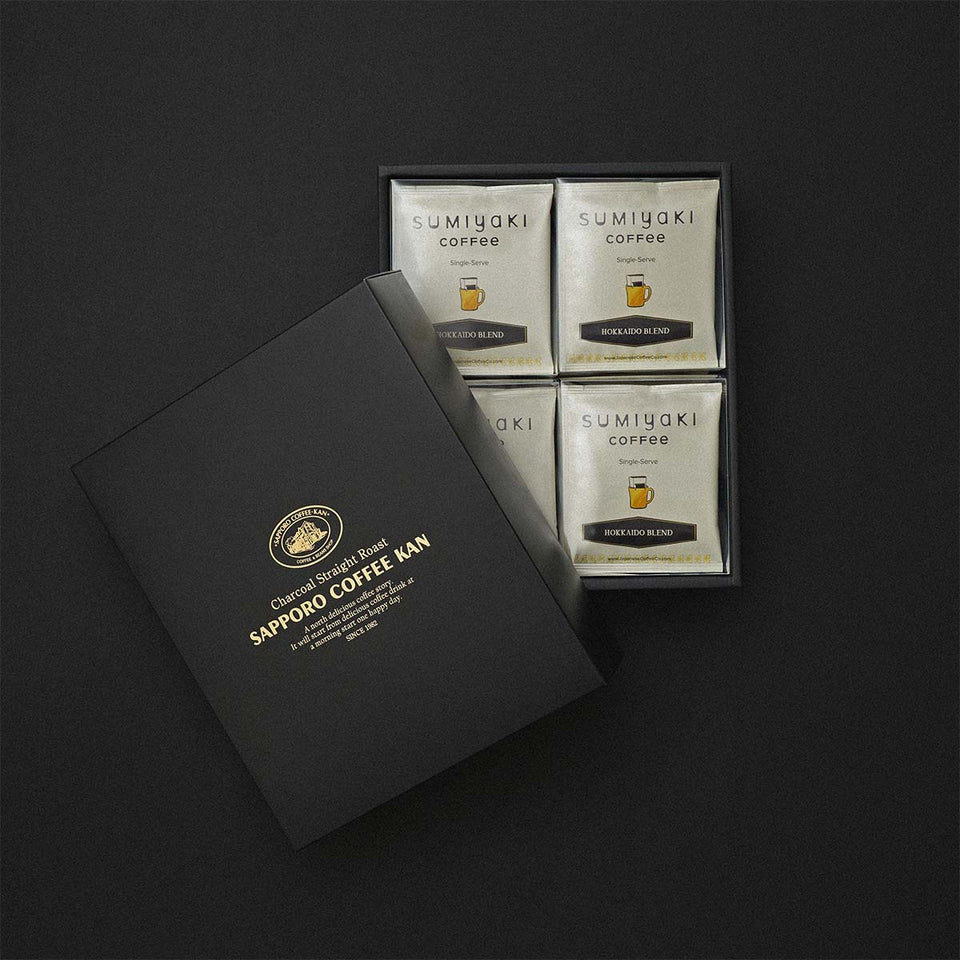
Looking for the perfect gift for a coffee lover? This beautifully rustic gift set features four of our most popular Sumiyaki coffees, each portioned into single-serve disposable filter bags designed for an effortless pour-over experience. Each filter bag holds the ideal amount of ground coffee for one cup and includes a clever paper structure that stabilizes securely onto your cup—just pour hot water and enjoy a fresh, delicious brew with minimal effort. This ingenious brewing method, known in Japan as "Cup-On," brings the joy of café-quality drip coffee anytime, anywhere without the need for special equipment. The set includes 28 single-serve bags, and each package is thoughtfully designed with an easy-open cut line and a pro tip for optimal brewing: lightly tap the coffee grounds with a spoon to even the surface for a perfectly balanced cup.

3 reviews

Asa Tsuyu Blend [Light Blend] (Colombia, Brazil, Ethiopia)

USD $25.00
Quick view

Delicate, invigorating, and oh so pure! This blend knows how to dish up a warm welcome. Our lightest blend features beans from Columbia, Brazil, and Ethiopia. We’ve found that this roast makes an incredible espresso, as well as a beautiful, bright drip coffee. With pure coffee flavor, soft touch of sourness and a rich sweet aroma —this light blend helps you start the day off right.

5 reviews

Decaf Premium Blend (Colombia, Brazil, Ethiopia)

USD $35.00
Quick view

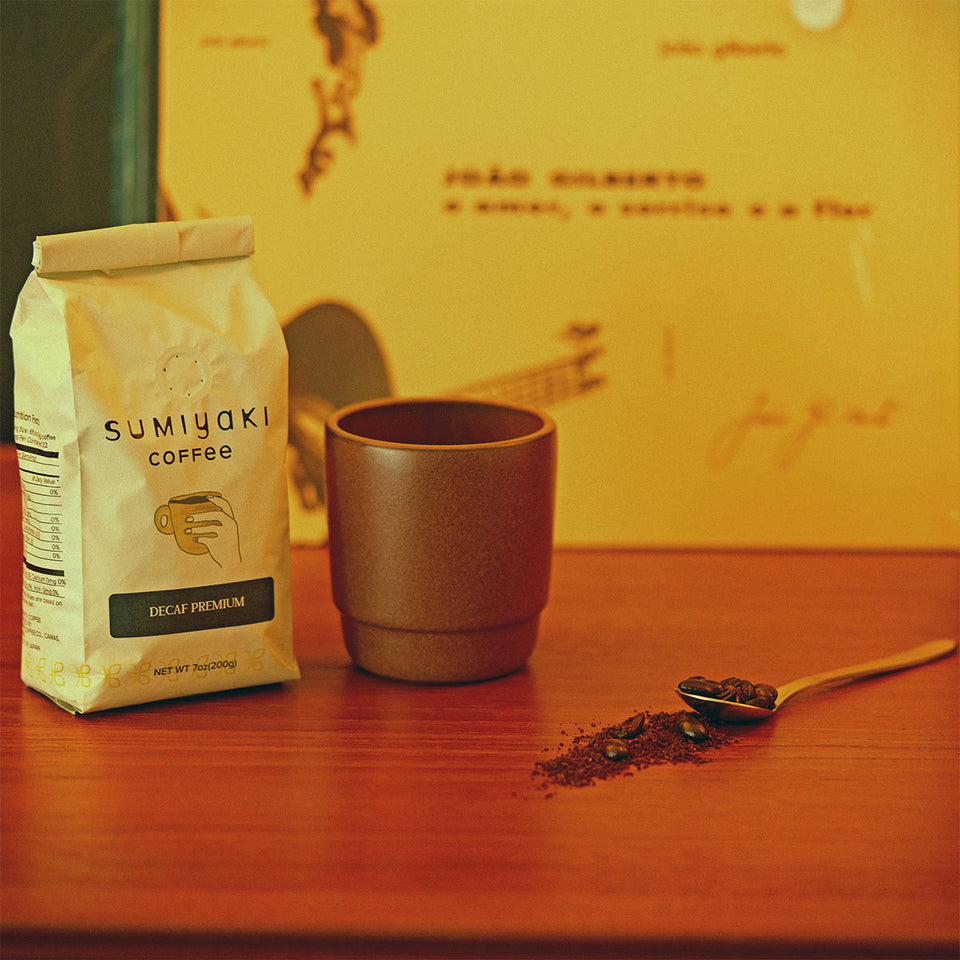
The secret behind Sapporo Coffee Kan’s original Caffeine-off blend lies in a groundbreaking German method called the "Liquid Dicarboxylic Acid Extraction Method," which removes 93–98% of caffeine while preserving the coffee’s original flavor, aroma, and richness. Unlike conventional decaf processes that strip away essential taste components, this technique uses a careful combination of low pressure and temperature over an extended period, ensuring the coffee’s delicious character remains intact. The beans are then roasted using Sapporo Coffee Kan’s unique CSR (Charcoal Straight Roasting) method, minimizing oxidation and preserving the coffee’s vibrant profile. As a result, this decaf coffee is so flavorful and satisfying that it is served at high-end restaurants with evening desserts, offering a true specialty coffee experience for caffeine-sensitive individuals, pregnant women, nursing mothers, and anyone advised to reduce caffeine intake.

3 reviews

French Roast Blend (Colombia, Brazil, Indonesia)

USD $25.00
Quick view

Experience the dark side of coffee with our French Roast Blend, crafted from a rich combination of beans from Colombia, Brazil, and Ethiopia. This bold blend features low acidity, a heavy body, and deep, smoky flavors, achieved by roasting the beans at a high temperature that brings their natural oils to the surface. Versatile and full of character, it delivers exceptional taste both with and without milk, making it perfect for café au lait, iced coffee, or even coffee-based cocktails with a splash of brandy.

• Disclosure: I only recommend products I would use myself, and all opinions expressed here are my own. This post may contain affiliate links that I may earn a small commission at no additional cost to you.
The commission also supports us in producing better content when you buy through our site links.
Thanks for your support.
- Kei and Team at Japanese Green Tea Co.


Related Articles You May Be Interested

10 Trendy Coffee Cocktail Recipes You will Love
How to Brew Tasty Japanese Sumiyaki Coffee - Quick Guide
How  to Brew Tasty Japanese Sumiyaki Coffee - Quick Guide
Anko & Coffee – AnCoffee?
Coffee with Japanese Whisk? Otemae Coffee お点前珈琲
How to Make Japanese Coffee Jelly (with Video Recipe)

Get Free Bonus Books

Join Japanese Coffee Club

Sign up for free to the Coffee Club to get advice and exclusive articles about how to choose Japanese Coffee, and tips, tricks, and recipes for enjoying Japanese coffee.

Unsubscribe anytime. It’s free!

About the author

Kei Nishida

Kei Nishida

Author, CEO Dream of Japan

info@japaneseCoffeeCo.com

Certifications: PMP, BS in Computer Science

Education: Western Washington University
Kei Nishida is a passionate Japanese tea and coffee connoisseur, writer, and the founder and CEO of Japanese Coffee Co. and Japanese Green Tea Co., both part of Dream of Japan.

His journey began with a mission to introduce the world to the unparalleled quality of Japanese green tea. Through Japanese Green Tea Co., he established the only company that sources premium tea grown in nutrient-rich sugarcane soil—an innovation that led to multiple Global Tea Champion awards.

Building on this success and his passion for Japanese craftsmanship, Kei expanded into the world of coffee, pioneering the launch of Japanese Coffee Co., the first company to bring Sumiyaki charcoal-roasted coffee to a global audience. His dedication to authenticity and quality ensures that this traditional Japanese roasting method, once a well-kept secret, is now enjoyed worldwide.

Beyond tea and coffee, Kei has also introduced Japan’s legendary craftsmanship to the world through Japanese Knife Co., making handmade katana-style knives—crafted by a renowned katana maker—available outside Japan for the first time.

Kei’s journey continues as he seeks out and shares the hidden treasures of Japan, one cup and one blade at a time.

Related Posts

How to Make Japanese Coffee Jelly
How to Make Japanese Coffee Jelly (with Video Recipe)

Step up your coffee game with this unique Japanese coffee jelly recipe! Impress your guests and satisfy your sweet tooth

Read More
Balmuda Brings Japanese Lifestyle to Brooklyn – My First-Hand Journey at Cibone O’te

Step into Brooklyn’s ‘Little Tokyo’ where timeless Japanese craftsmanship meets sleek innovation—dashi, design, and dram

Read More
Exciting News: We Acquired the History of Katana YouTube Channel!

Welcome to the famed History of Katana YouTube Channel—unlocking rare stories, epic blades, and what comes next. Curious

Read More
Leave a comment

Your email address will not be published..

Cart

Your cart is currently empty.

Start Shopping

Select options