Skip to content

JAS Certification - What is it?


JAS Certification - HOW CAN IT ASSURE AN ORGANIC PRODUCT

The Japanese Started to be Conscious of Their Food

When men started to be conscious about anything they ingested in their bodies, one of the most conscious ones was the Japanese. When industrialization boomed in Japan around the 1960s, people in the nation raised concerns about the pollution and other materials that could mess up their food raised on farms. The Japanese are curious as to what constitutes the food that they eat. This started the commercialization of organic products. Because of the Japanese's consciousness of what is in their food, sellers and dealers would commercialize their chemical-free items. Because of the wide popularity of organic food, there was a need to set standards to know what "true" organic food is.

JAS Certified Organic


Knowing About JAS Certification that Started the Labeling of Organic

In 1950, Japan started labeling organic products, which were later introduced on food products in the 1970s. It was a little bit modern when Japan already conducted a system for this only around 2000, when organic plants and organic processed foods of plant origin were eventually extended to include livestock products such as animals, eggs, and processed animal products such as cheese, to provide principles of organic production, criteria for production methods, and a system of labeling. Eventually, Japan systematized and mandated the process around 2001. The Japan Agricultural Standard, or JAS, of the Japanese government was created as a certification and labeling system that provides a quality standard for food production, beverages excluding alcohol, and forestry products.

How Does JAS Certification Work?

A third-party organization issues a certification called registered overseas certifying bodies recognized by the Ministry of Agriculture, Forestry, and Fisheries, or MAFF, to the producers, manufacturers, distributors, or importers of organic products following the approved Guidelines for the Production, Processing, Labeling, and Marketing of Organically Produced Foods. The labeling process is being issued to overseas third-party organizations to eliminate biases in certifying agricultural and food products as organic. A certified JAS logo is stamped on the products that pass the JAS quality standard and is issued to registered business entities that have been certified by the registered overseas certifying bodies to verify that organic foods are produced in compliance with JAS. This already clarifies to the naked eye the difference between chemically produced or induced food products and organic ones. The JAS also prohibits selling agricultural products and processed foods as "organic foods" with names such as "有機," "Organic," etc., without the Organic JAS logo. As long as the product is at least 95% organic, it will already be approved with the Organic JAS logo.

Of course, the regulations have prohibitions for producers and manufacturers too. Organic plant or food producers are prohibited from using agricultural chemicals and fertilizers. Instead, they request the non-use of recombinant DNA technology and list the criteria for exercising the soil's productivity and the cultivation method to minimize the load on the environment.

The JAS also has a say as to the yearly certification of the production method and conditions of the field, regardless of the number of crops produced in an area upon inspection by the registered certifying body, soil fertility, the use of organically produced seeds and seedlings for reproductive seed plants and vegetative reproductive plants, and the non-use of recombinant DNA technology.

There are different labels for organic plant products, such as "organic plant," "organically grown plant," "organic farming," and "organic," both written in Japanese and English.

USDA: Keeping the Imported JAS Certified Organic Products Recognized as Safe in the United States

In 2019, Japan was the fifth-largest destination for U.S. agricultural exports. This is a sign that the United States, through the Organic Foods Production Act of 1990, which provides the process for a producer to receive authorization to use the U.S. The Department of Agriculture (USDA)'s "USDA Organic" seal on its products works hand in hand with Japan's JAS. Both have the same purpose: ensuring food safety for consumers and guaranteeing that organic products are grown and processed according to their respective guidelines and regulations. The difference between the two is that while JAS used third-party certifiers, the USDA itself is the certifier. Also, unlike JAS, which would authorize the use of the JAS logo as long as the product is 95% organic, the USDA could seal "made with organic" labels or 100% organic labels. On the other hand, products with at least 70% organic ingredients may have the label "made with organic ingredients" or "contains organic ingredients," but may not display the USDA seal.

USDA Organic

The Mutual Certification Agreement Between JAS and USDA Keeps Organic Products in Both Countries Authentic

Generally, USDA- and Japan-certified organic products are eligible for trade under this equivalence. Japan's JAS Law, particularly Article 12 of such, regards Japan's systems and those of other countries as equivalent and treats other countries' certified organic products like those of Japan. The products certified as organic in the recognized countries by the registered certifying body as having an equivalent quality grade as those in Japan will be distributed in Japan with an organic JAS logo. Starting June 1, 2014, certified organic products, including organic plants, including fungi, and plant-based processed products of both United States and Japanese origin, can be sold as organic between the two countries following the US-Japan Equivalency Agreement. The new U.S.-Japan Trade Agreement will provide both nations farmers and ranchers with enhanced market access in one of the largest agricultural export markets. As long as the terms of the arrangement are met, U.S. and Japanese organic products certified to the USDA organic standards or JAS may be sold, labeled, and represented as organic in both countries. As a result of the trade arrangement, either organic seal may be used on products traded under the agreement.


FAQs about JAS Certification and Japanese Organic Standards

What is JAS certification, and what does it actually verify?

Japanese Agricultural Standards (JAS, 日本農林規格) is Japan's official organic-and-quality certification system. JAS Organic specifically verifies that products meet Japanese organic standards — no synthetic pesticides, no synthetic fertilizers, no GMO ingredients, with documented record-keeping across the supply chain. The certification is administered by the Japanese Ministry of Agriculture, Forestry and Fisheries (MAFF).

JAS is broader than just organic. The system covers multiple quality standards including JAS Special (extra-quality grades), JAS Specific (specialty processing methods), and JAS Production Information (transparency about origin and methods). For coffee specifically, JAS Organic is the relevant category — verifies organic cultivation and minimal-residue processing.

The certification process involves on-site inspection, paperwork review, and ongoing audits. JAS-certified producers typically display the JAS organic mark on packaging and can use "organic" claims in Japanese marketing. International export of JAS-certified products requires meeting equivalent foreign standards (USDA Organic, EU Organic) at the destination country.

How does JAS organic compare to USDA organic certification?

Largely equivalent standards with some specific differences. Both certify organic cultivation (no synthetic pesticides, no GMOs), both require multi-year transition periods from conventional to organic, both involve third-party verification. JAS slightly stricter on some pesticide residues; USDA slightly stricter on some processing additives. The differences are technical rather than philosophical.

Mutual recognition exists between JAS and USDA organic in many product categories — JAS-certified products can be sold as organic in the U.S. without separate USDA certification, and vice versa. This simplifies international organic trade significantly. Coffee specifically benefits from this; JAS-organic Japanese coffee can be sold as organic in the U.S. directly.

For consumers, the practical difference between JAS and USDA organic is small. If a product carries either certification, the underlying organic standards are roughly equivalent. The certification matters more than which specific certification when you're trying to verify organic claims.

Why does JAS certification matter for Japanese coffee specifically?

Two reasons. First, supply-chain verification — Japanese coffee imports through complex supply chains (green beans from Africa or South America, processing in Japan, retail to consumers) where verification matters more than for domestic products. JAS certification tracks the chain from origin through processing to retail, which is harder for non-certified products.

Second, market premium — JAS-certified coffee commands a price premium in Japanese specialty retail and in Japanese export markets. Japanese consumers value JAS certification highly, particularly for specialty products. International specialty coffee markets are starting to value JAS certification similarly as awareness grows.

For coffee customers prioritizing organic and verified-quality coffee, JAS-certified Japanese coffee is one option among several. Other certifications (Rainforest Alliance, Fair Trade, USDA Organic, EU Organic) cover different but overlapping concerns. Multi-certification products combine verification across multiple frameworks.

How do I find JAS-certified Japanese coffee in the U.S.?

Specialty Japanese coffee importers are the primary channel. Look for "JAS Organic" or the JAS mark on packaging; specialty importers usually disclose certification status clearly. Generic "Japanese coffee" without certification claims is usually not JAS-certified.

Asian-market grocery stores sometimes carry JAS-certified Japanese products in their organic-foods sections. Selection is narrower than dedicated specialty importers; freshness can be variable. For coffee specifically, the specialty importer route is more reliable.

Direct purchasing from Japan-based JAS-certified producers (some have international shipping) is the most reliable path for serious organic-coffee customers. Higher shipping costs, but the certification verification is direct rather than third-party-intermediated. Worth considering for committed JAS-organic coffee enthusiasts.

Are there trade-offs to JAS certification I should consider?

Two main ones. First, cost — JAS-certified products carry meaningful price premiums (typically 30-50% above conventional equivalents). The premium reflects real production cost differences (organic farming costs more per unit produced) but also retail markup on certification. Worth understanding the cost structure when making purchasing decisions.

Second, certification doesn't automatically mean best quality. JAS-certified coffee is verified-organic; it's not necessarily the highest-flavor-quality coffee. Some excellent specialty coffee operations choose not to pursue JAS certification because the paperwork and inspection costs aren't justified for their customer base. Quality and certification are correlated but not identical.

Practical: if organic and verified-quality matter to you specifically, JAS certification is meaningful. If you're optimizing for taste regardless of certification, evaluate coffee on cup quality directly rather than relying on certification as a quality proxy.

Related products

16 reviews

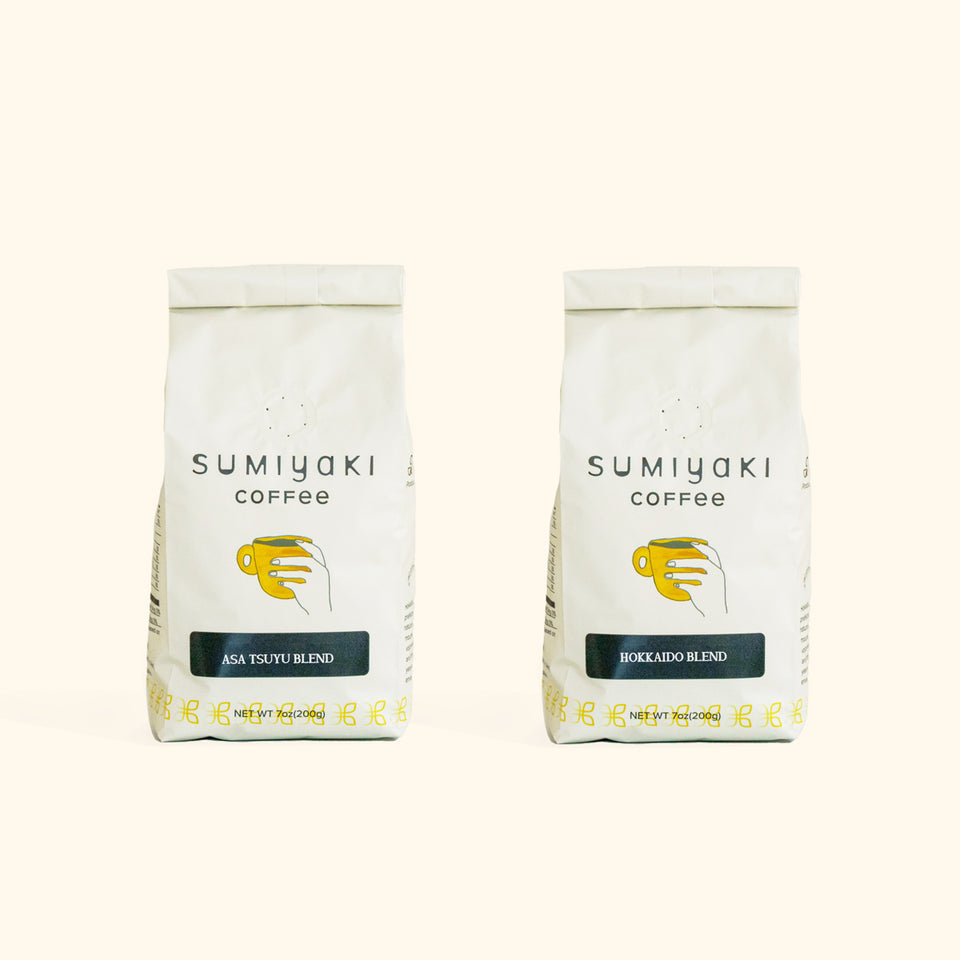
Hokkaido Blend (Colombia, Brazil, Honduras, Indonesia)

USD $25.00
Quick view

Sapporo Coffee Kan's most popular and long-selling signature blend, known as "the house blend," offers a rich, full-bodied coffee experience with a pleasant, mild bitterness and a mellow taste. Crafted by adding the finest Mandheling Berkat Lingtong beans to the blend, it achieves a rare balance—delivering depth and complexity without the sharp acidity often found in other coffees. For those who prefer a smoother, less acidic cup without sacrificing richness and flavor, this special house blend truly hits the spot.

Asa-Yuu Blend Duo (Get 20% Off)

USD $50.00 USD $39.00
Quick view

Meet the Asa-Yuu Blend Duo (朝夕): a roasted-to-order set featuring Asa Tsuyu (light roast, Colombia/Brazil/Ethiopia) and Hokkaido (medium roast, Colombia/Brazil/Honduras/Indonesia). Bright in the morning, smooth and balanced through the day—now 20% off for a limited time.


Related Articles You May Be Interested

Specialty Coffee Association of Japan - Who Are They?
Coffee Associations in Japan: AJCRA, JCQA, AJCA, and SCAJ
How Blue Bottle was Inspired by Japanese Coffee Culture
Introducing the Asa-Yuu Blend Duo (朝夕 ブレンドデュオ): Two of Our Most Popular Coffees, Now Together!
The Latest Japanese Coffee Trends

Get Free Bonus Books

Join Japanese Coffee Club

Sign up for free to the Coffee Club to get advice and exclusive articles about how to choose Japanese Coffee, and tips, tricks, and recipes for enjoying Japanese coffee.

Unsubscribe anytime. It’s free!

About the author

Kei Nishida

Author, CEO Dream of Japan

info@japaneseCoffeeCo.com

Certifications: PMP, BS in Computer Science

Education: Western Washington University
Kei Nishida is a passionate Japanese tea and coffee connoisseur, writer, and the founder and CEO of Japanese Coffee Co. and Japanese Green Tea Co., both part of Dream of Japan.

His journey began with a mission to introduce the world to the unparalleled quality of Japanese green tea. Through Japanese Green Tea Co., he established the only company that sources premium tea grown in nutrient-rich sugarcane soil—an innovation that led to multiple Global Tea Champion awards.

Building on this success and his passion for Japanese craftsmanship, Kei expanded into the world of coffee, pioneering the launch of Japanese Coffee Co., the first company to bring Sumiyaki charcoal-roasted coffee to a global audience. His dedication to authenticity and quality ensures that this traditional Japanese roasting method, once a well-kept secret, is now enjoyed worldwide.

Beyond tea and coffee, Kei has also introduced Japan’s legendary craftsmanship to the world through Japanese Knife Co., making handmade katana-style knives—crafted by a renowned katana maker—available outside Japan for the first time.

Kei’s journey continues as he seeks out and shares the hidden treasures of Japan, one cup and one blade at a time.

Learn more about Kei Nishida

Related Posts

How to Make Japanese Coffee Jelly
How to Make Japanese Coffee Jelly (with Video Recipe)

Step up your coffee game with this unique Japanese coffee jelly recipe! Impress your guests and satisfy your sweet tooth

Read More
Balmuda Brings Japanese Lifestyle to Brooklyn – My First-Hand Journey at Cibone O’te

Step into Brooklyn’s ‘Little Tokyo’ where timeless Japanese craftsmanship meets sleek innovation—dashi, design, and dram

Read More
Exciting News: We Acquired the History of Katana YouTube Channel!

Welcome to the famed History of Katana YouTube Channel—unlocking rare stories, epic blades, and what comes next. Curious

Read More
Leave a comment

Your email address will not be published..

Cart

Your cart is currently empty.

Start Shopping

Select options