Skip to content

Manu Coffee - Everything You Need to Know


The coffee industry in Japan has never flourished as much as in the past few decades. A lot of that progress came from the local shops and roasteries that, along with the Specialty coffee wave, changed the landscape completely!

A great example of this is Manu Coffee, one of the very first stores to introduce espresso in the Prefecture of Fukuoka.


For those who may not be familiar, Fukuoka is one of the most influential places in the Coffee Culture of Japan, but more on that shortly.

In the following 1000 words we will dive together to Manu Coffee’s History and Fukuoka’s distinct coffee culture that birthed so many talents over the years.

So, ladies and Gentlemen, if you are ready, grab your mug because we are going to take a trip to Japan right about…now!

Fukuoka Coffee Culture

For those that may be unfamiliar with Fukuoka and it’s distinguished Coffee Culture, there are a ton of things I would love to tell you about it, but I will save that for a future article where we can take a much closer look to it!

Fukuoka’s coffee culture began in 2000 when Starbucks Japan landed in the city and started serving our beloved beverage. The city was already known for its delightful food and shopping districts, so it makes sense that high quality coffee could grow roots there!

All 3 of these industries (food, coffee, and shopping) have bloomed even further in the past 20 years, intertwined as they are to one another, so the entire prefecture makes for a great expedition!

For the coffee side at least, it is an absolute testament that many World Champions have emerged from Fukuoka’s coffee stores.

Hidenori Izaki who won the World Barista Championship in 2014 started there, at his father’s specialty coffee store, “Honey Coffee”.

Yoshikazu Iwase who was 2016’s runner up worldwide, started as an amateur Barista there 8 years before ascending to the highest ranks of the coffee world.

World Class roasters like Naoki Goto who won the Coffee Roasters World Championship of 2013 also emerged there. In Mr. Naoki Goto’s case, he opened Tokado coffee in 2008, after teaching himself how to roast and studying in “Bach Coffee” in Tokyo for 3 years.

If there is one thing you need to know about Fukuoka before reading further, it is that it has some of the most exquisite and unmatched experiences to offer to a coffee lover.

And here is where Manu coffee enters the stage!

Origins and History

In 2003 one of the very few coffee shops with an espresso machine opened in Fukuoka’s Haruyoshi district.

The man behind that was Mr. Sonobu Nishioka, who during his college years in the US had decided he wanted to make a very special coffee shop once he returned. And so he did!

What he was motivated to do essentially though, wasn’t just to make a cafeteria with good coffee. He aspired in a store that could put smiles on people’s faces and connect them through coffee.

To do that, not only did he look for the best beans available, but he customized the entire atmosphere of the store transforming it into an oasis, in a perpetually moving city.

He built the store’s character with street art and music, which was a pioneering move in 2003, and this calming effect was most obvious in 2005, when a major earthquake broke out in the area and many people took refuge in the small store encouraging one another amidst the panic.

A few years had passed, and with more and more locals trying their high quality espresso, Manu coffee soon became the face of Fukuoka’s good morning beverage.

Until 2011, Mr. Nishioka had opened 2 more stores, one of which, the one located in Daimyo, is still open.

This one store specifically has a wonderful story, as the staff and regular customers painted it themselves with a vibrant yellow color, planting orchid logs around!


Many local artists showcased their art there as well, and this exactly what Mr. Nishioka aspired to when he opened it. A place of liveliness and youth that puts a smile on your face!

A total of 5 Manu shops have opened until today, but mainly due to Covid, only 3 of them survived, the ones in Haruyoshi, Daimyo and Yakuin in Chuo-ku. The latter is called a whale shop and also serves as the roasting factory of the chain other than a cafeteria!

Last but not least, did you know Manu coffee has their own theme song? It was written and performed by a local musician named JUNN and it is called “A cup of Universe”. Just how many coffee chains do you know that have their own theme song?

Other activities Today

As we speak, Manu coffee is still operating in Fukuoka in its 3 stores, but it has added another couple of projects to its activities.

These activities have a different character, but both reflect Manu Coffee’s spirit, and they are called “The Manua Project” and “Artist in a coffee farm!”. I will start with the first!

The Manua Project

To put it briefly, “The Manua Project” is a sustainability program related to fertilizer.

As the waste of coffee grounds and chaffs (the skin of the bean that is peeled when roasting) has always been high, Manu cooperated with experts from the Kanazawa Bio Research Institute to create 100% organic, coffee-based fertilizer.

The prototype began in 2014 and officially entered the market in 2017. By October 2018, 6 tons had already been sold. Another batch of equal amount was manufactured in 2020 and one can still buy it at their online store if they wish!


Artist in a farm

The second project, which is called “Artist in a farm”, also has a social concern attribute, but this one is focused on art and artists.

Since 2018, Manu Coffee decided to collaborate with a variety of local artists, first of whom was NONCHELEE (Fukuoka-based Illustrator) and send them to the farm from which they procure the beans for a short amount of time.

In return, what the artist made during his stay, inspired by the place, would be bundled in a book and sold all over the world, while the original artwork is on display in Fukuoka!

The first stay was from March 10 to March 18, in Nicaragua, and if not for COVID we would have had more artwork to behold. That said, the project is still active, so we are looking forward to more wonderful illustrations in the future!

Conclusion

To summarize everything, I believe there is not much left to say about Manu Coffee or the essence coursing through their coffee and activity.

Fukuoka has given birth to so many coffee gems and Manu coffee proudly stands among them!

As one of the very pioneers of the city, and one of the first shops to orient towards putting smiles on their customers faces, I would say no coffee lover should miss a chance of visiting them, if they find themselves in Fukuoka.

Until next time, may your Barista put a smile on your face and may good coffee find its way to your cup every time!


FAQs about Manu Coffee

What is Manu Coffee, and where is it located?

Manu Coffee is a Fukuoka-based specialty coffee roastery and café chain on Kyushu, southern Japan. Founded as a small specialty roastery, Manu has grown to multiple locations across Fukuoka and the broader Kyushu region. The brand emphasizes single-origin beans, traditional Japanese roasting techniques, and strong customer education through their café network.

Fukuoka has a smaller but distinct specialty coffee scene compared to Tokyo. Manu is one of the most-respected Fukuoka specialty roasters, alongside other regional brands. The local-Kyushu coffee culture leans toward more deeply-roasted profiles than Tokyo's third-wave-aligned scene — closer to traditional kissaten character with modern specialty quality.

For coffee travelers visiting Kyushu (Fukuoka, Kumamoto, Kagoshima), Manu Coffee is a worthwhile destination that's distinctively regional rather than just another version of Tokyo specialty coffee. The Kyushu coffee scene rewards the side-trip from main Japan tourist circuits.

How does Fukuoka coffee culture differ from Tokyo's specialty coffee scene?

Different aesthetic priorities. Tokyo specialty coffee skews more international-third-wave (light roasts, single-origin emphasis, V60 brewing dominance) — heavily influenced by U.S. and Australian specialty coffee culture imported in the 2010s. Fukuoka and broader Kyushu specialty coffee maintains more traditional Japanese roasting character — medium-to-dark roasts, blend emphasis, less aggressive third-wave influence.

Atmosphere also differs. Tokyo specialty cafés often feel design-conscious and minimalist (white walls, blonde wood, exposed concrete); Fukuoka specialty cafés tend toward warmer kissaten-influenced design (darker wood, more cluttered, more lived-in). Both are intentional aesthetic choices serving different customer expectations.

If you've experienced Tokyo specialty coffee and want something different on a Japan trip, Fukuoka offers genuinely distinct coffee culture. The differences are subtle to first-time observers but become more pronounced after spending time in both cities.

Can I buy Manu Coffee outside of Kyushu or Japan?
Limited retail beyond Kyushu. Manu has primary distribution within Kyushu region — Fukuoka, Kumamoto, Saga, Nagasaki. Some of their products appear in Tokyo specialty retailers and online Japanese specialty coffee retailers, but selection is narrower outside Kyushu. International availability is essentially zero.

If you can't visit Kyushu specifically, JPCo's coffee lineup represents the same Japanese specialty coffee category at U.S.-friendly availability. The Yuki Sora Blend and Hokkaido Blend both occupy the deeper-roasted Japanese specialty coffee space that Manu and other Kyushu roasters work in.

For travelers: visiting Manu and other Kyushu specialty roasters during a Japan trip, buying multiple varieties, and bringing home is the practical approach. Whole bean travels well; the roastery experience adds context that international purchasing can't replicate.

Are there other Kyushu specialty coffee roasters worth knowing?

Several. REC Coffee (also Fukuoka-based) is comparable to Manu in tier and aesthetic — strong specialty focus with multiple Fukuoka locations. Honey Coffee (Kumamoto) is a smaller specialty operation with strong local reputation. Suien Coffee (Kagoshima) maintains traditional kissaten approach with specialty quality.

Smaller boutique operations: dozens of single-location specialty cafés across Kyushu, especially in Fukuoka's Tenjin and Hakata districts. Many are good; finding the best requires either local knowledge or coffee-tour-style exploration.

If you're planning a Kyushu coffee trip: Fukuoka has the densest concentration of specialty cafés (4-5 day trip can cover 8-10 quality locations); Kumamoto has 4-5 worthwhile specialty cafés in 1-2 days; Kagoshima has 2-3 worth visiting in a half-day. Total Kyushu coffee tour: 6-8 days for serious enthusiasts.

When's the best time to visit Kyushu for coffee tourism?

Spring (March-May) and autumn (September-November) for comfortable weather. Kyushu summer (June-August) is hot and humid; iced coffee is the only practical option during summer travel. Winter (December-February) is mild but rainy. Spring and autumn provide the most-enjoyable walking-between-cafés weather.

Cherry blossom season (late March-early April in Kyushu, slightly earlier than Tokyo) overlaps with the best spring weather and produces dramatic visual context for coffee shop visits in parks and gardens. The premium-tourism crowds during cherry blossom season are real but Kyushu is less crowded than Kyoto or Tokyo even at peak.

If you have flexible timing, May or October produces the best combination of weather, lower tourist density, and coffee-tour comfort. Avoid: Golden Week (early May), Obon (mid-August), New Year's holiday (late December-early January) when Japanese domestic travel surges.

Related products

16 reviews

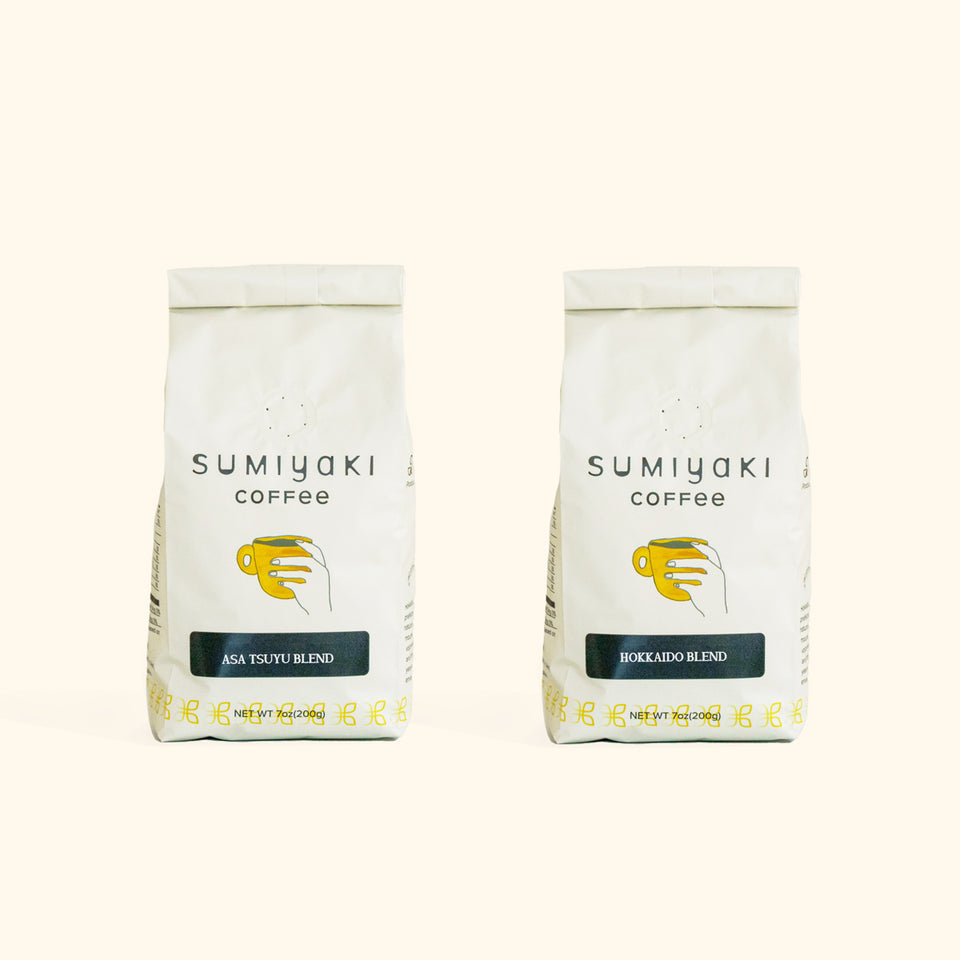
Hokkaido Blend (Colombia, Brazil, Honduras, Indonesia)

USD $25.00
Quick view

Sapporo Coffee Kan's most popular and long-selling signature blend, known as "the house blend," offers a rich, full-bodied coffee experience with a pleasant, mild bitterness and a mellow taste. Crafted by adding the finest Mandheling Berkat Lingtong beans to the blend, it achieves a rare balance—delivering depth and complexity without the sharp acidity often found in other coffees. For those who prefer a smoother, less acidic cup without sacrificing richness and flavor, this special house blend truly hits the spot.

Asa-Yuu Blend Duo (Get 20% Off)

USD $50.00 USD $39.00
Quick view

Meet the Asa-Yuu Blend Duo (朝夕): a roasted-to-order set featuring Asa Tsuyu (light roast, Colombia/Brazil/Ethiopia) and Hokkaido (medium roast, Colombia/Brazil/Honduras/Indonesia). Bright in the morning, smooth and balanced through the day—now 20% off for a limited time.


Related Articles You May Be Interested

Tokado Coffee - Roasting a Path to the Top - Café Spotlight
Hidenori Izaki – First Japanese World Barista Champion
REC Coffee - Everything You Need to Know
The 10 Coffee Shops In Japan
Maruyama Coffee of Japan - Who are they?
Japanese Contributions to the World of Coffee

Get Free Bonus Books

Join Japanese Coffee Club

Sign up for free to the Coffee Club to get advice and exclusive articles about how to choose Japanese Coffee, and tips, tricks, and recipes for enjoying Japanese coffee.

Unsubscribe anytime. It’s free!

About the author

Kei Nishida

Kei Nishida

Author, CEO Dream of Japan

info@japaneseCoffeeCo.com

Certifications: PMP, BS in Computer Science

Education: Western Washington University
Kei Nishida is a passionate Japanese tea and coffee connoisseur, writer, and the founder and CEO of Japanese Coffee Co. and Japanese Green Tea Co., both part of Dream of Japan.

His journey began with a mission to introduce the world to the unparalleled quality of Japanese green tea. Through Japanese Green Tea Co., he established the only company that sources premium tea grown in nutrient-rich sugarcane soil—an innovation that led to multiple Global Tea Champion awards.

Building on this success and his passion for Japanese craftsmanship, Kei expanded into the world of coffee, pioneering the launch of Japanese Coffee Co., the first company to bring Sumiyaki charcoal-roasted coffee to a global audience. His dedication to authenticity and quality ensures that this traditional Japanese roasting method, once a well-kept secret, is now enjoyed worldwide.

Beyond tea and coffee, Kei has also introduced Japan’s legendary craftsmanship to the world through Japanese Knife Co., making handmade katana-style knives—crafted by a renowned katana maker—available outside Japan for the first time.

Kei’s journey continues as he seeks out and shares the hidden treasures of Japan, one cup and one blade at a time.

Related Posts

A Walk Through Osaka's Coffee District: Six Standout Coffee Shops on a One-Hour Stroll

Sapporo-based writer Graham Hill walks the streets of Osaka with us, profiling six very different coffee experiences — p

Read More
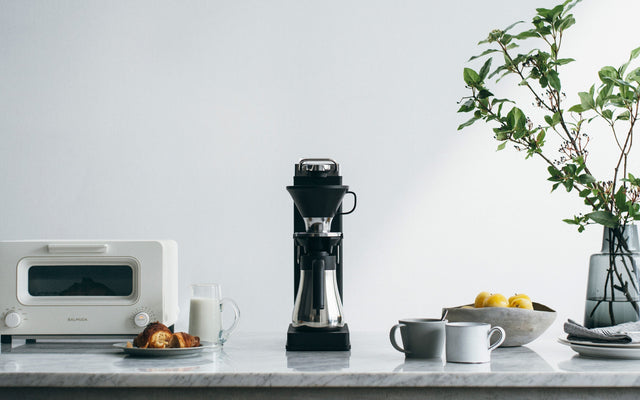
Behold: Balmuda's "The Brew" - Tokyo-based design powerhouse brings their coffee maker to the US
Behold: Balmuda's "The Brew" - Tokyo-based design powerhouse brings their coffee maker to the USA

Experience Balmuda's excellent coffee machine as Tokyo's design influence makes its way to the United States. This cutti

Read More
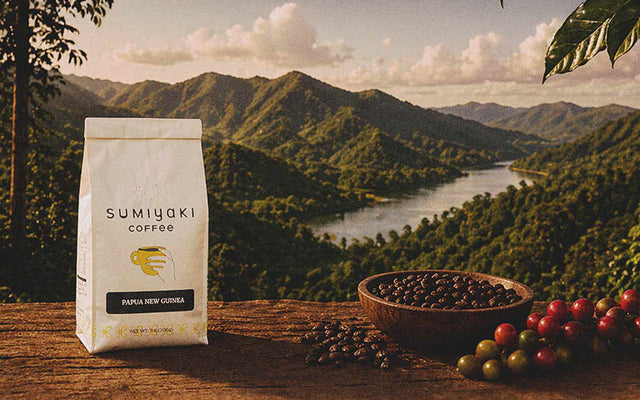
Everything You Need to Know About Papua New Guinea Coffee — And Its Surprising Connection to Japan

PNG coffee has deep ties to Japan — from Blue Mountain roots to today's specialty scene. Meet Baroida Estate and try our

Read More
Leave a comment

Your email address will not be published..

Cart

Your cart is currently empty.

Start Shopping

Select options