

Japanese iced coffee has won the hearts of many baristas and coffee industry professionals around the world because it’s quick to make, it’s super refreshing and it has a smooth and bright flavor.
Today I wanted to talk to you about what makes it so special and show you how you can make it at home. Here’s what we are going to cover:
Download Printable One-Page Recipe PDF Now

A Brief History of Iced Coffee
Funny story, we have been drinking iced coffee longer than you think! Take the Mazagran for example. Mazagran is a cold coffee drink that was invented in Algeria in 1840! Back then they used to mix coffee with syrup and cold water.
Other frozen/iced coffee drinks, like slush, have been around since the 19th century.
If you think about it, it’s not so surprising since the hot months of the year are certainly a source of inspiration to invent something refreshing.

Types of Iced Coffee Drinks
There are many types of iced or chilled coffees these days and thanks to the evolution of technology we have so many tools to use to craft new coffee drinks. Some of the most popular types are:
- Japanese Iced Coffee - filtered coffee over ice
- Cold Brew - chilled coffee concentrate mixed with water
- Iced Latte - espresso with milk over ice
- Frappé - instant coffee blended with cold water, topped with milk and ice
- Frappuccino - coffee blended with ice and syrups, topped with whipped cream (trademarked brand of the Starbucks Corporation)
- Vietnamese Iced Coffee - filtered coffee over ice with condensed milk
- Nitro Cold Brew - cold brew with added nitrogen
You’ve probably seen many of these in coffee shop menus. As you can tell by their description they all differ from one another in many ways, which is great because you have so many options to order from depending on your mood.

For example, some of these drinks are sweet by default, like the Frappuccino or the Vietnamese Iced coffee while you can choose to make the best sweet or not by using sugar or sweeteners.
From all these drinks, many coffee industry professionals favor Japanese iced coffee a lot because it successfully brings out the coffee bean’s natural flavors. This type of drink was only introduced in the U.S. during the 90s and we can thank Japan for that!
What is Japanese Iced Coffee?
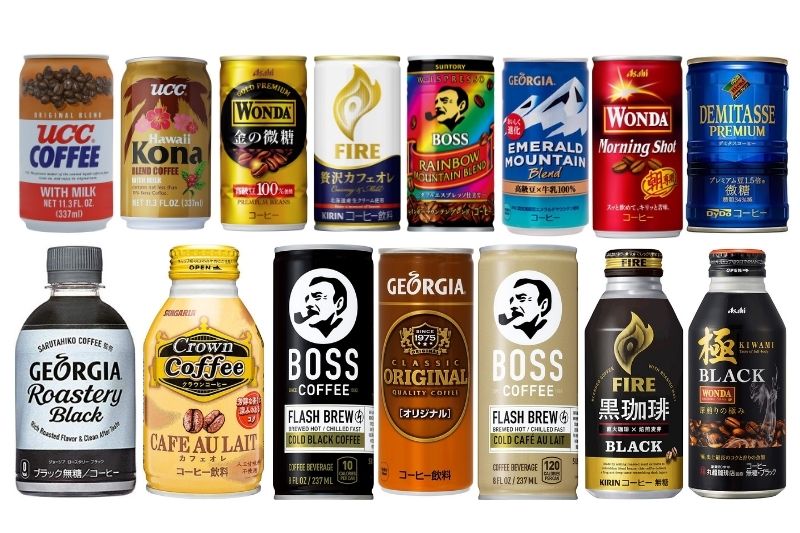
A more accurate name for this drink would be Japanese-style iced pour-over since the pour-over method is used to brew the coffee. In Japan, this has been a common way to drink iced coffee for quite a while and you can even find it sold in convenience stores.
Some places like 7-Eleven in Japan simply hand you a cup filled with ice then you walk over to the automated coffee machine that grinds and drips your coffee over the ice in a few seconds.
Of course, this is convenience store coffee so the quality of the drink might be questionable but I simply mean to show you how common it is to get a Japanese Iced Coffee all over Japan and it usually doesn’t cost more than a dollar.
Why is it So Popular?
The story goes that Peter Giuliano, the director of coffee for Counter Culture at that time, paid a visit to Japan in 1994 and was exposed to this method of making iced coffee.
With the help of Hidetaka Hayashi, the president of Hayashi Coffee Institute and a long-time judge in coffee competitions, Guiliano perfected the method and brought it back to the U.S.

One of the main reasons this drink has become so popular is because it’s such a quick way of making iced filtered coffee without having to wait for many hours like with the cold brew.
The fact that it’s flash-chilled also has a great impact on the flavor and freshness of the coffee, yielding a much smoother and subtle result. Plus it’s super easy to make at home and it’s so refreshing on hot days!
How to Make Japanese Iced Coffee
Before getting into how you can make Japanese iced coffee at home, I am going to answer some common questions so you can have the best experience possible.
Which type of coffee is best for making it?
I would suggest using medium ground coffee beans with a light to medium roast profile. You could choose between a single origin or a nice blend but if you are going with a blend make sure the beans have similar flavor attributes.
Generally, coffee beans from Africa have to taste notes of fruits, Asian coffees often taste spices, herbs, and dark chocolate while the ones from Central and South America have notes of chocolate and nuts.
What Does Japanese Iced Coffee Taste Like?
One of the reasons why many baristas love Japanese iced coffee is its flavor profile. The result is a drink with a bright and complex flavor, floral aroma, and fruity flavor. It has a light body, meaning it’s easy to drink and leaves a pleasant and delicate aftertaste.

If you opt for single-origin coffee beans, meaning coffee beans from a specific country then this way of brewing the coffee will enhance the flavor profile of these beans. I would suggest trying it without adding milk or sugar so you can fully enjoy the coffee flavor.
Which Pour-Over Device Should I Use?
Don’t limit yourself regarding the pour-over device you are going to use as most of them will give you a good result. Many coffee shops around the world use Chemex to make this coffee not only for its capability to bring out the tasting notes but also because it is visually pleasing.
I would suggest using any reputable pour-over brewer like the Hario V60, the Kalita Wave, the Chemex, the Clever Dripper, or the Origami. Just make sure to follow the best practices for brewing, like paying attention to the coffee: water ratio, grinding the coffee beans fresh, controlling the water temperature, and your total brewing time.
Recipe for Japanese Iced Coffee
This is a recipe for two. To make sure your coffee is not diluted by adding ice, you simply need to calculate the ice as part of the total water volume in the final brew. Don’t worry though, I’ve already done that for you here.
Download Printable One-Page Recipe PDF Now
You will need:
- 32g of coffee
- 250 ml of water
- 8 ice cubes
- Your pour-over brewer
- Scales
- Timer
- A decanter
Step by step guide:
- Heat the water to 195-205 degrees Fahrenheit
- Grind your coffee beans
- Add the ice cubes to your decanter and place them on your scales
- Add the ground coffee to your brewer and start your timer
- Pour in slow circular motions for 30 seconds
- Once the coffee has drained through keep pouring until your scales read 250 ml
- Swirl and serve. Enjoy!
Final Thoughts
As you can see Japan has many secrets to share when it comes to good coffee. Like a true home barista now you have all the information you need to make some delicious Japanese iced coffee at home and impress your friends and family. Happy Brewing!
TRY OUR PREMIUM SELECTION FOR YOUR PERFECT CUP OF JAPANESE ICED COFFEE!





37 reviews
USD $42.00
USD $39.00
/
Quick view
Hokkaido Blend Single-Serve Pour-Over - Disposable Filter Bag



Get Free Bonus Books

Sign up for free to the Coffee Club to get advice and exclusive articles about how to choose Japanese Coffee, and tips, tricks, and recipes for enjoying Japanese coffee.
About the author

Kei Nishida
Author, CEO Dream of Japan
Certification: PMP, BS in Computer Science
Education: Western Washington University
Kei Nishida is a passionate Japanese tea and coffee connoisseur, writer, and the founder and CEO of Japanese Coffee Co. and Japanese Green Tea Co., both part of Dream of Japan.
His journey began with a mission to introduce the world to the unparalleled quality of Japanese green tea. Through Japanese Green Tea Co., he established the only company that sources premium tea grown in nutrient-rich sugarcane soil—an innovation that led to multiple Global Tea Champion awards.
Building on this success and his passion for Japanese craftsmanship, Kei expanded into the world of coffee, pioneering the launch of Japanese Coffee Co., the first company to bring Sumiyaki charcoal-roasted coffee to a global audience. His dedication to authenticity and quality ensures that this traditional Japanese roasting method, once a well-kept secret, is now enjoyed worldwide.
Beyond tea and coffee, Kei has also introduced Japan’s legendary craftsmanship to the world through Japanese Knife Co., making handmade katana-style knives—crafted by a renowned katana maker—available outside Japan for the first time.
Kei’s journey continues as he seeks out and shares the hidden treasures of Japan, one cup and one blade at a time.
Learn more about Kei

