Skip to content

Hario Syphon – Everything You Need to Know

Coffee in the syphon – not only does it sound special, it also tastes that way! The siphon preparation is one of the most exciting ways to prepare coffee - for yourself and for your friends.

With the Hario Coffee Syphon you can make a wonderfully aromatic filter coffee with a barista show at the same time, you only have to pay attention to a few simple tricks.

 The coffee not only tastes great, the preparation can become a real experience for your viewers. So, let’s find out how the Hario Syphon works and if it’s the right brewer for you!

Hario Syphon – Everything You Need to Know

HARIO Syphon – Everything You Need to Know

People have been enjoying the preparation of coffee using vacuum in glass flasks since at least 1830. According to stories, Beethoven preferred to drink his coffee from a vacuum maker!

The preparation in the coffee syphon is not only a feast for the eyes, but also a feast for the senses. Because it combines the principle of completely dissolving the coffee powder in water (“full immersion”) with a paper filter. The coffee has a lot of body, while at the same time its aromas can be tasted clearly.

The siphon is particularly suitable for light, fruity types of coffee. When preparing the coffee with the syphon, the body of the coffee is reduced. The result is a very aromatic coffee with a harmonious taste.

How does the Hario Syphon work?

Making coffee with the Hario Syphon might look complicated but it’s really not. The brewer consists of two vessels placed on top of each other, which are connected to each other with a tube. The lower vessel must be sealed in such a way that only the tube acts as a connection to the environment.

In the lower vessel, water and air are heated with the help of an external heat source. As it is heated, the water and air expand and rise through the tube from the lower to the upper tank as there is no other way to expand. The heated water collects in the upper vessel and is mixed with the ground coffee there.

As soon as the siphon is removed from the heat source, the water and air remaining in the lower vessel cools down and contracts in the process. The resulting negative pressure in the connecting pipe sucks the water-coffee mixture into the lower vessel, where the finished coffee is now.

Depending on the system used, cotton, paper or plastic filters are used, which are placed in the upper vessel on the connecting pipe. They are held in place by a spring that is pulled through the connecting tube and hooked into its lower edge.

Brewing with the Hario Syphon

The coffee from the Hario Syphon not only tastes particularly good, the preparation itself is a real eye-catcher. The vacuum machine arouses curiosity just by looking at it and makes you want more. Since the coffee powder is extracted directly in the water, this method of preparation is somewhat reminiscent of the French press. Let’s go through a step-by-step process on how you can brew delicious coffee with the Hario Syphon.

Step-by-Step Guidance

Step 1

Grind your coffee to a medium grind, comparable in size to grains of table salt. I recommend using 28g of coffee in 450ml of water. This has always given me excellent results. Insert the cloth or paper filter into the upper chamber with the chain sticking out of the glass tube.

Pull out the chain until you are able to catch the hook at the end of the glass tube. Make sure the filter is level and centered. Use a spoon or something similar to center the filter if it's not in the right place right away.

Step 2

Fill the lower glass chamber with 450 ml of preheated water and place the heat source underneath. Of course you can also use cold water. But then it takes longer for the water to boil and the preparation takes longer.

Step 3

Now you can put on the upper glass chamber. It is important that the chain reaches into the water, because the water rises from the lower chamber to the upper one. Just before the water starts to boil, make sure the seal between both chambers is closed. Since they are easy to close, you don't need to use too much force to do so.

To do this, twist the two seals slightly into each other; so they can be easily disassembled again after use. Now watch the water rise. When the water has almost completely risen and the level is at the bottom of the tubes, stir the hot water in the upper chamber again. So it cools down a bit and is not hotter than the ideal 96°C for preparation.

Step 4

I use 28 g of coffee for the suggested 450 ml of water. Add the ground coffee and stir immediately.

Step 5

Stir the coffee powder vigorously so that it is quickly immersed in the water and can be extracted evenly.

Step 6

After stirring, a clear separation should form in the coffee grounds. This is an indicator that the coffee aromas are being extracted evenly, i.e. dissolved out. Lower the temperature of the heat source a bit so the coffee doesn't get too hot.

Stir again after about 45 seconds. The aim is to break through the crust on the surface so that the remaining carbon dioxide is released from the coffee. This time you don't have to stir as vigorously. Now set the heat source to the lowest level.

Step 7

The ground coffee should be completely retained by the filter. The ideal filter bed is flat with a slight heap in the middle. Your coffee is ready to serve!

Tips and Tricks

I love to get the best out of my coffee beans, regardless of roast and preparation method, that's why I am going to give you some valuable tips and tricks for the Hario Syphon and how your brew is going to taste the best:

Is the coffee too bitter?

The water temperature during siphon brewing is generally very high. This means that this type of preparation tends to over-extract from the ground up. It is therefore best to use light or medium roasts with little bitterness.

If the coffee tastes too bitter for you, then check whether…

Does the coffee not have the optimal aroma?

The causes of this problem are usually not due to the preparation itself. Since flavors are lost immediately after grinding, you should grind the beans immediately before preparation and only in portions! In addition, freshly roasted coffee should be used, as unfortunately valuable roasted aromas are lost if your coffee has been stored away for too long.

Is the coffee too strong for you?

The wonder weapon called caffeine makes us awake and focused. Many people are not used to strong coffees, i.e. coffees with a higher caffeine content. Since coffee in the syphon is filter coffee, the caffeine content is also higher here.

The explanation for this: caffeine is water soluble. The extraction time is closely related to the strength of the coffee, and the brewing time is longer with the siphon than it would be with an espresso, for example.

So: The longer the coffee powder has contact with the water, the more caffeine is released. In order to achieve a weaker coffee, you should therefore pay attention to a shorter extraction time.

Pros and Cons

Pros:

  • Very stylish and rare preparation method
  • Smooth and balanced result in your cup

Cons:

  • All parts are very filigree
  • Difficult cleaning
  • Relatively expensive - compared to other brewing methods

HARIO Syphon

Cleaning your Hario Syphon

In order to enjoy your coffee maker for as long as possible, you should clean your Hario syphon (like all other coffee machines, of course) after each use. It is best to rinse all components under clear water and let them dry well.

In this way you can ensure that no coffee residues spoil the taste. This can be a rather long process in comparison to other brewing methods as the syphon has many parts that need cleaning and you gotta be extra careful not to break the glass.

Final Thoughts

If you're looking for a unique way to brew coffee, the Hario Syphon is definitely worth trying out. The process takes a bit of practice, but it's well worth it for the delicious cup of coffee you'll end up with. It may not be a brewer for everyday but it definitely is a classy addition to your kitchen counter and you can impress your friends with your Syphon brewing skills when they visit!

FAQs about HARIO Siphon Coffee Brewing

What's siphon coffee, and why is it associated with Japanese coffee culture?

Siphon (also called "vacuum pot" in English) coffee uses vapor pressure and vacuum to brew — water in a lower chamber heats and rises into an upper chamber containing coffee grounds, brews briefly, then returns to the lower chamber as the heat is removed. The visual is dramatic: bubbling water rising, coffee swirling, then cleanly draining back. The result is a clean, tea-like coffee with bright clarity.

Japan didn't invent siphon coffee (originally a 19th-century European technology) but adopted it intensely in mid-20th-century kissaten coffee culture and refined the technique to high precision. The Japan Siphonist Championship is the world's most-respected siphon coffee competition, and Japanese siphon technique is considered the global standard.

HARIO is the dominant Japanese siphon brand — their NEXT, NCA, and TCA series cover the range from compact home use to commercial siphon presentation. The HARIO siphon experience is what most international siphon coffee enthusiasts encounter when they get serious about the format.

How does siphon coffee actually taste compared to other brewing methods?

Cleaner than French press, brighter than drip, less concentrated than espresso. The full-immersion brewing combined with paper or cloth filtration produces a cup with espresso-level clarity and pour-over-level brightness. Some specialty coffee tasters describe siphon as the brewing method that most cleanly expresses bean character — origin notes are particularly visible.

Mouthfeel is distinctive — the high brewing temperature (water typically at 91-93°C / 196-200°F when brewing happens) produces a tea-like rather than coffee-like texture in the cup. Some drinkers find this elegant; others miss the body that drip coffee provides. Personal preference varies.

For specialty single-origin coffees with delicate flavor profiles (Ethiopian, Kenyan, Geisha varietals), siphon is often the brewing format that best showcases the beans. For bolder dark roasts or charcoal-roasted Japanese coffee, drip or pour-over often serves better. Match the brewing method to the bean character.

Is siphon coffee impossibly difficult to make at home, or doable?

Doable, with some learning curve. The first 5-10 brews feel awkward — the timing of heat removal, the stirring technique during brewing, the precision required to avoid over-extraction. After 15-20 brews, the technique becomes routine. The HARIO NEXT or TCA-2 home siphon ($60-100) plus a small alcohol burner is the standard starter kit.

Equipment required beyond the siphon: small kitchen scale (essential), gooseneck kettle for water transfer (helpful), bamboo paddle (for stirring; comes with most siphons), filter cloth or paper (consumable). Total starter investment: $80-130.

Don't try siphon as your first specialty-coffee brewing method. Start with V60 or French press, develop coffee-brewing intuition for 6-12 months, then add siphon as a specialty technique. The learning curve assumes you already understand basic coffee variables (grind size, ratio, time, temperature) which siphon brewing depends on but doesn't teach.

Where can I taste siphon coffee made by professionals?

Specialty kissaten in Japan (Tokyo, Kyoto, Osaka especially) often feature siphon brewing as a signature method. Saza Coffee, Tully's Coffee Japan, and dozens of independent kissaten serve siphon coffee daily. In Tokyo specifically, the Ginza and Kanda neighborhoods have multiple high-quality siphon kissaten.

Outside Japan: specialty coffee shops in major cities (NYC, San Francisco, Toronto, London, Tokyo, Seoul, Taipei) increasingly offer siphon coffee. Look for shops with "siphon" or "vacuum pot" on their menu — usually only available during certain hours or by reservation, since the brewing process takes 5-10 minutes per cup.

If you can't find siphon coffee locally, watching Japan Siphonist Championship videos on YouTube provides good visual education on technique. Worth watching before attempting siphon brewing at home — the visual recognition makes the home practice easier.

Are HARIO siphons worth the price compared to other brands?
For serious siphon use, yes. HARIO siphons are made of borosilicate glass with precision-fit components — they handle thermal stress reliably and produce consistent results. Cheaper siphon imitations often have weaker glass that cracks under repeated heating, or inconsistent component fits that affect vacuum-seal performance. The HARIO premium is small relative to total siphon ownership cost (which is mostly time investment to learn the technique). If you're committing to siphon as a brewing method, HARIO is the right choice. The Yuki Sora Blend pairs particularly well with siphon brewing — the charcoal-roasted profile holds up against siphon's high-temperature extraction without going bitter.

For occasional siphon use or experimentation, a cheaper siphon (Tiamo, Gabi, generic brands) at $30-50 covers the experience without the HARIO investment. Quality is meaningfully lower; durability is much lower. Treat as disposable equipment that may not last beyond 1-2 years of casual use.

The HARIO NEXT is the best home-use model — automated alcohol burner, clean modern design, reliable performance. The TCA-2 (manual alcohol burner) is the more traditional model for users who want the full siphon ritual including burner ignition. Both produce comparable coffee; difference is the experience.

Related products

26 reviews

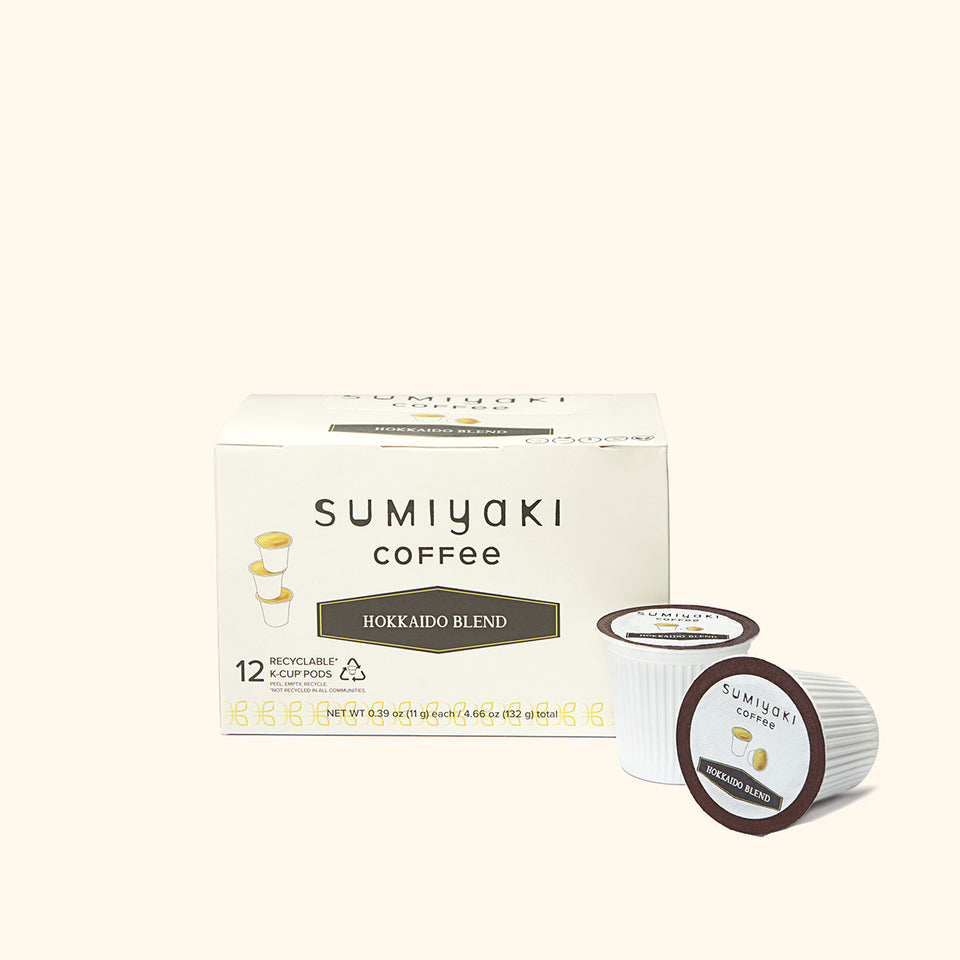
Hokkaido Blend K-Cups Pods (12 Count)

USD $30.00 USD $25.00
Quick view

Hokkaido Blend K-Cup Pods bring the rich, balanced flavor of Sapporo Coffee Kan’s famous sumiyaki roasted coffee into a convenient single-serve format, making it easy to enjoy authentic Japanese quality at home. Crafted with the highest quality pods to preserve aroma and flavor, these K-Cups offer a bold, full-bodied experience without sacrificing freshness or taste. Each pod captures the depth and richness of traditional sumiyaki roasting, a special charcoal-roasting method that enhances flavor while reducing acidity. Featuring a built-in paper filter and designed for quick, easy brewing, Hokkaido Blend K-Cups are perfect for busy mornings or whenever you crave a perfectly brewed cup of coffee.

37 reviews

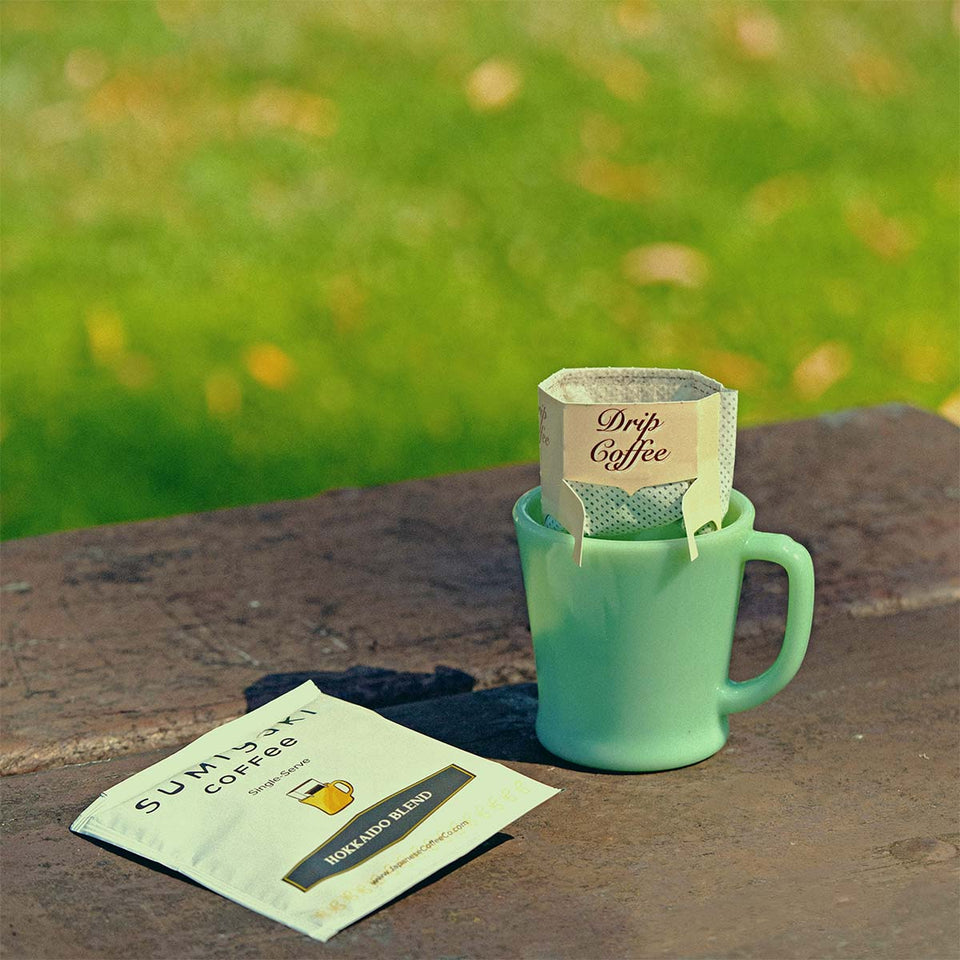
Hokkaido Blend Single-Serve Pour-Over - Disposable Filter Bag

USD $42.00 USD $39.00
Quick view

The Single-Serve Disposable Filter Bag (Cup-On) is an ingenious coffee-brewing method that has been popular in Japan for quite some time but remains lesser known elsewhere. Designed to hold the perfect amount of ground coffee for a single cup, each filter bag features a clever paper structure that securely stabilizes onto your cup—just pour hot water, and voilà, a fresh and delicious drip coffee is ready with minimal effort and no special equipment. What sets this Cup-On apart from other pour-over filters is its unique 4-point system, an innovative design that prevents the filter from becoming soaked after pouring, ensuring a consistent and flavorful brew. Among the many variations of cup-on filters available in Japan, this premium version stands out for delivering an exceptional pour-over experience crafted for true coffee enthusiasts.

2 reviews

Indonesia Lintong - Arabica Typica

USD $48.00
Quick view

This exclusive contract farm coffee, Mandheling Berkat Lingtong, comes from the lush, fertile region of Lingtong Nihuta, located south of Lake Toba in North Sumatra. Grown at an altitude of 1350 to 1400 meters, this special variety—meaning "the blessing of Lingtong" in Indonesian—is distinct from the more common Mandheling coffee. Cultivated without artificial chemicals on humus-rich soil, the coffee trees are carefully spaced at four-meter intervals, allowing them to grow thick, strong, and healthy for decades, producing large, vibrant red cherries. Around 40 local families handpick and deliver the cherries to a fine selection factory, where they are traditionally processed using the Sumatran method and meticulously screen sorted, resulting in Sapporo Coffee Kan’s original specialty coffee with rich, complex flavors.

16 reviews

Hokkaido Blend (Colombia, Brazil, Honduras, Indonesia)

USD $25.00
Quick view

Sapporo Coffee Kan's most popular and long-selling signature blend, known as "the house blend," offers a rich, full-bodied coffee experience with a pleasant, mild bitterness and a mellow taste. Crafted by adding the finest Mandheling Berkat Lingtong beans to the blend, it achieves a rare balance—delivering depth and complexity without the sharp acidity often found in other coffees. For those who prefer a smoother, less acidic cup without sacrificing richness and flavor, this special house blend truly hits the spot.

28 reviews

Hokkaido Blend Single-Serve Pour-Over Gift Box Set

USD $85.00 USD $79.99
Quick view

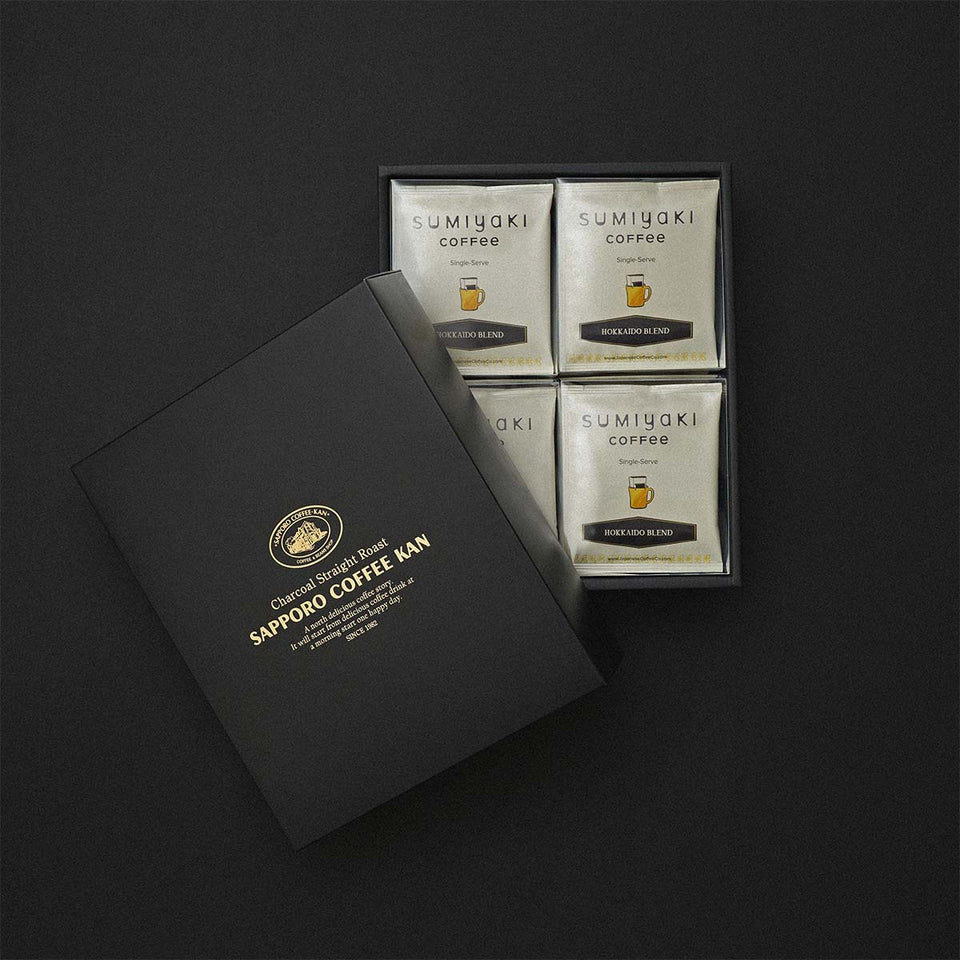
Looking for the perfect gift for a coffee lover? This beautifully rustic gift set features four of our most popular Sumiyaki coffees, each portioned into single-serve disposable filter bags designed for an effortless pour-over experience. Each filter bag holds the ideal amount of ground coffee for one cup and includes a clever paper structure that stabilizes securely onto your cup—just pour hot water and enjoy a fresh, delicious brew with minimal effort. This ingenious brewing method, known in Japan as "Cup-On," brings the joy of café-quality drip coffee anytime, anywhere without the need for special equipment. The set includes 28 single-serve bags, and each package is thoughtfully designed with an easy-open cut line and a pro tip for optimal brewing: lightly tap the coffee grounds with a spoon to even the surface for a perfectly balanced cup.

5 reviews

Select Blend Combination Set (Get 30% Off)

USD $110.00 USD $77.00
Quick view

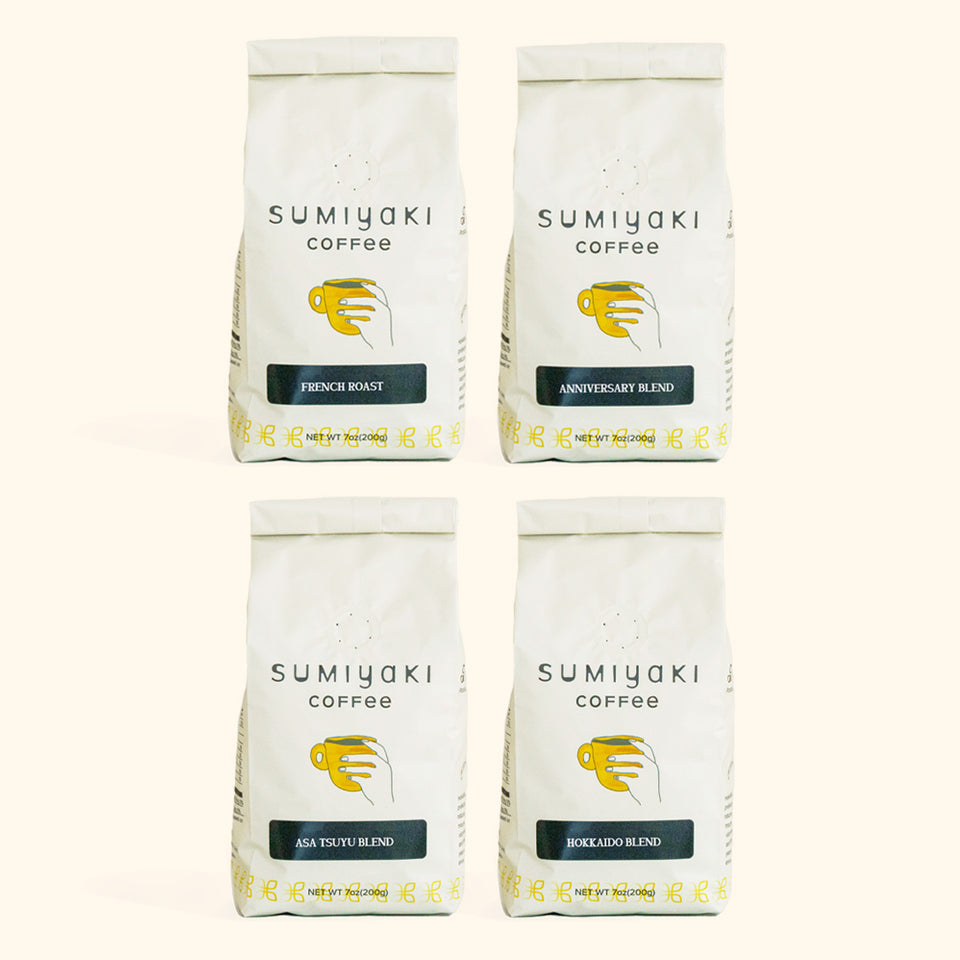
Get 30% off for a limited time when you purchase this special Combination Set featuring four of our most popular Premium Blend Sumiyaki Coffees. Your order will include four 200g packages: Anniversary Blend Coffee (Colombia, Brazil, Indonesia), the fruity favorite originally created for Sapporo Coffee Kan’s 30th anniversary; Asa Kiri Blend, a light roast with pure coffee flavor and a soft touch of sourness; Hokkaido Blend, the signature house blend beloved for its rich and balanced taste; and French Roast Blend, a dark, smoky roast perfect for pairing with milk or crafting café au lait and coffee cocktails. All beans are roasted to order under the expert blending tradition of Sapporo Coffee Kan, led by Ito Eiichi, the renowned “King of Blenders” in Japan, ensuring every cup is a masterful balance of flavor and aroma.

Buy Ceremonial Matcha Gift Set – Hario × Japanese Green Tea Co.

The Ceremonial Matcha Set – Hario × Japanese Green Tea Co. celebrates the union of two Japanese specialists: our award-winning ceremonial matcha and Hario, the iconic glassware brand known for its craftsmanship and timeless design. We are truly excited to bring this collaboration to life, blending Hario’s modern aesthetic with the rich tradition of Japanese tea.

Gift Box Size
12.1" (width) x 9" (length) x 4.7" (height) [15.9 cm x 22.9 cm x 6.4 cm] 

Included


Related Articles You May Be Interested

Hario MUGEN V60 One Pour Dripper
HARIO V60 – Everything You Need to Know
Hario Grinders - Everything You Need to Know
HARIO Nel Drip - Everything You Need to Know
Hario Vs. Kalita
Hario Vs. Kalita

Get Free Bonus Books

Join Japanese Coffee Club

Sign up for free to the Coffee Club to get advice and exclusive articles about how to choose Japanese Coffee, and tips, tricks, and recipes for enjoying Japanese coffee.

Unsubscribe anytime. It’s free!

About the author

Kei Nishida

Kei Nishida

Author, CEO Dream of Japan

info@japaneseCoffeeCo.com

Certifications: PMP, BS in Computer Science

Education: Western Washington University

Kei Nishida is a passionate Japanese tea and coffee connoisseur, writer, and the founder and CEO of Japanese Coffee Co. and Japanese Green Tea Co., both part of Dream of Japan.

His journey began with a mission to introduce the world to the unparalleled quality of Japanese green tea. Through Japanese Green Tea Co., he established the only company that sources premium tea grown in nutrient-rich sugarcane soil—an innovation that led to multiple Global Tea Champion awards.

Building on this success and his passion for Japanese craftsmanship, Kei expanded into the world of coffee, pioneering the launch of Japanese Coffee Co., the first company to bring Sumiyaki charcoal-roasted coffee to a global audience. His dedication to authenticity and quality ensures that this traditional Japanese roasting method, once a well-kept secret, is now enjoyed worldwide.

Beyond tea and coffee, Kei has also introduced Japan’s legendary craftsmanship to the world through Japanese Knife Co., making handmade katana-style knives—crafted by a renowned katana maker—available outside Japan for the first time.

Kei’s journey continues as he seeks out and shares the hidden treasures of Japan, one cup and one blade at a time.

Related Posts

How a Sumiyaki Roaster Machine Works: Inside the Japanese Charcoal Roasting Process

Discover the art of Japan’s charcoal coffee roasting — where binchotan, far-infrared heat, and artisan skill create a de

Read More
Introducing the Asa-Yuu Blend Duo (朝夕 ブレンドデュオ): Two of Our Most Popular Coffees, Now Together!

The Asa-Yuu Blend Duo (朝夕) is here! Two of our most popular Sumiyaki coffees in one set – bright Asa Tsuyu and smooth Ho

Read More
The Story Behind Our Booth Backdrop: Craftsmanship, Engineering, and Sacred Wood
Behind the Scenes – How We Made the Event Booth & Backdrop Using Sacred Wood

Discover how our one-of-a-kind event booth came to life—from Japanese Kōshi (格子) design and rare Port Orford Cedar to mo

Read More
Leave a comment

Your email address will not be published..

Cart

Your cart is currently empty.

Start Shopping

Select options